A simple lemon and petroleum jelly mix can help soften dry, rough heels when used as a short overnight foot treatment. This recipe is quick to make and uses ingredients most homes already have.

Quick Recipe
Prep time: about 5 minutes
Best for: dry, rough, or cracked heels that need extra softening
Use type: paste-style balm
Main ingredients:
- Petroleum jelly, such as Vaseline
- Fresh lemon juice
- Warm water for soaking
Ingredients
- 2 tablespoons petroleum jelly
- 1 teaspoon fresh lemon juice, strained
- 1 small bowl of warm water
- A pumice stone or soft foot file, optional
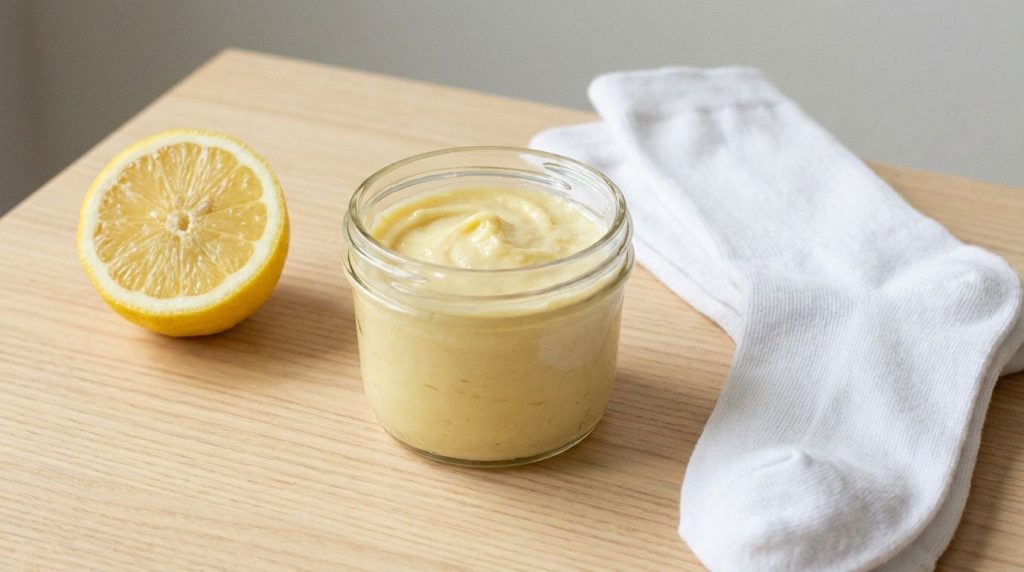
- Clean cotton socks
How to Make It
- Wash your feet in warm water for 5 to 10 minutes to soften the skin.
- Pat your feet dry and gently file away any loose dead skin with a pumice stone or foot file.
- In a small clean bowl, add the petroleum jelly and the fresh lemon juice.
- Mix with a clean spoon until the texture is smooth and evenly blended.
- Store any leftover mixture in a clean, covered jar and use it within a few days.
How to Use It
- Apply a thin layer to clean, dry heels, focusing on the cracked areas.
- Cover your heels with clean cotton socks to keep the mixture in place overnight.
- In the morning, wash your feet with lukewarm water and mild soap, then pat dry.
How Often to Use It
Most people use this treatment two or three nights a week. Skip it on days when your skin feels raw or sore, and give your heels a rest if you notice redness.
Why These Ingredients Are Used
Petroleum Jelly
Petroleum jelly creates a protective layer that helps lock in moisture. This can help dry heels feel softer and more comfortable overnight.
Fresh Lemon Juice
Lemon juice is naturally acidic and is traditionally used in home beauty routines to help loosen the look of dull, dry skin. Because it can irritate, keep the amount small.
Warm Soaking and Filing
Softening the skin first helps the mixture absorb better and makes gentle filing easier, which can support a smoother-looking surface.
What Results to Expect
This remedy may help heels feel softer and look smoother over several nights of regular use. It cannot repair deep fissures or change thick calluses overnight, and results vary from person to person. Consistent moisturizing and gentle exfoliation work best together.
Safety Notes
- Patch test first for topical remedies by applying a small amount to the inside of your wrist or behind your ear for 24 hours.
- Use gently and avoid rubbing hard during filing.
- Avoid irritated, bleeding, or broken skin, as lemon can sting and cause discomfort on open cracks.
- Lemon juice can make skin more sensitive to sunlight, so avoid direct sun on treated areas and apply sunscreen if your heels will be exposed during the day.
- Stop using it if burning, itching, redness, or swelling occurs.
- People with diabetes, poor circulation, or nerve problems in the feet should check with a doctor before trying any home foot treatment.
FAQ
Can I leave the mixture on all night?
Yes, many people apply it at bedtime and cover with socks. If your skin stings, wash it off sooner and reduce the amount of lemon juice next time.
Can I use bottled lemon juice?
Fresh lemon juice is preferred because it is less processed. Always test a small area first, since bottled versions may vary in strength.
How soon will I notice a difference?
Many people notice softer-feeling skin after a few nights of use, though deeper cracks may take longer and may need a dedicated heel cream or medical advice.
Final Thoughts
A simple lemon and petroleum jelly routine can be a practical way to support softer heels at home when used gently and consistently. If you enjoyed this easy DIY beauty idea, explore more home remedy guides on our website and save this recipe for your next foot care night.