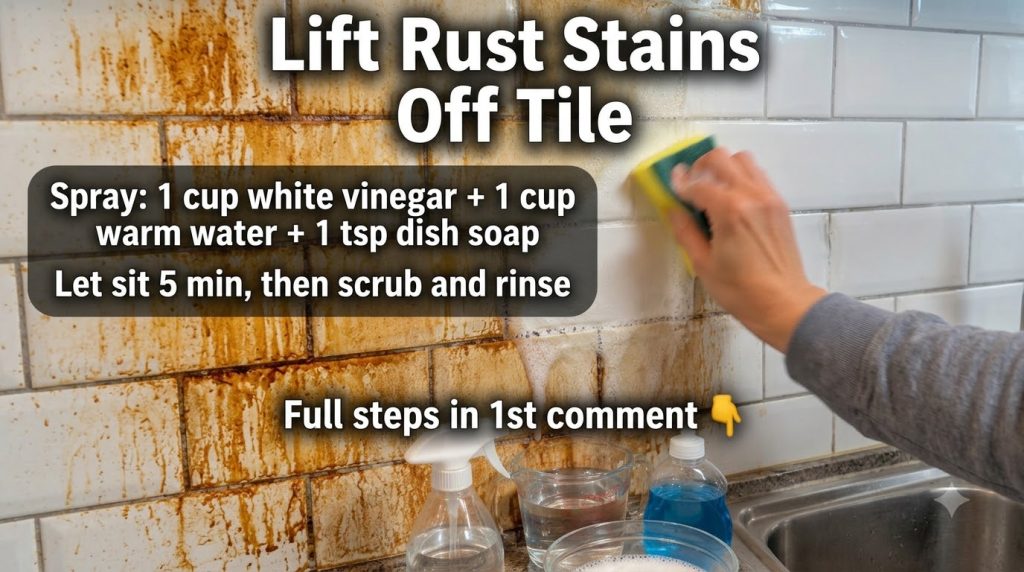
Glossy kitchen tiles look great when they are clean, but they can quickly pick up dull, brownish-orange streaks that seem to appear overnight. These marks are often caused by hard water minerals or small amounts of rust washing down from faucets and fixtures. The good news is that you can usually lift them with a simple, gentle cleaning routine and a basic scrub sponge, without any harsh products.
What You’ll Need
- 1 cup warm water
- 1 tablespoon mild dish soap
- 1/2 cup white vinegar (optional, for stubborn mineral streaks)
- 1/4 cup baking soda
- A non-scratch sponge (yellow and green scrub sponges work well)
- A soft microfiber cloth
- A small bowl or spray bottle
- A soft-bristle toothbrush for grout lines
Why This DIY Can Be Useful
Mild dish soap helps lift grease and surface grime so the scrubbing action can work more easily. Baking soda is mildly abrasive, which helps loosen dried residue from the tile surface and grout without the harshness of strong cleaners. White vinegar is acidic and can dissolve mineral deposits left behind by hard water, which is why it is often used on streaky, chalky-looking spots. Used together in the right order, these simple ingredients can make a visible difference on everyday buildup.
How to Make It
- Fill a bowl or spray bottle with the warm water and add the dish soap. Stir gently until the soap is evenly mixed, and avoid making it too sudsy.
- For a scrubbing paste, mix the baking soda with a few teaspoons of the soapy water until it forms a thick, spreadable consistency.
- If you are dealing with mineral streaks, pour the white vinegar into a separate spray bottle. Do not mix the vinegar with the soap solution or the baking soda paste, because the mixture simply dilutes both and reduces its effectiveness.
- Keep a clean cloth or sponge nearby so you can rinse as you work.
How to Use It
- Start with a small test area, especially on glossy or glazed tile, and wait a few minutes to make sure the surface looks unchanged.
- Wet the tile with warm water first. This helps the cleaner spread evenly and prevents the sponge from dragging dry residue across the surface.
- Apply the soapy solution and scrub in small, circular motions. Work from the top of the wall downward, so the suds and drips do not reclaim areas you have already cleaned.
- For stubborn stains, apply a thin layer of baking soda paste directly to the spot and let it sit for about five minutes. Scrub gently with the sponge or a soft toothbrush, focusing on the grout lines.
- If mineral streaks remain, lightly mist the area with diluted white vinegar, wait one to two minutes, and wipe away. Do not let vinegar sit for long periods on grout.
- Rinse the wall thoroughly with clean warm water, then wipe it dry with a microfiber cloth to remove streaks and reduce water spots.
What to Expect
Light grease and surface grime usually come off after one or two passes with the soap solution. Mineral streaks and rust-like staining take more patience. Some marks may fade noticeably after the first session, while very old or deep stains may need a second round. Grout can also look lighter once cleaned, but it may not return to its original color if the staining has been there for a long time.
Helpful Tips
- Clean small sections at a time so the solution does not dry on the tile before you can rinse it.
- Wipe tiles after cooking or washing dishes to prevent grease and water minerals from building up.
- Use a soft brush or toothbrush for grout instead of heavy scouring pads, which can wear the surface over time.
- If the rust-like stains keep coming back, check nearby faucets, pipes, or metal fixtures for leaks or corrosion, since they may be the source.
Important Notes and Safety
Always test any cleaner on a hidden or small area first, especially on glazed tile, natural stone, or colored grout, since vinegar and baking soda can dull some finishes. Never mix vinegar with bleach or other cleaning products, because the combination can release harmful fumes. Open a window or run the kitchen fan while cleaning, and rinse the wall well so no soap or baking soda residue is left behind. Store your vinegar and cleaning solutions clearly labeled and out of reach of children and pets.
With a little patience and the right gentle approach, your kitchen tiles can look bright and clean again. Have you tried this method on your own tile? Share your results in the comments and let us know which stains gave you the most trouble.