Most people pull this lawn weed without a second thought, but the green seed spikes rising from broadleaf plantain are tender, mildly nutty, and worth a jar on your counter. Here is how to pick, cook, and pickle them safely at home.
What It Is
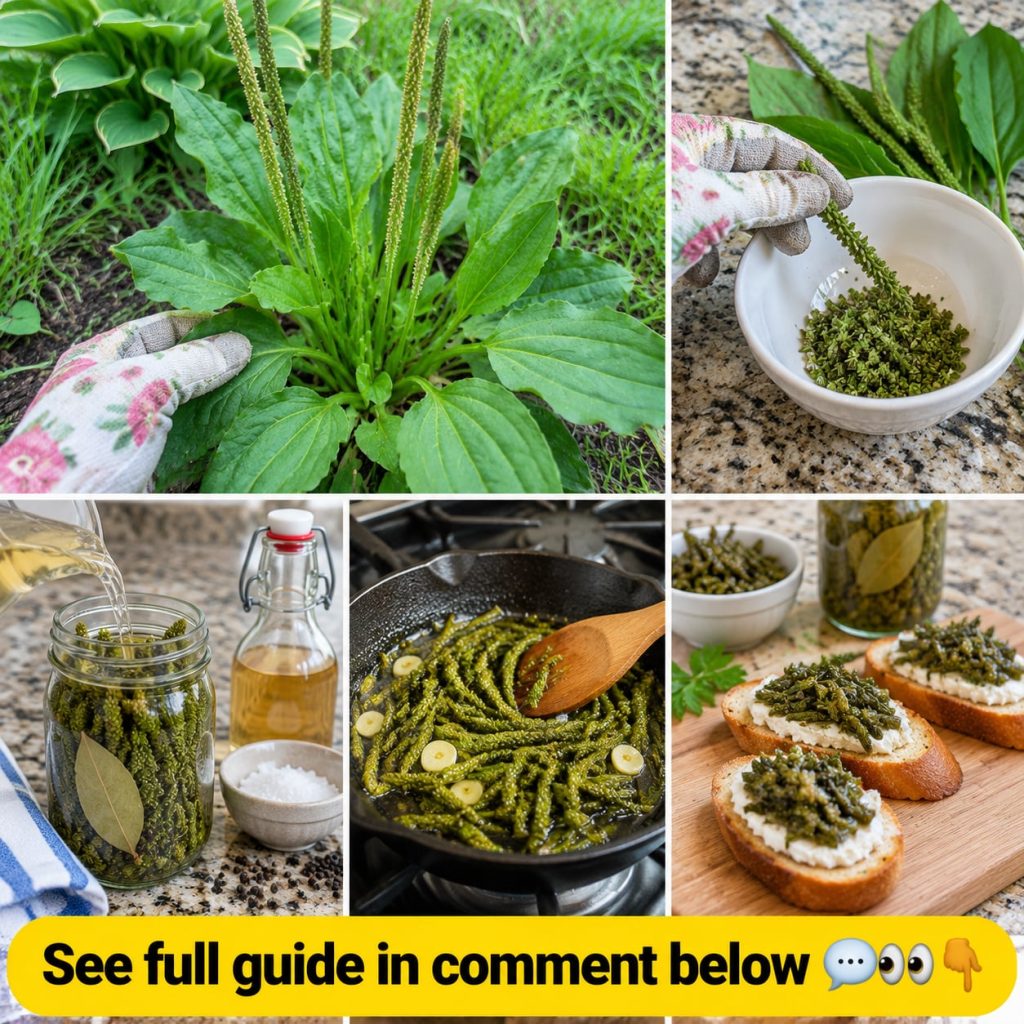
Broadleaf plantain (Plantago major) grows flat in lawns, cracks in pavement, and along garden edges. Its leaves are oval with parallel veins, and the flower stalks carry dense green spikes packed with tiny seeds. Pick them while they are still green and firm. Once they turn brown and dry, they suit tea better than pickling.
Ingredients
- 2 cups young green plantain seed spikes, about 40 to 60 spikes
- 1 cup white wine vinegar or apple cider vinegar (5% acidity)
- 1 cup filtered water
- 1 tablespoon pickling or sea salt
- 1 teaspoon sugar
- 1 small garlic clove, sliced
- 1/2 teaspoon black peppercorns
- 1 small dried chili (optional)
Approximate Measurements and Formula
Use a simple ratio of 1 part vinegar to 1 part water, plus 1 tablespoon salt and 1 teaspoon sugar per cup of liquid. This brine fills one 500 ml (about 16 oz) jar with room for the spikes.
Step-by-Step Method
- Pick spikes from a clean area, away from roads, dog routes, and sprayed lawns. Choose stalks that are green and firm.
- Rinse under cold water, then soak them in a bowl of water for 10 minutes to loosen grit. Pat dry.
- Trim each stalk about 5 cm (2 inches) below the spike.
- Blanch the spikes in boiling water for 30 seconds, then move them straight into ice water. This helps them stay crisp.
- Combine vinegar, water, salt, and sugar in a pot. Simmer for about 2 minutes until the salt dissolves.
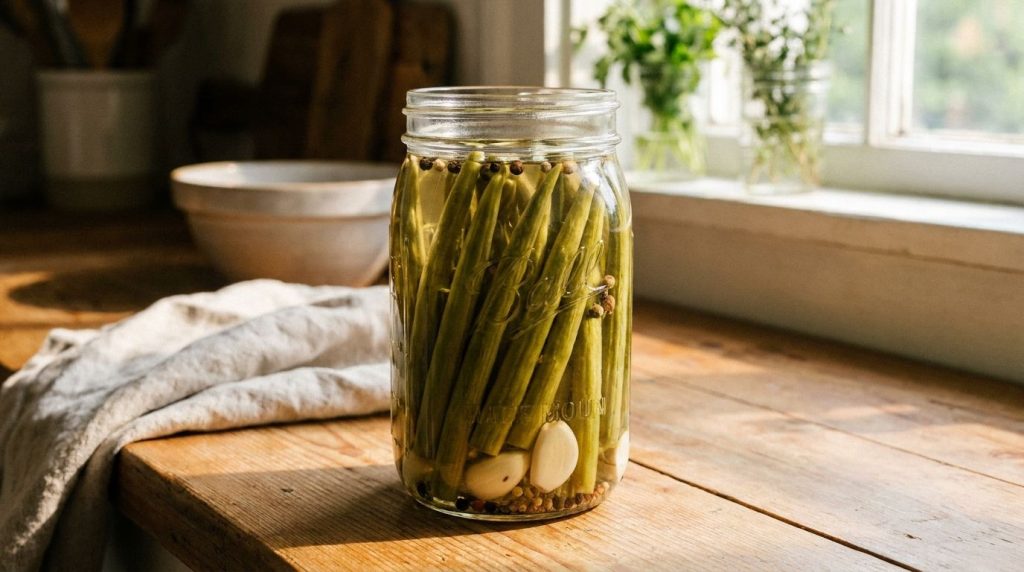
- Pack the spikes, garlic, peppercorns, and chili into a sterilized jar. Pour the hot brine over them, leaving 1 cm (1/2 inch) of headspace.
- Cool to room temperature, seal, and refrigerate.
How to Use
Chop two or three pickled spikes into green salads, grain bowls, or cream cheese spreads. They taste somewhere between green beans and a mild caper.
How Often to Use
Start with one spoonful per day and see how you feel. Treat the jar as an occasional condiment, not a daily routine.
Fresh vs Pickled vs Dried
| Version | Best Use | Shelf Life |
|---|---|---|
| Fresh spikes | Quick sautés or raw salad toppings | 1 to 2 days refrigerated |
| Pickled spikes | Condiments and snacks | 3 to 4 weeks refrigerated |
| Dried spikes | Tea or seed mixes | Up to 6 months in a sealed jar |
How to Choose Your Plants
Harvest only from lawns you know have not been treated with herbicides or pesticides. If you do not have a safe patch, grow broadleaf plantain in a pot with a clean, unsprayed soil mix. Avoid plants along busy roads, where exhaust residue can settle on leaves and stalks.
Storage
Keep the sealed jar in the refrigerator at all times. Use clean utensils every time you open it, and discard the jar if it smells off, grows mold, or the brine turns cloudy.
Practical Tips
Quick Tip: Pick spikes in the morning when stalks are firm and cool.
Did You Know? Plantain seeds were traditionally used in the kitchen as a thickener, which is why the spikes have a slightly soft, earthy bite.
Common Mistakes
- Picking spikes that are brown, dry, or half-collapsed.
- Boiling the spikes too long, which turns them mushy.
- Using a jar that was not cleaned and sterilized.
- Skipping the cold water step after blanching.
- Harvesting from sprayed lawns or roadside strips.
Cautions and Who Should Avoid It
Only harvest plants you can identify with confidence, and check a local foraging guide before you start. People with allergies to plantain or related plants should avoid it. Speak with a healthcare professional before adding it to your diet if you are pregnant, nursing, managing a medical condition, or taking medication. Start with small portions.
Quick Summary
Best preparation: Blanched and pickled in a vinegar brine. Best use: Chopped in salads, bowls, and spreads. Storage: Refrigerated for 3 to 4 weeks. When to use: Harvest green, firm spikes. What to avoid: Sprayed lawns, brown spikes, and unclean jars.
FAQ
Can I use fresh or dried spikes?
Fresh, young spikes work best for pickling. Dried spikes are better for tea or seed-based mixes.
How long does pickled plantain last?
Refrigerated and kept submerged in brine, it lasts about 3 to 4 weeks.
Can I store it at room temperature?
No. This recipe is a refrigerator pickle and should stay cold.
Can I freeze the spikes?
Blanched spikes can be frozen for up to 3 months, but they will soften and are better used in cooked dishes.
Can I reuse the leaves?
Leaves can be cooked as greens, but harvest them only from clean, unsprayed areas.
Which part is best?
The young green spike is the most tender. Avoid older, woody stalks.
When should I avoid it?
Avoid it if you have a known allergy, are pregnant or nursing without medical advice, or cannot confirm the plant is safe to eat.
You may also like: How to Identify Edible Wild Greens at Home.
Read more: Simple Herbal Vinegars You Can Make in One Afternoon.
See the full guide: Growing Safe Wild Edibles in Your Garden.
Final Thoughts
Plantain seed spikes are a simple, practical ingredient once you know what to look for. Pick them young, blanch them briefly, and keep the jar cold. With clean technique, a small jar can turn a common lawn weed into a useful kitchen staple.