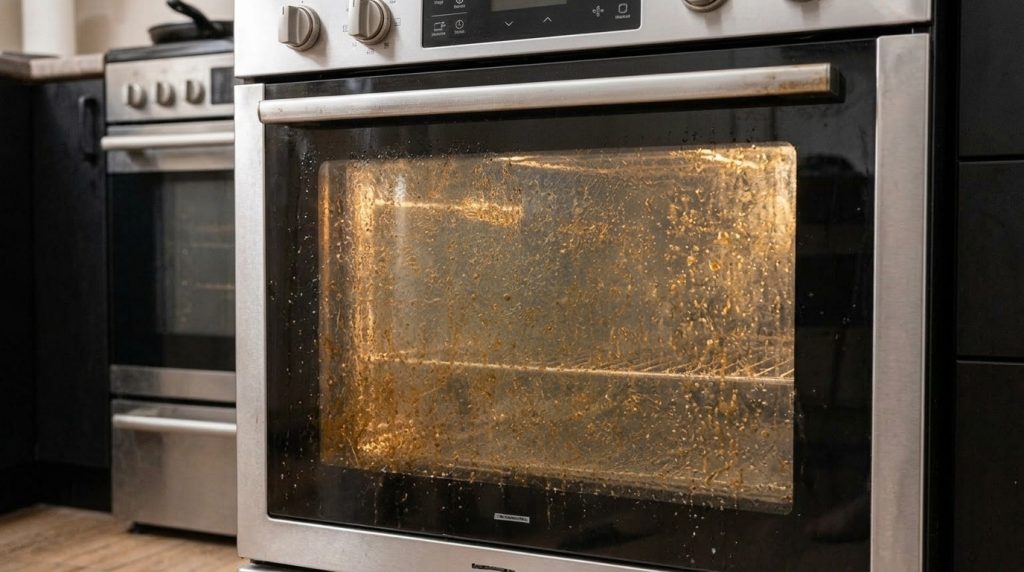
Baked-on grease in the oven, a sticky film over the range hood, a chalky ring around the faucet, and a fridge that smells a little off no matter how often you wipe it down. Most kitchens deal with all four. This guide walks you through three simple cleaning combinations built from everyday pantry staples, so you can tackle these problem spots without relying on harsh fumes.
What You’ll Need
Cleaning ingredients:
- Baking soda, about 1/2 cup for the oven paste
- Water, enough to form a spreadable paste
- White vinegar, about 1/2 cup for the faucet and fridge
- Warm water, about 2 cups for the range hood solution
- Dish soap, about 1 teaspoon
Tools:
- Small mixing bowl and spoon
- Non-scratch sponge or soft scrub brush
- Microfiber cloths
- Spray bottle
- Small plastic bag or cloth for the faucet
- Rubber gloves
Why These Ingredients Work
Baking soda is a mild abrasive, so it helps lift cooked-on residue when you let it sit and then scrub gently. White vinegar is mildly acidic, which makes it useful for loosening mineral deposits like the hard water ring around a faucet and for cutting through light odors. Dish soap breaks up grease, which is why it works well on range hood surfaces where cooking oil collects over time.
None of these ingredients should be mixed with each other in the same container for this method, and they should never be combined with bleach or ammonia-based cleaners.
How to Make It
- For the oven paste, add water a little at a time to the baking soda until it forms a thick, spreadable paste, similar to frosting.
- For the range hood solution, stir the dish soap into the warm water in a spray bottle. Add the white vinegar only if you want an extra cut through residue, and label the bottle clearly.
- For the faucet, pour some white vinegar into a small cup or bag that will hold it around the faucet head.
- For the fridge, set aside an open box of baking soda and prepare a separate bowl of warm water with a small splash of vinegar.
How to Use Them
Baked-On Oven Grime
Make sure the oven is completely cool and remove the racks. Spread the baking soda paste over the greasy areas, avoiding the heating elements. Let it sit for at least 30 minutes, or longer for heavy buildup. Scrub gently with a non-scratch sponge, wipe away the residue with a damp cloth, and rinse until no grit remains.
Greasy Range Hood
Turn off the range and wipe the surface with a cloth dampened in the dish soap solution. Work from the top down so drips do not run over areas you have already cleaned. For stubborn spots, let the solution sit for a few minutes before wiping. Rinse with a clean damp cloth and dry the surface completely.
Stubborn Faucet Stains
Dampen a paper towel or cloth with white vinegar and wrap it around the base of the faucet or over the stained area. Leave it in place for about 30 minutes. Remove it, scrub lightly with a little baking soda paste if needed, rinse well with water, and dry with a soft cloth to prevent new spots.
Fridge Odor
Remove shelves and drawers when possible and wash them with warm water and a few drops of dish soap. Wipe the interior with a cloth dampened in the vinegar solution, then dry thoroughly. Place an open box or bowl of baking soda on a shelf to help absorb lingering smells.
What to Expect
These methods work well for routine deep cleaning and light to moderate buildup. Very heavy, years-old grease in the oven may need a second round or a longer soak. Faucet stains that have been present for a long time may fade rather than disappear completely. Fridge odors often improve within a day or two of cleaning, but strong smells from spoiled food may need a more thorough removal.
Helpful Tips
- Clean the oven and range hood on a regular schedule so grease does not build into a hard layer.
- Test the faucet method on a small hidden spot first, especially on brushed nickel, gold, or lacquered finishes.
- Replace the baking soda in the fridge about every month for the best odor absorption.
- Use a microfiber cloth on range hoods and faucets to avoid streaks and scratches.
Important Notes and Safety
- Never mix vinegar with bleach or ammonia-based cleaners. Doing so can release harmful fumes.
- Keep the kitchen ventilated while cleaning, especially when using vinegar.
- Keep the oven paste away from heating elements and the oven fan area.
- Rinse all surfaces well after cleaning so no residue is left behind, especially near food.
- Wear rubber gloves to protect your skin from baking soda and vinegar.
- Store any leftover solution in a clearly labeled container away from children and pets.