Have you ever felt a sudden crash in energy a couple of hours after lunch? That rollercoaster is often linked to how quickly your body turns the carbohydrates you eat into blood sugar. The good news is that some everyday foods release their energy slowly, helping you feel focused and steady throughout the day. Understanding the glycemic index (GI) is a simple way to choose them.
What Is the Glycemic Index?
The glycemic index is a scale from 0 to 100 that ranks carbohydrate-containing foods by how much they raise blood sugar compared with pure glucose. Foods with a GI of 55 or lower are generally considered low GI. Lower GI foods are digested and absorbed more gradually, which can mean a gentler rise in blood sugar and a more even supply of energy.
Foods With Surprisingly Low GI Values
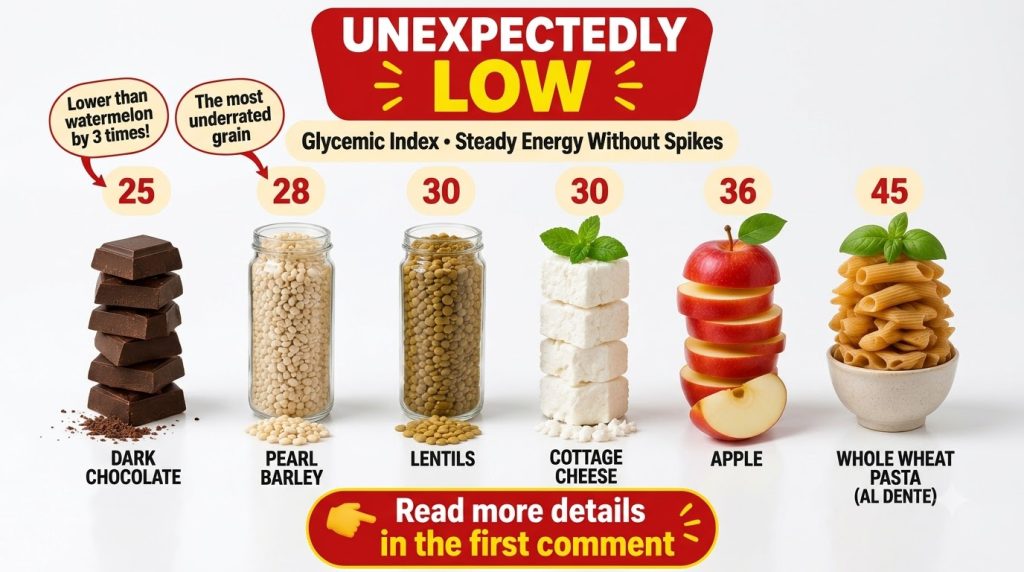
Many people assume that only sugary snacks cause blood sugar spikes, yet several common foods sit comfortably in the low GI range. Here are some standouts:
- Dark chocolate (around 25): Dark chocolate with a high cocoa content contains less sugar and more fiber and polyphenols than milk chocolate. A small square can satisfy a craving without a dramatic spike.
- Pearl barley (around 28): This chewy, mild grain is often overlooked. It is rich in soluble fiber, which slows digestion and supports fullness.
- Lentils (around 30): Packed with plant protein and fiber, lentils are a versatile base for soups, salads, and curries.
- Cottage cheese (around 30): Because it is high in protein and contains little available carbohydrate, cottage cheese pairs well with fruit or whole grain snacks to keep energy steady.
- Apples (around 36): The fiber in the fruit, especially pectin, helps moderate how quickly its natural sugars enter the bloodstream.
Why Low GI Foods Support Steady Energy
When a meal digests slowly, blood sugar tends to rise and fall more gently. This can help reduce mid-afternoon fatigue, cravings, and the urge to reach for another snack. Fiber, protein, and healthy fats all play a role, which is why combining foods often works better than eating a single item on its own.
Practical Ways to Use Low GI Foods
- Start your morning with oats or barley porridge topped with berries and a spoonful of nuts.
- Add lentils or pearl barley to soups and salads to make lunch more filling.
- Pair an apple with a source of protein, such as cottage cheese or a handful of almonds.
- Choose a small square of dark chocolate after dinner instead of a large dessert.
- Swap white pasta for whole wheat or al dente varieties and add plenty of vegetables.
Tips for Building Balanced Blood Sugar Habits
Low GI foods are most effective as part of an overall pattern. Aim to include fiber-rich vegetables, lean protein, and whole grains at most meals, stay hydrated, and move your body with a short walk after eating when possible. Keep in mind that GI values can vary with ripeness, cooking time, and portion size, so the way you prepare and combine foods matters.
Final Thoughts
Steady energy does not have to mean giving up the foods you enjoy. By choosing dark chocolate, pearl barley, lentils, cottage cheese, and apples more often, you can build meals that keep you satisfied and focused. If you have a medical condition such as diabetes or are managing blood sugar, speak with your healthcare provider or a registered dietitian for personalized guidance.