Heavy calves, buzzing nerves in the feet, ankles that feel like they’re wrapped in sandbags… tired legs are a very common “quiet” complaint.
Most people never realize how much relief can start simply from the feet.
Let’s turn this into a clear, safe routine you can try at home.
Ingredients for the Circulation Foot Soak
For one simple session you’ll need:
- 1 basin or large bowl that fits both feet
- Warm water – enough to cover your feet up to the ankles
- ½–1 cup apple cider vinegar (the bottle in the image)
- 1 tablespoon plant oil for after the soak
- Use the kind of golden kitchen oil shown in the spoon – something mild you already tolerate on your skin
That’s it. Just water, apple cider, and oil.
How to Prepare the Foot Soak
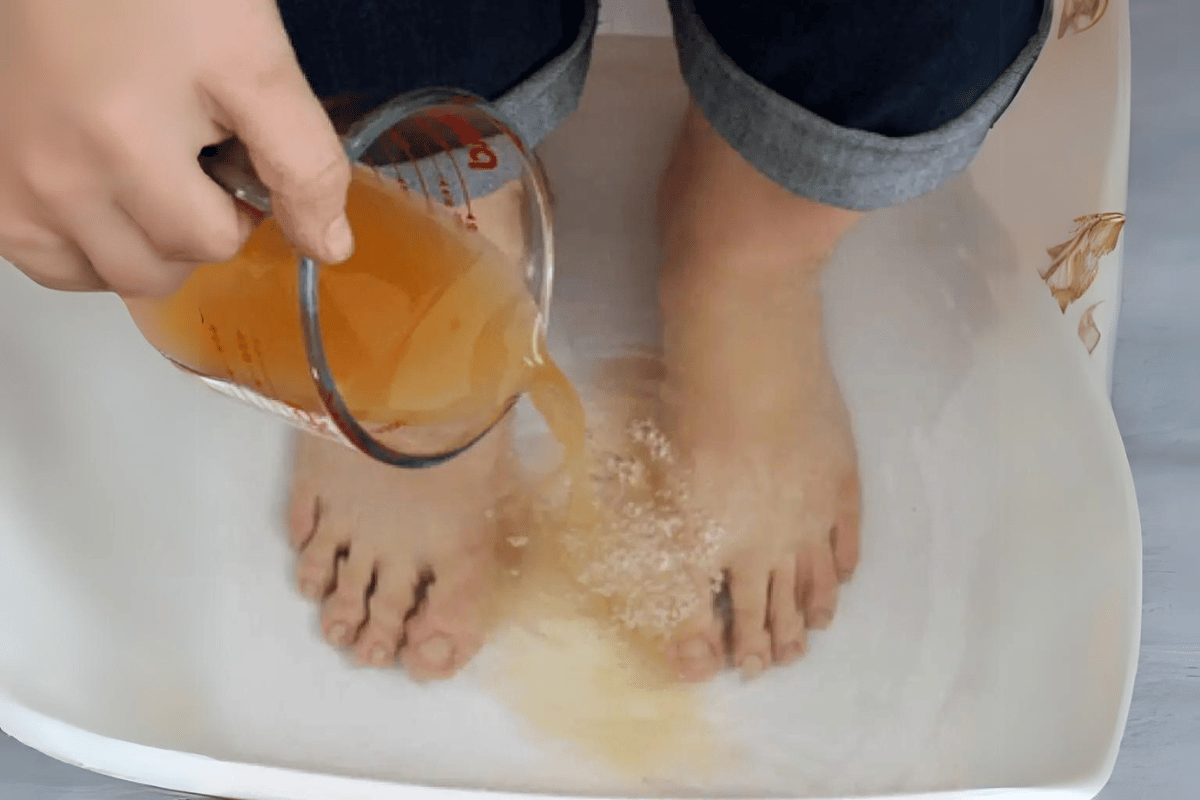
- Fill the basin with comfortably warm water – never scalding.
- Add the apple cider vinegar and swirl with your hand so it mixes evenly.
- Place a towel underneath your basin and keep another towel nearby to dry your feet.
- Have your oil ready for massage once you’re done soaking.
Whole setup time: about 3 minutes.
How to Use It + Best Time of Day
- Soak your feet in the warm apple cider mix for 15–20 minutes.
- While soaking, breathe slowly and relax your shoulders and jaw. This helps your vessels open up.
- When you’re done, dry your feet very well, especially between the toes.
- Put a little oil in your hands and massage your feet and calves:
- Use your thumbs to press and knead the soles.
- Slide your hands upward from ankle to knee to follow the path of the veins in your legs.
- Put on clean cotton socks to keep the warmth in.
Best times
- Evening, after a long day on your feet
- After travel or long sitting sessions
- On days when your legs feel heavy, cool, or restless
Why This Simple Routine Helps Your Legs
This ritual works on a few gentle levels:
1. Warm water for blood flow
Warmth naturally dilates blood vessels, drawing circulation down into the feet and back up the legs. That’s why your feet look pinker after a soak.
2. Apple cider for skin and comfort
Apple cider vinegar in the water can:
- Support a healthy skin barrier on the feet
- Help with odor and roughness
- Make the soak feel slightly stimulating and refreshing
It is not “detoxing your whole body,” but it does make the soak more active and comforting for the skin.
3. Oil massage for veins and nerves
Massaging with oil after the soak:
- Encourages upward movement of blood and lymph
- Calms the nervous system through touch
- Lets you work on key reflexology zones on the sole (like the areas traditionally linked with liver, kidneys and digestive organs in maps like the one shown)
Reflexology ideas come from traditional practice; science is still catching up. But most people agree that warm touch on the feet feels grounding and deeply relaxing.
Quick Notes, Safety & Simple Adjustments
- Check the temperature with your hand first; if it’s too hot for your hand, it’s too hot for your feet.
- Do not use this soak on:
- Open cuts, ulcers, or infected skin
- Freshly shaved or irritated areas
- If you have diabetes, serious circulation problems, varicose ulcers, or neuropathy, talk to your healthcare provider before doing any hot soaks or strong massage on the feet.
- Stop if you notice redness, burning, itching or pain and rinse your feet with plain lukewarm water.
- Keep expectations realistic: this can relieve heaviness and tension, but it does not replace medical treatment for clots, severe varicose veins, or heart issues.
Final Takeaway
A basin of warm water, a splash of apple cider, and a few minutes of mindful massage can turn heavy legs into something much lighter and more relaxed by the end of the evening.
Save this guide if you want to try the foot soak later – and share it with someone whose legs are begging for a little extra love tonight.