This no-flour, no-sugar banana bread is a simple one-pan recipe that cooks on the stovetop instead of in the oven. It uses ripe bananas for natural sweetness and a few pantry staples to create a soft, tender, and fluffy bread that works well for breakfast or an afternoon snack.
Why You’ll Love This Recipe
- Only a few ingredients: Bananas, eggs, and basic seasonings do most of the work.
- No flour and no added sugar: The natural sweetness comes from very ripe bananas.
- Stovetop method: You don’t need to heat the oven, which is handy on warm days.
- Quick cleanup: Most of the mixing happens in one bowl and the bread cooks in one skillet.
Ingredients
Quantities below are estimates, since the original recipe was shared as a video. Adjust the banana amount based on how sweet and moist you want the bread.
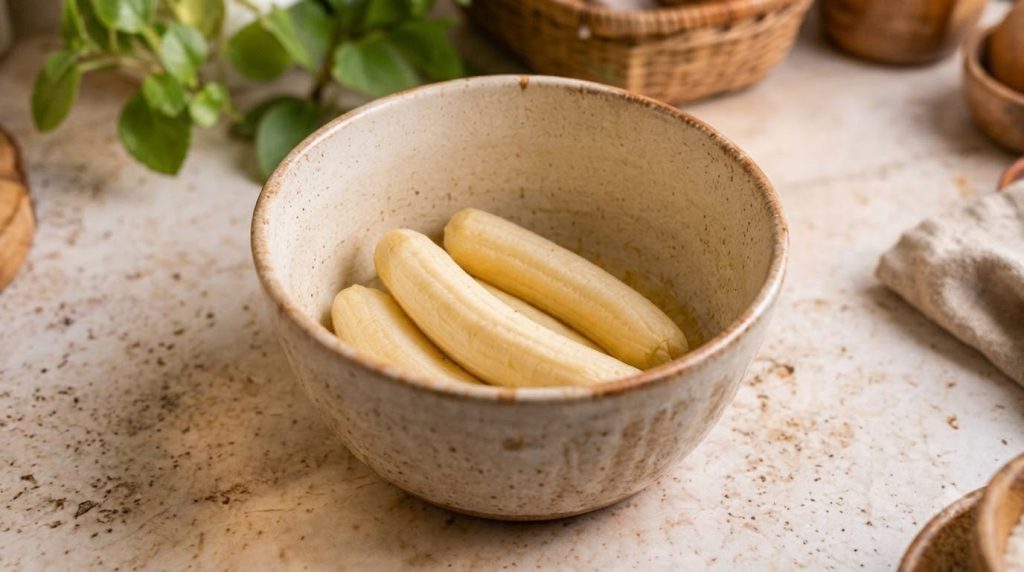
- 3 very ripe bananas (about 1 1/2 cups or 340 g mashed)
- 3 large eggs
- 1 teaspoon pure vanilla extract (5 ml)
- 1 teaspoon ground cinnamon (2 g)
- 1/2 teaspoon baking powder (2 g)
- Pinch of salt
- 1 tablespoon (15 g) butter or coconut oil, for greasing the pan
Ingredient Notes
Ripe bananas with brown or speckled skins are the key to this recipe. They are naturally sweet and soft, which helps the bread come together without flour or added sugar. Eggs bind the mixture and give it structure. Baking powder helps the bread rise and become lighter. If your bananas are not very ripe, the bread will taste less sweet and may be denser.
Equipment You’ll Need
- Medium mixing bowl
- Fork or potato masher
- Whisk
- 10-inch nonstick skillet with a tight-fitting lid
- Silicone spatula
- Thin spatula for flipping
How to Make No-Flour, No-Sugar Banana Bread
- Mash the bananas. Peel the bananas and place them in a medium bowl. Mash them with a fork until they are mostly smooth, with only a few small lumps. This takes about 2 to 3 minutes.
- Mix in the eggs. Add the eggs, vanilla, cinnamon, baking powder, and salt. Whisk for about 1 minute until the mixture is smooth, pale, and evenly colored. It should look like a thin, loose batter.
- Prepare the skillet. Place the skillet over medium-low heat and melt the butter or coconut oil. Spread it evenly across the bottom and up the sides with a paper towel if needed.
- Add the batter. Pour the batter into the skillet and spread it into an even layer about 1 inch (2.5 cm) thick. The batter will be soft, so use a spatula to smooth the top.
- Cook covered. Cover the skillet with the lid and cook on low to medium-low heat for about 10 to 12 minutes. Keep the heat low so the bottom does not brown too quickly before the center sets.
- Check for doneness. Lift the lid and look at the top. It should look set and no longer look wet. Insert a toothpick into the center. It should come out mostly clean or with a few moist crumbs. If the center is still very wet, cover and cook for another 2 to 3 minutes.
- Flip (optional) and cool. For a golden top, carefully slide the bread onto a plate and flip it back into the skillet to cook the other side for 2 to 3 minutes. Then transfer the bread to a cutting board and let it cool for about 10 minutes before slicing. Cutting it too early can make the center gummy.
Pro Tips for the Best Results
- Use bananas that are very ripe with dark spots, because they add more natural sweetness and moisture.
- Mash the bananas thoroughly before adding the eggs so the batter stays smooth.
- Keep the heat low. A high flame can scorch the bottom before the middle sets.
- Use a tight-fitting lid so steam stays inside and the bread cooks through evenly.
- Let the bread rest for about 10 minutes before cutting for cleaner slices.
Common Mistakes to Avoid
The bread is gummy in the middle. This usually happens when the heat is too high or the bread is cut before it cools. Cook on low heat and let it rest before slicing.
The bottom is burned but the top is wet. Your burner may be running too hot. Lower the heat and cover the pan so the top cooks through.
The bread tastes bland. Your bananas may not be ripe enough. Wait until the peels are heavily spotted, or add a small pinch more cinnamon.
Variations and Substitutions
- Add mix-ins: Fold in a small handful of chopped walnuts, dark chocolate chips, or unsweetened shredded coconut before cooking.
- Spice it up: Add a pinch of nutmeg or a little ground ginger in place of part of the cinnamon.
- Use a different fat: Olive oil or a neutral oil works in place of butter or coconut oil.
Serving Suggestions
Serve warm or at room temperature. Top slices with a spoonful of plain Greek yogurt, a drizzle of nut butter, or fresh berries. It also pairs well with a cup of coffee or tea for breakfast.
Storage and Reheating
Store leftover banana bread in an airtight container in the refrigerator for up to 3 days. For longer storage, wrap slices individually and freeze them for up to 1 month. To reheat, warm a slice in a dry skillet over low heat for 1 to 2 minutes per side, or microwave it for about 15 to 20 seconds. Freezing and reheating can change the texture slightly.
Frequently Asked Questions
Can I make this banana bread without eggs?
This recipe relies on eggs for structure. Egg-free versions usually need a different binder, so results will vary if you substitute.
Why does this recipe have no added sugar?
The bananas provide the sweetness. Very ripe bananas taste sweeter and blend easily into a batter, so the bread still tastes pleasantly sweet.
Can I make this banana bread in the oven instead?
You can pour the batter into a greased small loaf pan and bake it, but the baking time and temperature will differ from the stovetop method. Check it with a toothpick for doneness.
How do I know when the bread is done?
The top should look set, and a toothpick inserted in the center should come out mostly clean. Slight moistness in the center is normal for a soft, tender texture.
Can I double the recipe?
You can, but use a larger skillet and cook the bread a little longer. A thicker layer needs more time to set in the middle, so check it often.
What is your favorite way to enjoy banana bread? Share your go-to topping or add-in in the comments.