Garlic-infused oil is a gentle home idea for softening thick, rough skin on the feet around a painful corn. Raw garlic can irritate or burn the skin, so this method uses a mild, lightly infused oil instead.
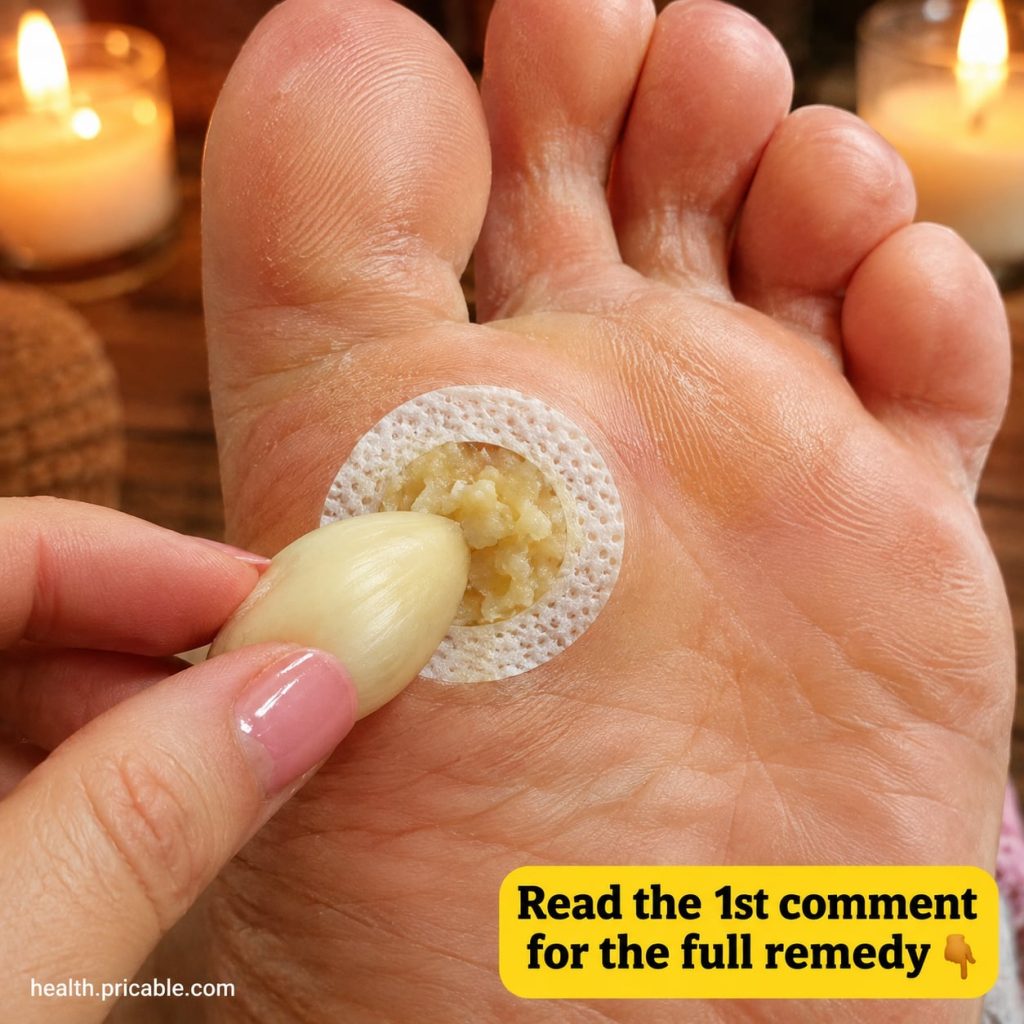
Quick Recipe
Prep time: About 15 minutes, plus cooling time
Best for: Rough, thickened skin on feet and painful corn areas
Use type: Oil
Main ingredients:
- 3 fresh garlic cloves
- 1/4 cup olive oil
- 1 teaspoon coconut oil, optional
Ingredients
- 3 fresh garlic cloves, peeled and lightly crushed
- 1/4 cup olive oil
- 1 teaspoon coconut oil, optional for a softer texture
- Warm water and a basin for a foot soak
- Clean cotton socks
How to Make It
- Add the crushed garlic cloves and olive oil to a small saucepan.
- Heat over very low heat for about 5 minutes. The oil should look warm and fragrant, not bubbling or browned.
- Remove from heat and let it cool completely.
- Strain out the garlic pieces and pour the oil into a clean, dry glass jar.
- Refrigerate the oil and use it within 4 days. Make a small batch each time.
How to Use It
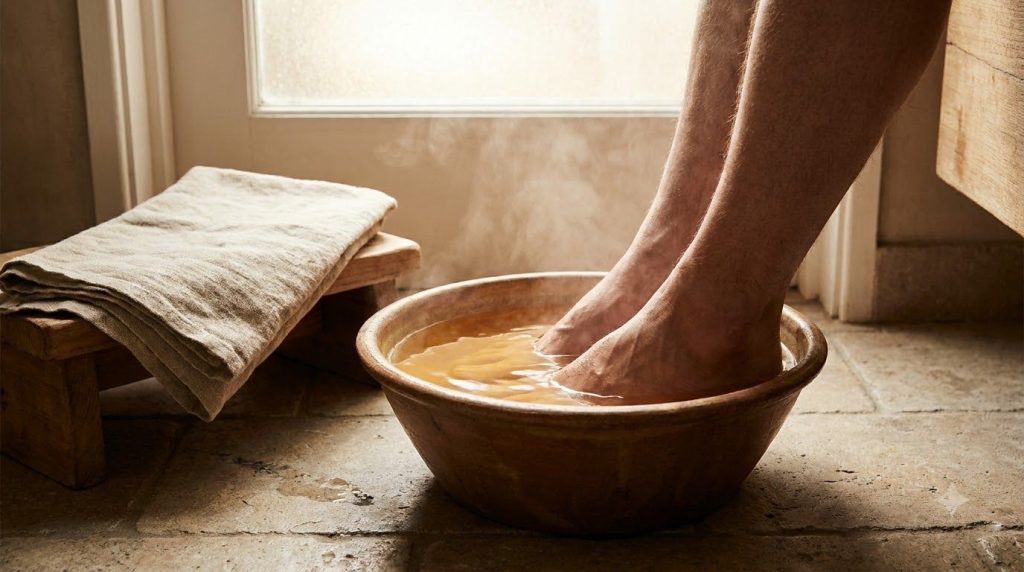
- Soak your feet in warm water for about 10 minutes to soften the skin.
- Pat your feet dry gently, especially between the toes.
- Apply a small amount, about one teaspoon, of the cooled garlic oil to the rough area around the corn.
- Massage lightly for 1 to 2 minutes. Avoid pressing hard on the corn.
- Wear clean cotton socks afterward and wash your hands well.
How Often to Use It
Use this remedy two to three times per week at most. Keep sessions short and stop if you notice burning, redness, or stinging.
Why These Ingredients Are Used
Garlic
Garlic is a traditional home ingredient often used in folk remedies. When infused gently into oil, it can add a fragrant, natural base to a softening routine.
Olive Oil
Olive oil is a common moisturizing base. It can help rough skin feel more supple and comfortable between care sessions.
Coconut Oil
Coconut oil is optional. It can give the blend a thicker, more nourishing feel on dry, hardened skin.
What Results to Expect
This remedy may help rough skin feel softer and more comfortable over time. It does not remove the root cause of a corn. Pressure from tight shoes is often the main reason corns return, so comfortable footwear matters just as much as any home care.
Safety Notes
- Patch test first for topical remedies by applying a small amount to the inner arm and waiting 24 hours.
- Use gently and never cut, shave, or dig at a corn at home.
- Avoid irritated or broken skin, blisters, cracks, or open sores.
- Stop using it if discomfort, burning, or redness occurs.
- Do not use this remedy if you have diabetes, poor circulation, numbness in the feet, or a foot infection. See a doctor or podiatrist instead.
- Store the oil in the refrigerator and discard it if it smells off, looks cloudy, or develops bubbles.
FAQ
Can garlic remove a corn completely?
Garlic oil is a home softening idea and cannot guarantee that a corn will disappear. Persistent corns should be checked by a podiatrist.
Why shouldn’t I put raw garlic directly on my feet?
Raw garlic can irritate or burn the skin. Infusing it into oil at low heat gives a milder option, but a patch test is still important.
How do I stop corns from coming back?
Choose shoes with enough room for your toes, wear cushioned socks, and reduce pressure on high-friction areas.
Final Thoughts
A warm foot soak and a small amount of garlic-infused oil can be a simple way to care for rough skin around a corn. Start slowly, watch how your skin responds, and seek professional care if the discomfort continues. If you have a favorite foot care routine, share it in the comments below.