Ever wondered how to get fresh aloe vera gel straight from the leaf? It is simpler than most people expect, and a little practice goes a long way. Fresh gel is a popular choice for home skincare and for adding a mild, cooling touch to certain homemade beverages. This guide walks you through choosing a leaf, cleaning it, and scraping out the gel safely.
Recipe Overview
Preparation time: 15 minutes
Draining time: 10 to 15 minutes
Total time: about 30 minutes
Yield: about 1/2 cup (120 ml) of gel from one medium leaf
Difficulty: Easy
Best use: Topical skincare after a patch test, or as a food-grade ingredient only when properly prepared and used in small amounts
Important Safety Notes Before You Start
Aloe plants contain a yellow layer just under the green skin called aloin, or latex. This substance can cause strong stomach cramps and diarrhea if swallowed, so removing it completely is essential. The clear inner gel is the part most people use.
- Do a patch test first. Rub a small amount of gel on your inner forearm and wait 24 hours. Stop using it if you notice redness, itching, or swelling.
- Do not use aloe gel on deep wounds, burns that need medical care, or irritated skin without first speaking with a healthcare professional.
- Avoid internal use if you are pregnant or breastfeeding, have digestive conditions, take medications, or have an allergy to plants in the lily family.
- Never drink raw aloe leaf juice or untreated gel. For drinks, choose commercial aloe products labeled as latex-free and food-grade instead.
Equipment Needed
- Cutting board
- Sharp paring or utility knife
- Stainless steel spoon
- Clean glass or bowl for draining
- Fine-mesh strainer
- Airtight glass container or ice cube tray
Ingredients
- 1 mature aloe vera leaf, about 8 to 10 inches (20 to 25 cm) long, from a plant at least three years old
- Cool running water, for rinsing
Step-by-Step Preparation
Step 1: Choose the right leaf. Pick a thick, firm, green outer leaf from the base of the plant. Avoid thin, pale, or soft leaves, which contain less gel. Cut the leaf close to the base using a clean knife.
Step 2: Rinse and dry. Rinse the leaf under cool water to remove dust. Pat it dry with a clean towel.
Step 3: Drain the latex. Stand the leaf cut-side down in a clean glass for 10 to 15 minutes. You will see a yellowish liquid drain out. Pour it away and rinse the leaf again.
Step 4: Trim the edges. Lay the leaf flat on the cutting board. Use the knife to trim the small spiky edges along both sides, cutting about 1/4 inch (6 mm) inward.
Step 5: Peel the green skin. Hold the leaf steady and slice off the top green layer with a shallow cut, starting at the wide end. Work carefully so you do not cut deeply into the gel. You should see a clear, slightly wet layer underneath.
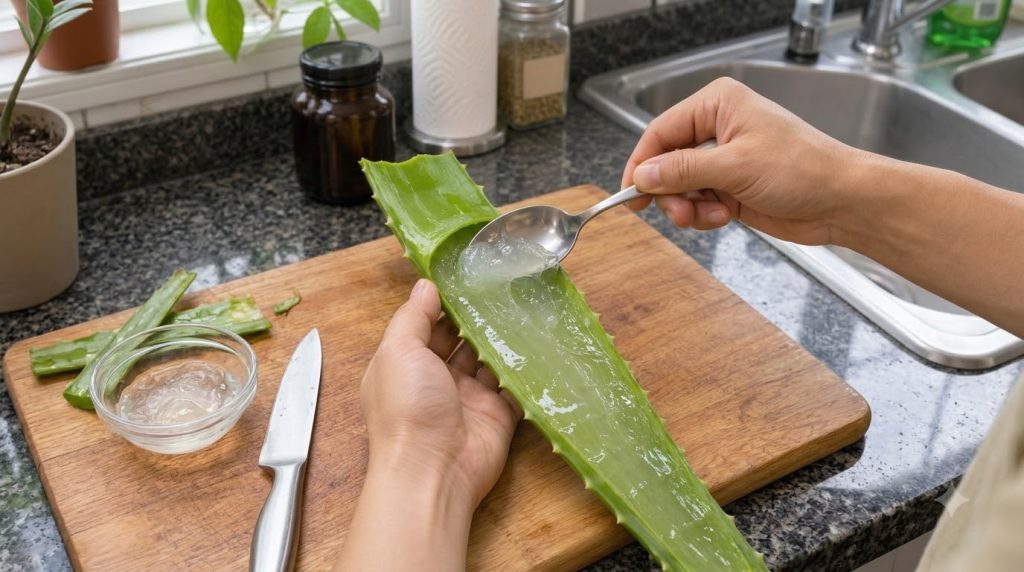
Step 6: Scrape the gel. Use a stainless steel spoon to scrape the clear gel from the peeled leaf into a bowl. Stop when you reach the thin green edge at the bottom. The gel should look translucent and glossy, with no yellow or green tint.
Step 7: Rinse the gel. Place the scraped gel in a fine-mesh strainer and rinse briefly under cool water. This removes any remaining latex and stray bits of skin. Drain for about 1 minute.
Step 8: Store. Transfer the gel to a clean, airtight glass container. Refrigerate it and use within 3 to 4 days for skincare. For longer storage, spoon the gel into an ice cube tray and freeze it for up to 3 months.
Ingredient Benefits
Aloe gel is mostly water and contains plant compounds such as polysaccharides, which give it a smooth, slippery texture. It has a very mild flavor, so it blends easily into other ingredients. The gel is commonly used in skincare for its moisturizing feel. Research on its effects is limited, and it should not be considered a treatment for any condition.
Expert Tips
- Use leaves from a healthy, mature plant. Younger plants produce less gel and more latex.
- Work on a clean board and wash your hands before handling the leaf.
- Keep the gel cool while you work to slow spoilage.
- Freeze gel in small portions so you can thaw only what you need.
- Label your container with the date so you know when to discard it.
Recipe Variations
- Skincare gel: Use the rinsed gel as-is on clean skin, after a patch test. Store it refrigerated.
- Mild cooling water: Add a very small spoonful of properly prepared, latex-free gel to a glass of cool water with cucumber slices. Use only if you have read the safety notes above.
- Simple blend: Mix a teaspoon of gel with plain yogurt for a light topical mask, leaving it on for only a few minutes before rinsing.
Best Time to Enjoy
Freshly scraped gel works best for skincare in the morning or evening, after cleansing. If you prepare a cool drink, enjoy it as a refreshing option during warm afternoons, while keeping in mind the safety guidance above.
Storage and Shelf Life
Fresh gel can be refrigerated for 3 to 4 days in an airtight glass container. Discard it if it smells sour, develops an off color, becomes slimy, or shows any mold. Frozen gel keeps well for up to 3 months, although its texture may become slightly watery after thawing. Thaw cubes in the refrigerator rather than at room temperature.
Safety Precautions
Aloe is not a substitute for medical care. Stop use and seek advice if you experience skin irritation, allergic symptoms, stomach upset, or any unusual reaction. Keep all aloe products away from children and store them out of direct sunlight.
Common Mistakes
- Skipping the latex drain: Always stand the leaf upright for 10 to 15 minutes and rinse it well to avoid the yellow residue.
- Cutting too deeply: Shallow peeling keeps the gel clean and prevents green skin from mixing in.
- Storing too long: Fresh gel spoils quickly at room temperature, so refrigerate it promptly or freeze it.
- Skipping the patch test: Sensitive skin can react to any plant, so always test first.
FAQs
Can I drink fresh aloe gel? Raw homemade aloe is not recommended for drinking because of the risk of latex residue. Use commercial, latex-free, food-grade products for beverages.
Can I use the gel on my face? Many people use it on clean skin after a patch test. If your skin is sensitive or irritated, check with a dermatologist first.
How do I know the leaf is ready? A thick, firm, green leaf from a mature plant usually yields the most gel. Avoid leaves that look thin, wilted, or discolored.
Does the gel need to be cooked? No. Fresh gel is used raw for skincare, and you should not cook it for food use.
Conclusion
Harvesting fresh aloe vera gel is a practical skill that takes less time than you might think. With careful draining, shallow peeling, and thorough rinsing, you can enjoy clean, fresh gel for skincare at home. Always prioritize safety, skip the latex, and talk with a professional before using it on irritated skin or in any drink.