Roses are one of the most rewarding plants in any yard, but they can also be demanding. Aphids cluster on tender new growth, Japanese beetles arrive in midsummer, and spider mites thrive during hot, dry spells. Many gardeners reach for sprays first, yet a smarter long-term strategy is to build a supportive planting community around your roses. The right companion plants can draw pollinators and predatory insects, add habitat diversity, and keep the soil covered and biologically active. Companions won’t replace good rose care, but they can make your beds more resilient and far more enjoyable to work in.
How Companion Planting Really Works
Companion planting is most useful when you understand what each plant contributes. Some companions bloom for weeks, giving adult pollinators and beneficial insects a food source. Others host tiny predatory insects such as lacewings, hoverflies, and parasitic wasps, which feed on aphids and other soft-bodied pests. Some plants simply make it harder for pests to find roses by adding visual and scent variety. None of these effects guarantees pest control, but together they create a balanced garden where problems are less likely to explode.
Soil health matters too. Mulched, living groundcovers reduce soil splash and weed competition, while deep-rooted herbs and perennials help loosen compacted soil over time. Roses prefer loamy, well-drained soil with a pH of about 6.0 to 6.5, so choose companions that tolerate the same conditions.
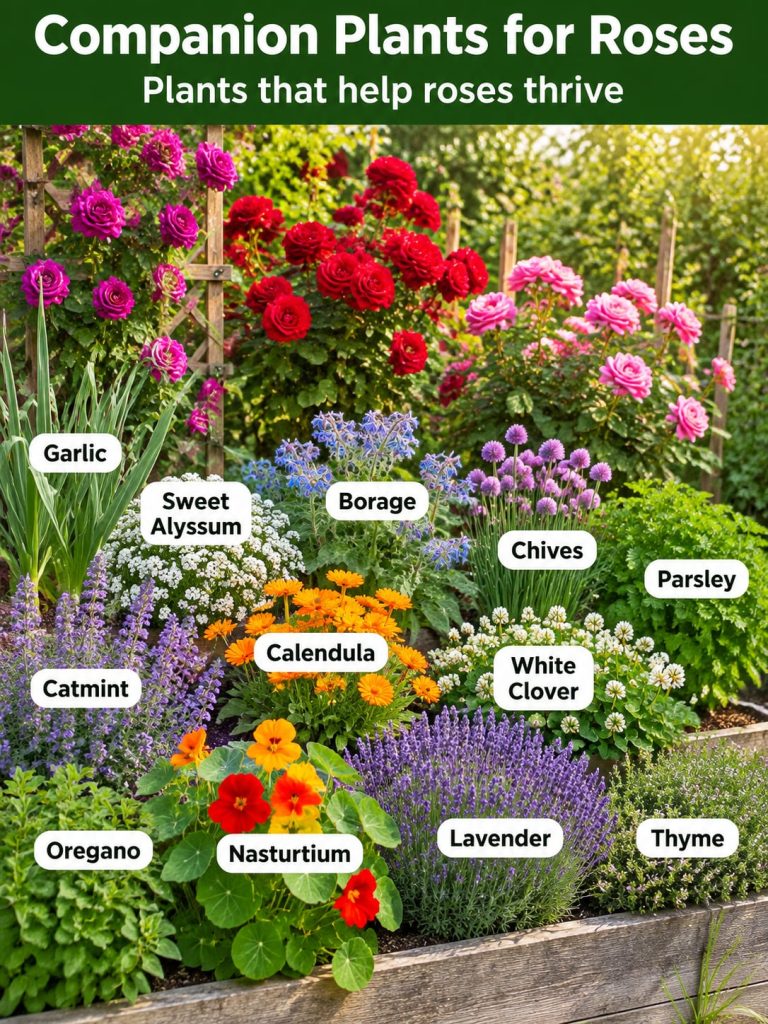
The 12 Best Companion Plants for Roses
1. Garlic (Allium sativum)
Garlic is hardy in USDA zones 3 through 9 and is planted as cloves in fall for a summer harvest in most regions. Plant cloves about 2 inches deep and 6 inches apart along the edge of the rose bed. Its strong scent may confuse some pests, though research on garlic as a repellent is mixed. Avoid overwatering garlic, which invites bulb rot.
2. Chives (Allium schoenoprasum)
Chives grow in zones 3 through 9 and form tidy clumps about 12 inches tall. Their purple pompom flowers attract bees and hoverflies in late spring. Divide clumps every three to four years to keep them vigorous. Snip flowers off after blooming if you want a longer harvest of leaves.
3. Lavender (Lavandula angustifolia)
English lavender is typically hardy in zones 5 through 8 and loves full sun and sharp drainage. It is one of the best pollinator plants you can grow beside roses. Space plants 18 to 24 inches apart, and avoid heavy clay without raised beds. Prune lightly in spring, never cutting into old woody stems, which may not regrow.
4. Catmint (Nepeta x faassenii)
Catmint is hardy in zones 3 through 8 and blooms for much of summer. Its blue-violet flowers draw bees and beneficial insects, and its low, spreading habit softens the base of tall roses. Shear plants back by about half after the first flush of bloom to encourage a second round of flowers.
5. Sweet Alyssum (Lobularia maritima)
Sweet alyssum is usually grown as a cool-season annual, though it can behave as a short-lived perennial in mild climates. Its tiny white or purple flowers provide nectar for hoverflies and small parasitic wasps. Sow seed directly in the garden two to three weeks before your last frost, and deadhead lightly to keep it blooming.
6. Marigold (Tagetes patula)
French marigolds are annuals in all zones and bloom from early summer until frost. Their nectar supports beneficial insects, and their open flowers add color around rose beds. Marigolds are often promoted for nematode control, but results depend on the species and on dense, long-term planting, so treat them as one helpful part of a broader plan. Plant seedlings in full sun after nights stay above 50°F.
7. Nasturtium (Tropaeolum majus)
Nasturtiums are annuals that tolerate poor soil and bloom from summer until frost. Aphids often prefer nasturtium to roses, so these plants can work as a trap crop. Check the undersides of nasturtium leaves weekly and remove heavily infested stems. Sow seeds 1 inch deep, and avoid rich fertilizer, which encourages leaves instead of flowers.
8. Borage (Borago officinalis)
Borage is an annual that self-seeds freely in most of the United States. Its blue star-shaped flowers are a favorite of honeybees and bumblebees. The plant grows 2 to 3 feet tall and can sprawl, so give it room at the back of the bed. Thin seedlings to about 18 inches apart to improve airflow around nearby roses.
9. Yarrow (Achillea millefolium)
Yarrow is a hardy perennial in zones 3 through 9 with flat clusters of flowers that attract predatory insects such as lacewings and hoverflies. It is drought tolerant once established and does well in lean soil. Yarrow can spread vigorously, so plant it where it has room or cut back spreading clumps each spring.
10. Dill (Anethum graveolens)
Dill is a fast annual that flowers in mid to late summer and draws many beneficial insects. Sow seeds directly in the garden after the last frost and succession-sow every three weeks for a steady supply. Keep dill away from fennel, which can cross-pollinate and reduce flavor. Harvest leaves regularly to keep plants compact.
11. Thyme (Thymus vulgaris)
Garden thyme grows in zones 5 through 9 and forms a low mat that shades soil and suppresses weeds. Its tiny flowers feed small pollinators in early summer. Thyme needs excellent drainage, so plant it on a slight slope or in raised soil. Cut stems back by one third after flowering to keep plants dense.
12. Salvia (Salvia nemorosa)
Salvia is a hardy perennial in zones 4 through 8 with spikes of purple or blue flowers that bees love. Deadhead spent spikes to encourage repeat bloom, and cut plants back to a few inches above the ground in early spring. Give salvia full sun and good airflow to reduce fungal issues.
Setting Up Your Rose Companion Bed
Start by checking your roses’ basic needs. Most roses need at least six hours of direct sun daily, and they perform best when leaves dry quickly after rain or watering. Plant companions at least 12 to 18 inches from the rose base so roots and air can move freely. Use shorter companions such as thyme, catmint, and alyssum at the front of the bed, and place taller plants like salvia, borage, and dill toward the back.
Water at the soil line rather than overhead. Insert a finger into the soil about 3 inches deep. If it feels dry, water deeply until moisture reaches the root zone. Apply 2 to 3 inches of shredded bark or compost mulch, keeping it a few inches away from rose canes to reduce rot and pest hiding spots.
Common Mistakes to Avoid
- Planting companions too close together, which blocks airflow and encourages mildew on roses.
- Overwatering thyme, lavender, and yarrow, which often prefer drier soil.
- Using broad-spectrum pesticides that also remove the beneficial insects you are trying to attract.
- Ignoring aphids on nasturtium or marigold leaves, which can become a source of pests rather than a trap.
- Choosing plants that spread aggressively, such as yarrow or borage, without a plan to contain them.
Regional Notes for U.S. Gardeners
In zones 3 through 5, choose hardy perennials like chives, catmint, yarrow, and salvia, and plant annuals such as dill and borage only after soil warms in late spring. In zones 6 through 8, you can grow a wider mix, including lavender and thyme, while watching for humid summers that increase fungal disease. In zones 9 through 11, many companions behave differently. Lavender may struggle with heat and humidity, and some annuals should be planted in cooler parts of the season. USDA zones measure winter cold tolerance, not summer heat or rainfall, so check local frost dates and contact your state cooperative extension office for timing advice.
Your Next Steps
Start small. Choose three or four companions that match your sunlight and soil, plant them around one rose bush, and watch the bed for two months. Look for pollinators, check the undersides of leaves for aphids, and note where airflow feels restricted. Over time, you will learn which combinations thrive in your yard. Share your favorite companion combinations in the comments, and enjoy the satisfaction of a rose garden that supports itself.