6 Homemade Pizza Sauce Recipes: Your Ultimate Guide
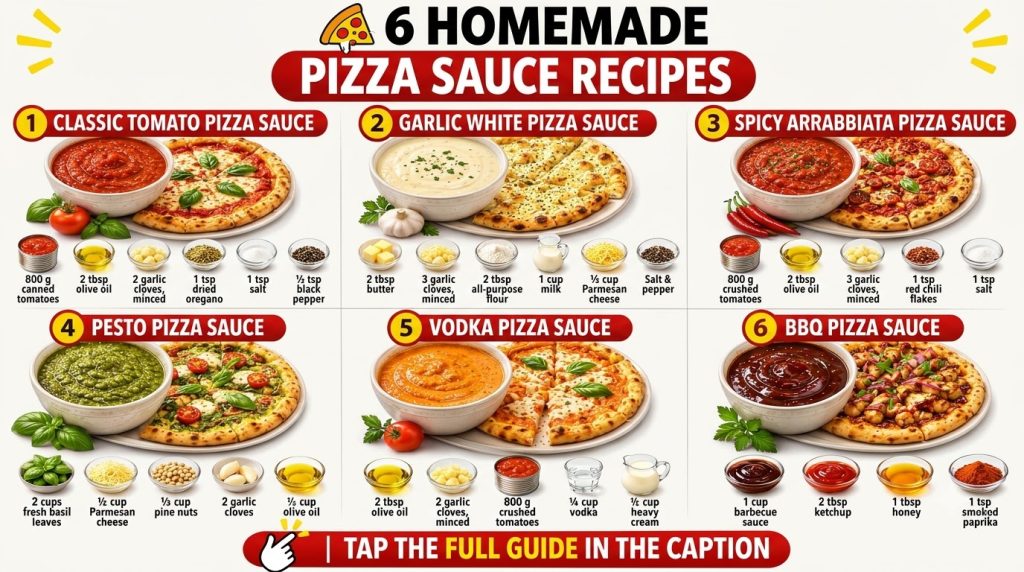
The sauce sets the tone for the whole pizza, and a good homemade version can turn a simple cheese pizza into a meal worth repeating. This guide covers six homemade pizza sauces, from a classic tomato base to white garlic, pesto, barbecue, spicy arrabbiata, and buffalo. Most take 5 to 20 minutes to make, so you can pick a favorite for your next pizza night.
Why Make Your Own Pizza Sauce?
- Most ingredients are common pantry staples.
- You control the salt, sugar, and spice level.
- Each sauce suits different toppings and crusts.
- Homemade sauce is easy to make ahead and store.
Before You Start
Each recipe below makes enough sauce for one 12-inch pizza, or two smaller pizzas. You will need a small saucepan or bowl, a spoon, and a fine-mesh sieve if you want a smoother texture. Taste the sauce before spreading it on dough, because salt levels vary by brand.
1. Classic Tomato Pizza Sauce
This is the everyday sauce that works with almost any topping.
- 1 can (14.5 oz / 411 g) crushed tomatoes
- 1 tbsp (15 ml) olive oil
- 1 clove garlic, minced
- 1/2 tsp dried oregano
- 1/2 tsp salt, plus more to taste
- Pinch of sugar and black pepper
- Heat the olive oil in a small saucepan over medium-low heat for about 30 seconds.
- Add the garlic and cook for 30 to 60 seconds, until fragrant but not browned.
- Stir in the tomatoes, oregano, salt, sugar, and pepper.
- Simmer uncovered for 10 to 15 minutes, stirring now and then, until the sauce thickens slightly.
2. White Garlic Olive Oil Sauce
This creamy, mild sauce works well on white pizzas with mozzarella and vegetables.
- 3 tbsp (45 ml) olive oil
- 3 cloves garlic, finely minced
- 1/2 cup (120 g) ricotta cheese
- 1/4 cup (25 g) grated Parmesan
- 1 tsp lemon zest
- Salt and black pepper
- Warm the olive oil in a small pan over low heat, then add the garlic.
- Cook gently for about 1 to 2 minutes, until the garlic smells sweet and turns pale gold. Do not let it brown.
- Remove from the heat and whisk in the ricotta, Parmesan, lemon zest, salt, and pepper until smooth.
3. Basil Pesto Pizza Sauce
Pesto brings bright, herby flavor without any cooking.
- 2 cups (60 g) fresh basil leaves, packed
- 1/3 cup (35 g) grated Parmesan
- 1/4 cup (30 g) walnuts or pine nuts
- 1 small clove garlic
- 1/3 cup (80 ml) olive oil
- Salt to taste
- Pulse the basil, nuts, garlic, and Parmesan in a food processor until finely chopped.
- With the motor running, slowly drizzle in the olive oil until the mixture is spreadable.
- Season with salt. Spread it thinly, since pesto is strong.
4. Smoky Barbecue Pizza Sauce
This sauce pairs well with chicken, red onion, and cheddar or mozzarella.
- 1/2 cup (120 ml) ketchup
- 1/4 cup (55 g) packed brown sugar
- 2 tbsp (30 ml) apple cider vinegar
- 1 tbsp (15 ml) Worcestershire sauce
- 1/2 tsp smoked paprika
- 1/4 tsp garlic powder
- Combine all the ingredients in a small saucepan.
- Simmer over medium-low heat for about 5 to 8 minutes, stirring often, until the sugar dissolves and the sauce is glossy.
- Cool slightly before spreading, since it can be very sticky.
5. Spicy Arrabbiata Pizza Sauce
Arrabbiata means angry in Italian, and this sauce lives up to the name. Adjust the chili flakes to your heat preference.
- 1 can (14.5 oz / 411 g) crushed tomatoes
- 2 tbsp (30 ml) olive oil
- 2 cloves garlic, sliced
- 1/4 to 1/2 tsp red pepper flakes
- 1/2 tsp salt
- Fresh basil, optional
- Warm the olive oil over medium-low heat, then add the garlic and red pepper flakes.
- Cook for about 1 minute, until the garlic is lightly golden and the oil smells fragrant.
- Add the tomatoes and salt, then simmer for 10 to 12 minutes until thickened.
- Stir in torn basil just before using, if you like.
6. Buffalo Pizza Sauce
This tangy sauce is ideal for chicken pizzas and game-day menus.
- 1/4 cup (60 ml) hot sauce, such as a cayenne-based hot sauce
- 2 tbsp (28 g) unsalted butter, melted
- 1/4 tsp garlic powder
- 1 tsp honey, optional
- Whisk the melted butter into the hot sauce until blended.
- Add the garlic powder and honey, if using, and stir until smooth.
- Use right away or keep warm for brushing onto the crust.
Pro Tips for Better Pizza Sauce
- Use a whole can of tomatoes for the tomato-based sauces so you have leftovers for other recipes.
- Keep sauces thick so the crust does not get soggy.
- Spread only a thin layer of sauce, especially with pesto and barbecue.
- Let simmered sauces cool for a few minutes before spreading them on dough.
Common Mistakes to Avoid
Burnt garlic gives a bitter taste, so keep the heat low and watch it closely. Too much sauce makes the center of the pizza wet, so go light. Skipping the taste test is another common issue, since salt and sugar levels vary widely between products.
Variations and Substitutions
- Swap the crushed tomatoes for fresh tomatoes that have been peeled and simmered until soft.
- Use cashews or sunflower seeds instead of pine nuts in pesto.
- Add a pinch of dried oregano or chili flakes to any sauce for extra flavor.
Serving Suggestions
Match each sauce to its toppings. Use tomato or arrabbiata with mozzarella and pepperoni, white garlic with vegetables, pesto with tomatoes and goat cheese, barbecue with chicken, and buffalo with shredded chicken and blue cheese or ranch.
Storage and Reheating
Store leftover sauce in a sealed container in the refrigerator and use it within about 4 to 5 days. Most tomato, barbecue, and buffalo sauces can be frozen in small portions for up to 3 months. Pesto and white garlic sauce are best used fresh, since their texture and color change more after storage.
Frequently Asked Questions
Can I make pizza sauce ahead of time?
Yes. Tomato, barbecue, and arrabbiata sauces can be made a day or two ahead. Cool them completely, then refrigerate in a sealed container.
Can I freeze homemade pizza sauce?
Tomato, barbecue, and arrabbiata sauces freeze well. Pesto and ricotta-based white sauce are better used fresh.
Why is my pizza sauce watery?
Canned tomatoes can be very juicy. Simmer the sauce longer until it thickens, and avoid spreading too much on the dough.
Can I use jarred sauce instead?
Yes. Jarred marinara works for a quick pizza, but check the label for salt and sugar levels, and taste before using.
Which sauce is best for beginners?
The classic tomato sauce is the easiest starting point because it needs only a few ingredients and one short simmer.
Which Sauce Will You Try First?
Start with the classic tomato sauce, then try one of the bolder options on your next pizza night. Tell us in the comments which sauce you like best.