Feeling tired, run down, or low on energy? Iron is one of the nutrients your body relies on to carry oxygen through your blood and keep your muscles and brain working well. The good news is that you do not need expensive supplements to get more of it. A varied plant-based diet can include plenty of iron-rich foods, from humble lentils and leafy greens to crunchy nuts and sweet dried fruit.
Quick Answer: Which Foods Are Highest in Iron?
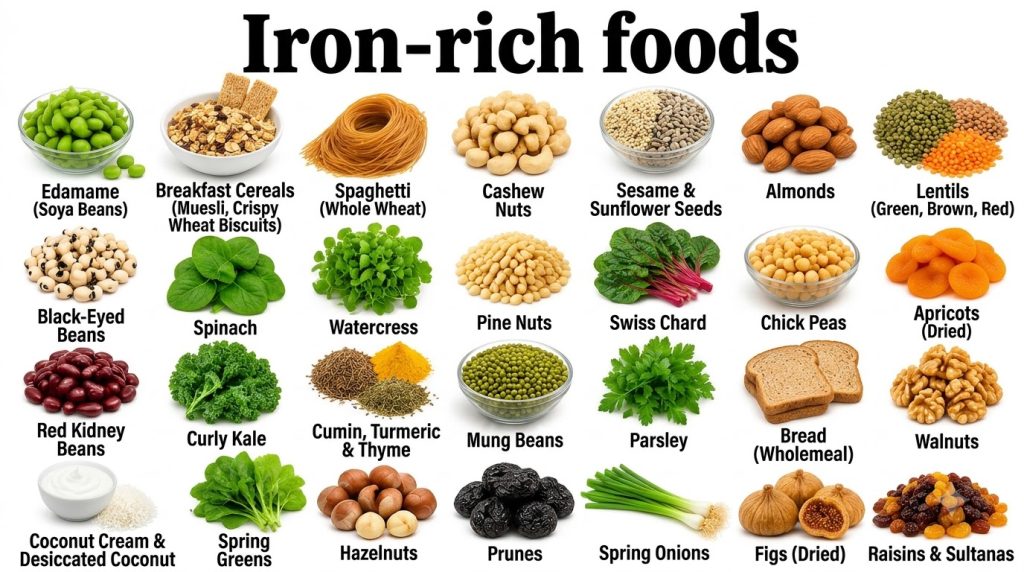
The most useful iron sources for everyday meals include lentils, spinach, Swiss chard, kale, chickpeas, kidney beans, edamame, pumpkin and sesame seeds, cashews, almonds, dried apricots, prunes, and fortified whole grains. Combining several of these foods across the day is an easy way to build a steady intake.
Two Types of Iron You Should Know About
Iron in food comes in two forms. Heme iron is found in animal foods and is absorbed more efficiently. Non-heme iron comes from plants such as the foods in this guide. Your body absorbs non-heme iron less efficiently, but you can improve absorption with a few simple habits.
- Pair iron-rich plants with vitamin C sources such as bell peppers, citrus, tomatoes, or strawberries.
- Limit tea and coffee during iron-rich meals, since their compounds can reduce absorption.
- Soak, sprout, or cook beans and lentils thoroughly to improve digestibility.
Legumes: The Budget-Friendly Iron Powerhouses
Lentils are one of the easiest ways to add iron to your diet. One cup of cooked lentils provides roughly 6 to 7 milligrams of iron, which is a substantial portion of the daily target for many adults. Chickpeas, kidney beans, black-eyed beans, and mung beans offer similar benefits and work well in soups, salads, and curries.
Leafy Greens and Vegetables
Cooked spinach is a classic iron source, providing about 6 milligrams per cup. Swiss chard, kale, and watercress also contribute useful amounts. Because spinach contains compounds that reduce iron absorption, varying your greens with kale, chard, and broccoli can help you get more from your meals.
Nuts and Seeds for Snacking
Nuts and seeds are convenient additions to your day. Cashews, almonds, pine nuts, walnuts, and hazelnuts all contribute iron along with healthy fats and protein. Sesame and sunflower seeds are especially useful because a tablespoon of sesame seeds can add more than one milligram of iron. Try a small handful as a snack or sprinkle seeds over salads and oatmeal.
Dried Fruits for Natural Sweetness
Dried apricots, prunes, figs, and raisins offer iron along with fiber and natural sugars. They are best enjoyed in small portions, such as a few pieces mixed into oatmeal or trail mix. Pairing dried fruit with nuts provides a satisfying snack that combines several iron sources.
Sample Iron-Boosting Day
- Breakfast: Fortified whole grain cereal with a handful of almonds and sliced strawberries.
- Lunch: Lentil salad with spinach, cherry tomatoes, and a lemon dressing.
- Snack: Dried apricots and cashews.
- Dinner: Chickpea and kale stew served with a side of bell pepper strips.
Practical Tips for Everyday Meals
- Add a cup of lentils to soups or pasta sauces.
- Stir spinach or kale into eggs, rice, or stir-fries near the end of cooking.
- Keep a jar of mixed seeds and nuts for quick snacks.
- Choose whole grain bread and pasta over refined versions.
When to Talk With a Professional
Some people need more iron than others, including pregnant women, teenagers, and those who lose blood regularly. Symptoms such as persistent fatigue, shortness of breath, or pale skin deserve a medical evaluation. A doctor or registered dietitian can check your levels and recommend the right approach before you start any supplement.
Explore More on Our Site
If you enjoyed this guide, continue learning with our articles on healthy meal prep, plant-based protein ideas, and simple recipes that make nutritious eating easier. Small, consistent changes to your daily plate can make a meaningful difference over time.