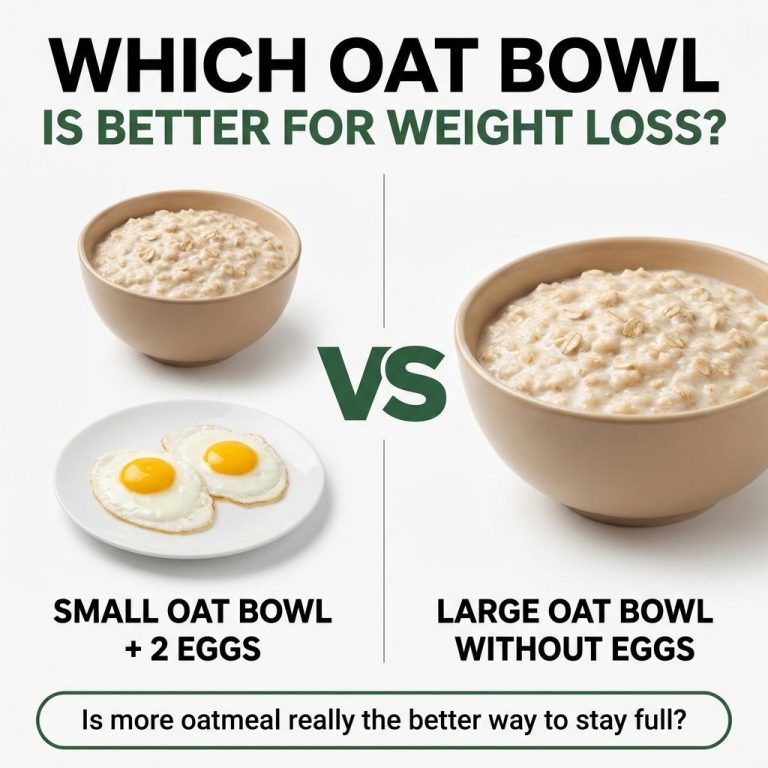
Ever wondered which breakfast truly keeps you full until lunch and supports your weight loss goals? The answer may surprise you. It is not only about how much oatmeal you eat, but about what you pair with it and how your meal is built.
Why Breakfast Matters for Fullness
Satiety is the feeling of being satisfied after a meal, and it plays a major role in how much you eat for the rest of the day. When breakfast leaves you feeling satisfied, you are less likely to reach for sugary snacks mid-morning or overeat at lunch.
Three nutrients have the biggest influence on how full you feel:
- Protein, which slows digestion and helps signal fullness to the brain.
- Fiber, which adds bulk and keeps blood sugar more stable.
- Healthy fats, which take longer to digest and extend satisfaction.
Oatmeal: A Fiber-Rich Foundation
Plain oats are a whole grain packed with soluble fiber, especially beta-glucan. This type of fiber forms a gel in the stomach, which can help you feel fuller for longer. Oats also provide complex carbohydrates that release energy gradually.
However, a standard serving of oatmeal is relatively low in protein. Many instant or flavored varieties also contain added sugars, which can cause quicker hunger after the initial energy spike wears off.
Eggs: A Protein-Powered Start
Eggs are one of the most complete protein sources available. A single large egg provides roughly 6 grams of high-quality protein along with healthy fats, vitamin D, choline, and B vitamins. Because protein has a strong effect on appetite hormones, eggs are often linked with longer-lasting fullness.
The Unexpected Key: Combine Them
The most effective approach is rarely choosing one over the other. Combining fiber-rich oats with protein-rich eggs creates a balanced meal that supports steady energy and satiety. Here are a few practical ideas:
- Stir a spoonful of Greek yogurt or cottage cheese into warm oatmeal for an extra protein boost.
- Serve a small bowl of oats alongside two scrambled eggs and sautéed spinach.
- Make overnight oats with chia seeds and top with a soft-boiled egg for a savory twist.
- Prepare a batch of egg muffins with vegetables on Sunday to make weekday mornings easier.
Tips for Building a Satisfying Breakfast
- Aim for roughly 20 to 30 grams of protein at breakfast.
- Choose plain oats and add fruit, cinnamon, or nuts for natural sweetness.
- Include a source of fiber such as berries, vegetables, or seeds.
- Eat slowly and pay attention to your hunger cues.
The Bottom Line
Oatmeal and eggs both have a place in a healthy breakfast. Oats deliver fiber and sustained energy, while eggs contribute protein that helps curb appetite. Pairing them thoughtfully is a simple, science-informed way to feel fuller and support your weight management goals. As always, consult a healthcare professional if you have specific dietary needs or health conditions.
Which breakfast do you think wins? Share your favorite combination in the comments below.