Short on garden space but still craving fresh green onions snipped straight from the plant? A vertical garden built from old plastic bottles can turn a sunny fence, patio wall, or balcony rail into a productive little harvest station. It is one of the most budget-friendly projects you can try, and it requires nothing more than a few bottles, some potting mix, and a bit of patience.
Green onions are one of the easiest edible crops to grow in containers. They are cold-tolerant, they regrow after harvest, and they do not need a huge root zone. Stacking them vertically lets you grow a surprising amount in a footprint no bigger than a dinner plate. In this guide, you will learn how to build a bottle tower, how to plant and water it so the roots stay healthy, how much light it needs, and how to keep it producing for months.
Why Vertical Bottle Gardens Work for Green Onions
Vertical gardening simply means growing plants upward in layers rather than spreading them across the ground. For green onions, this works well because their root systems are shallow and fibrous, usually reaching only 4 to 6 inches deep. Each bottle becomes a small, self-contained planter, and the whole tower can be moved, rotated, or repositioned to follow the sun.
Recycled bottles also make sense for a practical reason. They keep the project inexpensive, they divert plastic from the trash, and they make a fun weekend project for families. The trade-off is that bottles hold less soil than a standard pot, so consistent watering and regular feeding matter more than they do in a larger bed.
What You Will Need
- Several clean 2-liter plastic bottles (or larger jugs for deeper soil)
- A sharp utility knife or box cutter, and a drill or heated nail for drainage holes
- A sturdy stake, rope, or wire to anchor the tower
- Potting mix (not garden soil, which compacts in containers)
- Green onion starts, or seeds, or the white root ends of store-bought green onions
- A tray or saucer to catch runoff
Step-by-Step Build
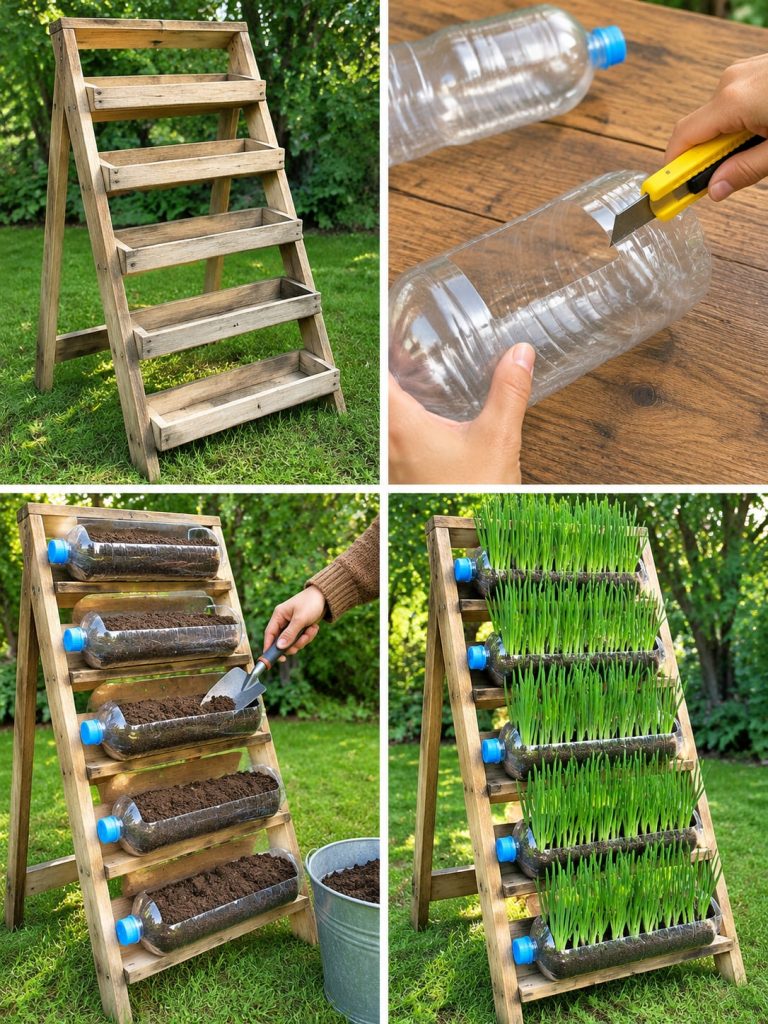
Step 1: Cut the Openings
Use a utility knife to cut a series of planting holes along one side of each bottle, about 3 inches apart and roughly the size of a golf ball. Stagger them so the upper openings do not sit directly above the lower ones, which helps the plants receive light. Cut the top off each bottle, leaving the cap in place as a sealed lid to keep the soil from draining through the top.
Step 2: Add Drainage
Poke three to five small drainage holes in the bottom of each bottle. Without drainage, roots sit in standing water and begin to rot within days. Drill or poke carefully and check that water runs out freely when you test it.
Step 3: Fill with Potting Mix
Fill each bottle with moist potting mix, working it gently into the openings so it stays in place. Lightly tamp it down, leaving about half an inch of space below the rim so water does not overflow.
Step 4: Plant the Onions
Insert a green onion start or a few seeds into each opening. For seeds, sow them about 1/4 inch deep and keep the surface evenly moist until seedlings emerge in roughly 7 to 14 days. For transplanted starts, gently spread the roots and firm the mix around them. Plant 3 to 5 starts per bottle opening cluster so each bulb has room to thicken without crowding.
Step 5: Anchor the Tower
Stand the bottles upright and secure them to a stake, trellis, or wall with wire or rope. Taller stacks become unstable once they are heavy with wet soil, so anchor them before you water.
Light, Watering, and Feeding
Sunlight
Green onions need at least 6 hours of direct sun per day for steady leaf growth. If your only available space is a partly shaded porch, expect slower growth and thinner stalks. Rotate the tower every few days so all sides receive light.
Watering
Container gardens dry out faster than beds, especially vertical ones. Check moisture by pushing a finger about an inch into the mix. If it feels dry, water slowly until it drains from the bottom holes. Overwatering shows as yellowing leaves, a sour smell, and soggy soil that never dries. Underwatering shows as limp, wilted foliage and mix that pulls away from the bottle walls.
Feeding
Because the soil volume is small, feed lightly every two to three weeks with a balanced liquid fertilizer diluted to half strength. Too much fertilizer can burn tender roots, so less is safer.
Harvesting and Keeping the Tower Productive
Harvest green onions when the stalks reach about 6 to 8 inches tall, usually 60 to 80 days after sowing from seed or about 3 to 4 weeks after planting starts. Cut the leaves about an inch above the soil line and leave the base in place. Many varieties will regrow for several cuts before weakening. To keep fresh supply coming, sow or plant a new set of onions every 3 to 4 weeks in an empty opening.
Common Mistakes and How to Avoid Them
- Skipping drainage holes: Test each bottle by pouring water through it before filling.
- Using garden soil: It compacts and drains poorly in bottles. Choose a lightweight potting mix.
- Crowding the openings: Too many onions in one opening leads to thin, weak stalks. Leave space for air circulation.
- Letting the mix dry out between waterings: Vertical containers lose moisture quickly, so check daily during hot weather.
- Ignoring plastic safety: Plastic bottles can degrade in strong sun over several seasons. Inspect the structure each season and replace cracked bottles before they fail.
Adapting the Project to Your Climate
Green onions are reasonably hardy and grow well across much of the United States. In USDA zones 3 to 6, start seeds or plant starts in early spring once the soil is workable, and move the tower to a protected spot if a hard freeze is forecast. In zones 7 to 9, you can often grow the tower through fall and winter, though hot afternoons in the South may call for afternoon shade. In zones 10 and 11, the tower works best in cooler months or in a location that gets relief from intense afternoon sun. USDA zones measure winter cold tolerance only, so local rainfall, humidity, and summer heat matter just as much. Check with your local cooperative extension service for frost dates and recommended planting windows in your area.
Final Thoughts
A recycled bottle tower is a satisfying way to turn waste into fresh food, and it teaches useful container-gardening habits along the way. Start with one or two bottles this weekend, check drainage, plant a small cluster of onions, and watch how quickly they respond to light and water. Once you know your tower’s rhythm, add more bottles and build a steady, space-saving supply of green onions for your kitchen. Your next harvest is only a few weeks away.