Few kitchen moments feel as ordinary as setting a pot of water on the stove and waiting for it to boil. It is also one of the most useful steps in everyday cooking. Whether you are making pasta, blanching vegetables, cooking eggs, or preparing a simple soup base, getting the water boiling properly makes the rest of the meal go more smoothly.
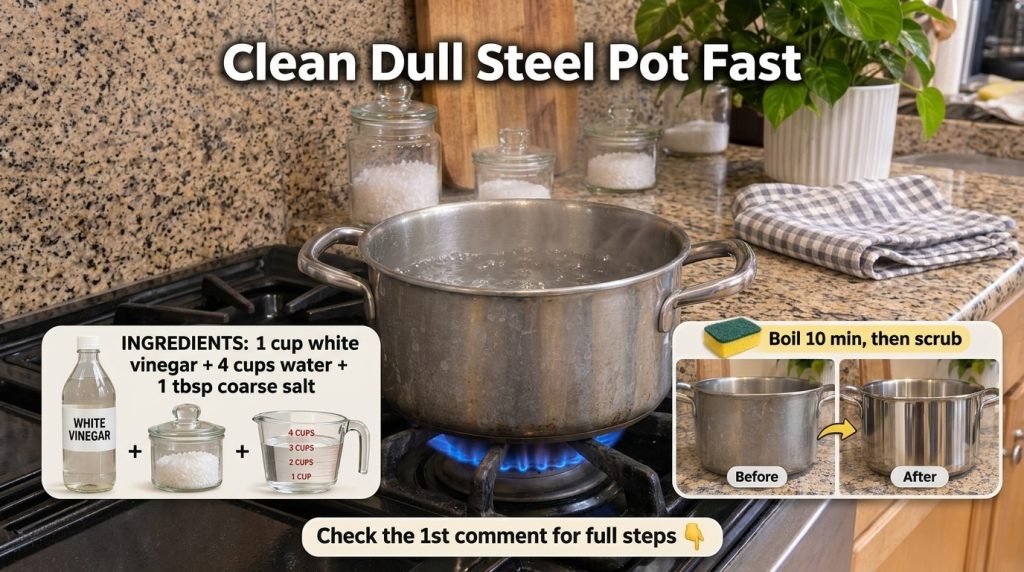
What You’ll Need
Equipment
- A stainless steel pot with a lid, sized so the water fills it about two-thirds full
- A gas or electric burner (the gas flame in this setup heats the pot quickly)
- A wooden spoon or heat-safe spatula for stirring
- Potholders or a dry kitchen towel for handling the pot
Optional Ingredients
- Coarse salt, about 1 teaspoon per 4 quarts of water, if you plan to cook pasta or vegetables
- A splash of oil, if you are cooking pasta and want to reduce foaming
Why Boiling Water Matters in Everyday Cooking
Boiling water is a basic step, but it affects texture and timing. A rolling boil, where bubbles break across the surface continuously, transfers heat quickly into food. This is why pasta cooks evenly when it goes into a fully boiling pot, and why vegetables keep their color when they are blanched in water that is already hot.
Salt does not make the water boil faster or hotter, but it adds flavor to foods cooked in it, especially pasta and potatoes. Coarse salt is easy to measure by pinch and dissolves well once the water is hot.
How to Bring Water to a Boil
- Fill the pot with cold tap water, leaving enough room so it does not overflow when the food goes in.
- Place the pot on the burner and set the flame to high, making sure the flame does not curl up the sides of the pot.
- Cover the pot with its lid to help it heat faster and reduce steam loss.
- Watch for small bubbles forming along the bottom, then larger bubbles rising steadily to the surface.
- Once the water is at a full rolling boil, add salt if you are using it and stir gently to dissolve.
- Add your food, then lower the heat slightly if the water stops boiling or boils over.
How to Use Boiling Water in Your Cooking
For pasta, use a large pot with plenty of water so the noodles can move freely. Stir during the first minute or two to prevent sticking, then cook according to the package directions. For vegetables, blanch them for a short time, usually one to three minutes depending on the type, then move them into cold water to stop the cooking.
For eggs, bring the water to a gentle boil rather than a violent one, then lower the eggs in carefully with a spoon. Cracks and splashing are less likely when the water is not aggressively bubbling.
What to Expect
A pot of water usually reaches a rolling boil within several minutes on a standard burner, though a larger volume of water takes longer. Expect steam, some bubbling, and a noticeable change in the sound of the pot as the water heats. The timing depends on your stove, the pot’s thickness, and how much water you started with.
Helpful Tips
- Use a lid until the water is close to boiling, then remove it if you need to watch the pot or add food.
- Start with cold water if you are cooking pasta, since it is less likely to contain residue from pipes.
- Keep the handles turned inward so the pot is not bumped or knocked off the burner.
- Keep a dry towel nearby, but make sure it is away from the flame.
Important Notes and Safety
Boiling water can cause serious burns, especially when steam escapes near your face or hands. Lift lids away from you and pour water carefully. Keep children and pets away from the stove while water is heating.
Never leave a pot of boiling water unattended for long periods, particularly on a gas burner. Make sure the flame stays under the pot and does not extend up the sides. Do not place plastic utensils or containers on the stove while it is in use.
Store salt in a dry, covered container away from steam and heat so it stays free-flowing and does not clump.