Your kidneys are incredible, hardworking organs, silently filtering waste, balancing fluids, and producing hormones essential for your health. But sometimes, they send out subtle distress signals that are easy to miss. Learning to recognize these early warning signs can be crucial for timely intervention and maintaining your long-term wellness.
We often overlook small changes in our body, attributing them to stress or minor ailments. However, your body communicates with you constantly, and when your kidneys are struggling, they have a way of letting you know. Empower yourself by understanding these nine critical early warnings – your health could truly depend on it!
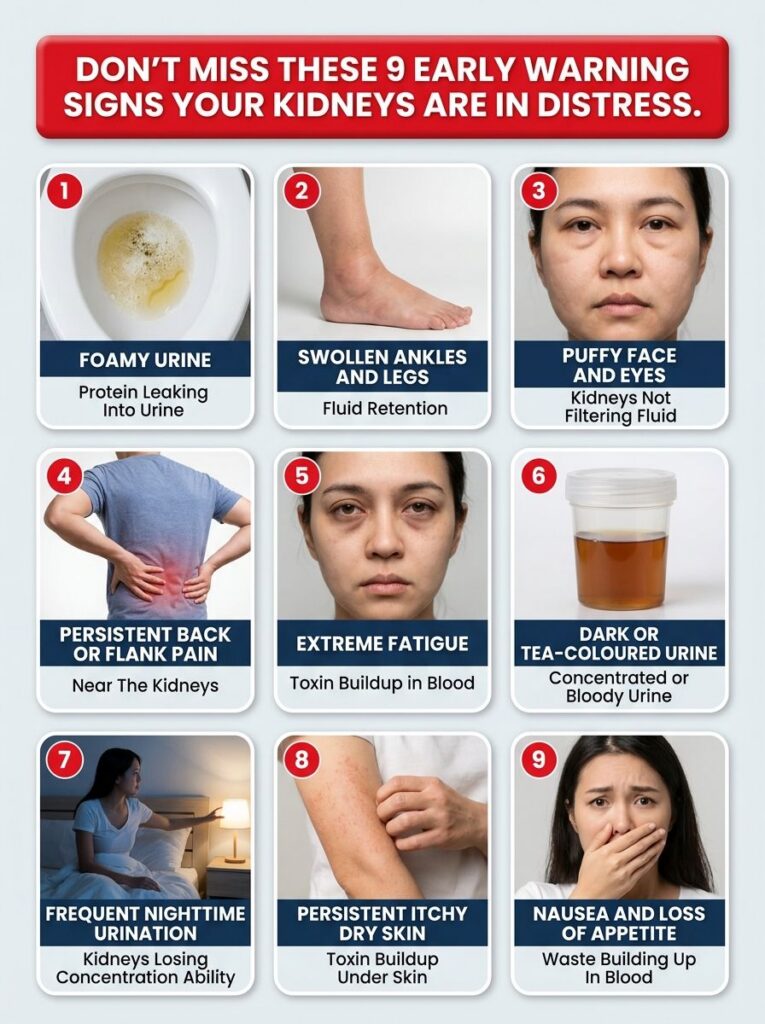
Why Kidney Health Matters So Much
Your kidneys perform vital functions, including:
- Filtering waste products, toxins, and excess water from your blood.
- Maintaining a healthy balance of electrolytes (like sodium, potassium, and calcium).
- Producing hormones that control blood pressure, make red blood cells, and keep your bones strong.
When these functions are compromised, waste products can build up, leading to serious health issues. Early detection of kidney problems can help prevent the progression to chronic kidney disease (CKD) and other complications.
9 Early Warning Signs Your Kidneys Are in Distress
1. Foamy Urine
What it means: Protein leaking into urine.
While occasional foamy urine can be harmless, persistent and excessive foam, similar to the head on a beer, can indicate proteinuria – the presence of too much protein in your urine. Healthy kidneys keep protein in your blood, but damaged kidneys may allow it to leak into your urine. This is a significant early sign of kidney damage.
2. Swollen Feet and Ankles (Edema)
What it means: Fluid retention.
The kidneys play a crucial role in regulating fluid balance in your body. When they’re not functioning properly, they can fail to remove excess sodium and water, leading to fluid retention. This often manifests as swelling in your feet, ankles, hands, or face. Pressing on the swollen area might leave an indentation for a few seconds.
3. Persistent Fatigue and Weakness
What it means: Anemia and toxin buildup.
Healthy kidneys produce a hormone called erythropoietin (EPO), which tells your bone marrow to make red blood cells. When kidneys fail, they make less EPO, leading to a decrease in red blood cells (anemia). Anemia causes fatigue and weakness. Additionally, the buildup of toxins that kidneys normally filter out can also contribute to a general feeling of tiredness and lethargy.
4. Itchy, Dry Skin
What it means: Mineral imbalance and toxin buildup.
Kidneys help maintain a healthy balance of minerals and nutrients in your blood. When they can’t do this, a buildup of waste products and imbalances in minerals like phosphorus and calcium can lead to severe, persistent itching, dry skin, and even rashes. This condition is known as uremic pruritus.
5. Poor Appetite, Nausea, or Vomiting
What it means: Toxin buildup.
As waste products accumulate in the body due to impaired kidney function (a condition called uremia), they can affect your digestive system. This can lead to a metallic taste in the mouth, a decreased appetite, and feelings of nausea or even vomiting, especially in the mornings.
6. Muscle Cramps
What it means: Electrolyte imbalance.
Kidneys are essential for balancing electrolytes such as sodium, potassium, calcium, and phosphorus. When kidney function declines, these electrolytes can become imbalanced, leading to muscle cramps, particularly in the legs, or even muscle weakness.
7. Difficulty Sleeping
What it means: Toxin buildup, restless legs.
The accumulation of toxins in the body can make it difficult to sleep. People with kidney disease often experience insomnia, sleep apnea, or restless legs syndrome due to the build-up of waste products that interfere with sleep patterns.
8. Shortness of Breath
What it means: Fluid in lungs or anemia.
Shortness of breath can be a symptom of kidney disease for a couple of reasons. Excess fluid can accumulate in the lungs (pulmonary edema) when the kidneys can’t remove it, making breathing difficult. Additionally, the anemia associated with kidney disease means less oxygen is delivered to your body’s cells, leading to breathlessness.
9. Changes in Urination
What it means: More frequent, dark, or blood in urine.
Changes in urinary habits are often direct indicators of kidney issues:
- Increased frequency: Especially at night (nocturia), which can be a sign that the kidneys’ filtering units are damaged.
- Darker urine: Can indicate dehydration, but sometimes a sign of kidney problems.
- Blood in urine (hematuria): While sometimes benign, it can point to kidney stones, infections, or kidney disease and should always be investigated.
What To Do If You Notice These Signs
It’s important to remember that these symptoms can also be caused by other less serious conditions. However, if you experience one or more of these warning signs persistently, it’s crucial to consult a healthcare professional promptly. Early diagnosis and treatment can significantly slow the progression of kidney disease and improve outcomes.
Don’t wait for symptoms to worsen. Be proactive about your health. Discuss your concerns with your doctor, who can perform simple tests like blood (creatinine, GFR) and urine (albumin) tests to assess your kidney function.
Taking care of your kidneys is a cornerstone of overall well-being. By staying informed and listening to your body, you empower yourself to live a healthier, more vibrant life!