Plants cannot tell us what is wrong, but they do send signals. Leaves that turn yellow, brown, or droop are usually trying to tell us something about water, light, nutrients, or pests. Learning to read these signs is one of the most useful skills any gardener can build, whether you grow vegetables on a balcony, keep a collection of indoor plants, or tend a full backyard garden.
Why Yellow Leaves Appear
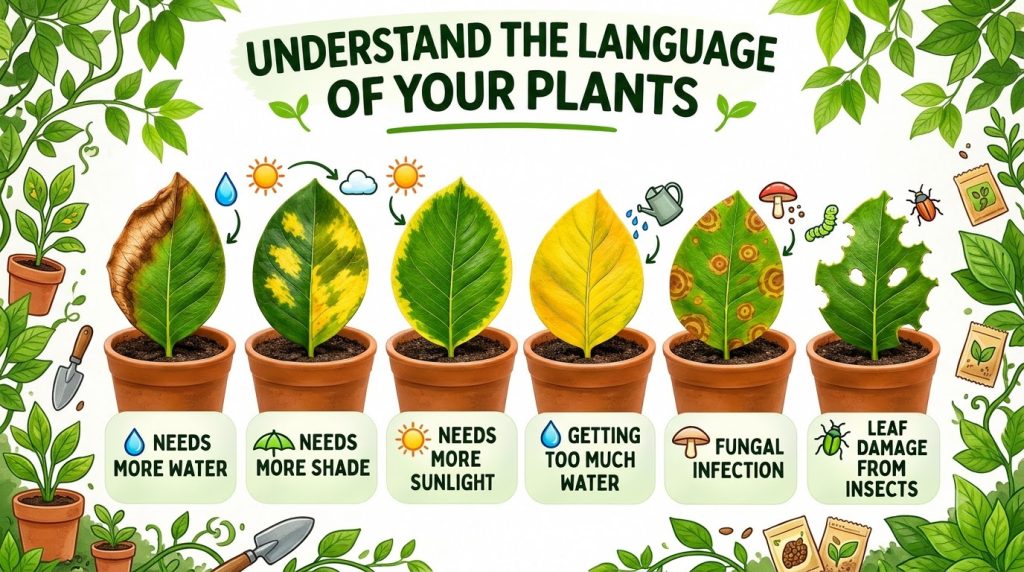
Yellow leaves are one of the most common concerns for plant owners. A few older leaves turning yellow and dropping off is often normal, because plants naturally shed their oldest foliage. When many leaves yellow at once, or new growth turns pale, it is worth investigating further.
- Overwatering: Soggy soil starves roots of oxygen, and leaves often turn yellow from the bottom up.
- Underwatering: Dry soil can cause leaves to yellow, curl, or crisp at the edges.
- Nutrient shortage: Yellowing between the veins may point to a lack of nitrogen or iron.
- Too much direct sun: Strong light can scorch leaves, leaving pale or bleached patches.
- Poor drainage: Pots without drainage holes trap water and stress roots.
Reading Brown and Drooping Leaves
Brown leaf tips often signal dry air, inconsistent watering, or a buildup of salts from fertilizer. Brown patches in the middle of a leaf may indicate sunburn or fungal spots. Drooping leaves usually point to thirst, but they can also come from root rot, so always check the soil before adding more water.
A quick finger test works well: push your finger about two centimeters into the soil. If it feels dry, water thoroughly. If it feels damp, wait before watering again.
Pests and Other Warning Signs
Tiny pests such as spider mites, aphids, and mealybugs can drain sap from leaves and leave yellow stippling or sticky residue. Check the undersides of leaves regularly. Wiping leaves with a damp cloth and rinsing plants can remove many pests early, and a gentle insecticidal soap is a common organic option when problems persist.
A Simple Routine for Healthier Plants
Healthy plants start with consistent habits rather than quick fixes. Try these steps:
- Observe your plants weekly and note any changes in leaf color, texture, or shape.
- Check soil moisture before watering, and make sure pots drain freely.
- Place plants according to their light needs, and rotate pots so all sides receive light.
- Feed plants lightly during the growing season, and avoid fertilizing stressed or dormant plants.
- Inspect leaf undersides for pests and act early.
Seasonal Changes to Keep in Mind
Plants often need different care as seasons change. Indoor plants generally need less water in winter when growth slows, and heating systems can dry out the air. In summer, outdoor containers may need more frequent watering and some shade during the hottest afternoons. Adjusting your routine with the seasons prevents many common problems.
Final Thoughts
Every yellow or brown leaf is a clue rather than a verdict. By observing carefully, checking the soil, and adjusting light and water gradually, you can understand what your plants need and help them recover. With patience and regular attention, reading your plant’s language becomes second nature, and your garden will reward you with fuller, healthier growth.