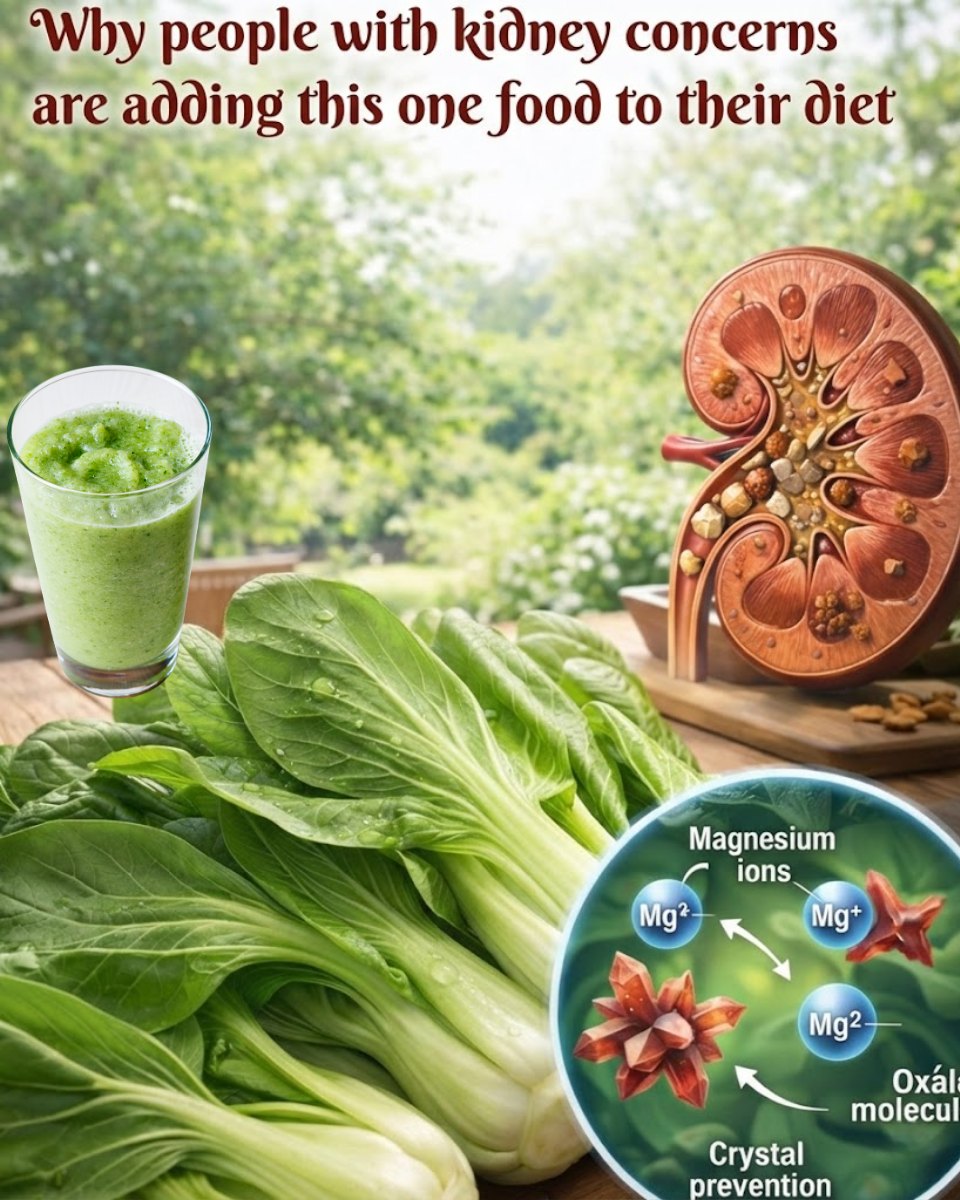
If you’ve ever dealt with kidney stone pain (or you’re trying to avoid a repeat), you’ve probably seen claims like: “Add this one food to your diet to prevent crystals.” Bok choy (an Asian cabbage): magnesium ions + oxalate molecules = crystal prevention.
Most people never realize this matters because they focus only on “drink more water.” Hydration is still the #1 habit, but minerals and oxalate balance can also influence whether crystals form – especially for calcium oxalate stones, the most common type.
Let’s unpack what science actually supports, what’s exaggerated, and how to use this food safely if you have kidney concerns.
What Type of Content Is This?
Bok choy (a leafy green with pale stalks).
Why people choose bok choy for kidney stone prevention:
- They can be part of a lower-oxalate greens rotation compared with very high-oxalate greens like spinach (which is often restricted for calcium oxalate stone formers).
1) Magnesium can interact with oxalate
Some evidence suggests that magnesium status may influence calcium oxalate stone risk because magnesium can bind oxalate and help keep it from forming problematic crystals (especially when urinary magnesium is low).
2) But magnesium is not a guaranteed shield
Clinical guidance for kidney stones focuses heavily on:
- Fluid intake
- Lower sodium
- Normal calcium intake (with meals)
- Oxalate awareness (depending on stone type)
Magnesium may be a helpful supporting factor, but it is not a “one food cure.”
Why People Add Bok Choy Specifically
Here’s the practical logic:
- Bok choy gives you a leafy green option that can fit better into a low-oxalate approach than some other greens, depending on your overall diet pattern and portions.
- It also helps people build meals that are more plant-forward without relying on ultra-processed foods – another pattern associated with healthier kidney outcomes overall.
How to Eat It (Without Overdoing Oxalates)
The image shows a green smoothie, but smoothies can accidentally become huge portions. For kidney stone prevention, portion control matters.
Kidney-friendly ways to use bok choy
- Lightly sautéed with garlic/onion (flavor without heavy salt)
- Added to soup near the end (keeps texture and volume)
- Stir-fried with lean protein and low-sodium seasoning
- Small smoothie portion (if your clinician allows high-potassium foods)
Simple smoothie idea (matches the image’s style)
- 1 cup chopped bok choy
- Water + ice
Blend and keep the portion moderate.
Who This Helps Most
This “one food” strategy makes the most sense if you:
- Have a history of calcium oxalate stones
- Were told to watch high-oxalate foods
- Want more greens but don’t want to default to spinach every day
Quick Relief Timeline (Realistic Expectations)
This is important because kidney content online often overpromises:
- Same day: Better hydration and lighter digestion if you swap out salty/processed foods.
- 1–2 weeks: Your overall diet pattern becomes more consistent (less sodium, more real food).
- Weeks to months: Stone prevention is long-term. What matters is your routine – fluid intake + diet pattern + follow-up testing.
Safety Notes (Especially If You Have CKD or High Potassium)
If your “kidney concerns” mean chronic kidney disease, the advice changes.
Leafy greens can be high in potassium, and some people with CKD (especially with high blood potassium labs) may need limits or careful portions.
Use extra caution if:
- You’ve been told your potassium is high
- You are on dialysis
- You take medications that raise potassium
In those cases, do not use daily green smoothies without guidance.
Final Takeaway
Bok choy-style leafy greens are trending in kidney circles because they can fit into a lower-oxalate, real-food pattern, and the magnesium – oxalate concept has scientific plausibility. But it’s not a magic fix.
If you want the biggest prevention win: hydrate consistently, keep sodium lower, follow stone-type guidance, and use leafy greens strategically – not blindly.
Related Source Science
- NIDDK: Eating, diet & nutrition for kidney stones (National Institute of Diabetes and Digestive and Kiney Diseases)
- National Kidney Foundation: Kidney stone diet plan and prevention (National Kidney Foundation)
- American Urological Association: Medical management guideline for kidney stones (AUA Network)
- NKF: Leafy greens and potassium guidance for CKD (National Kidney Foundation)
- NIDDK potassium tips for people with CKD (National Institute of Diabetes and Digestive and Kiney Diseases )
- Review/clinical discussion on magnesium and stone recurrence (nuanced evidence) (SciELO)