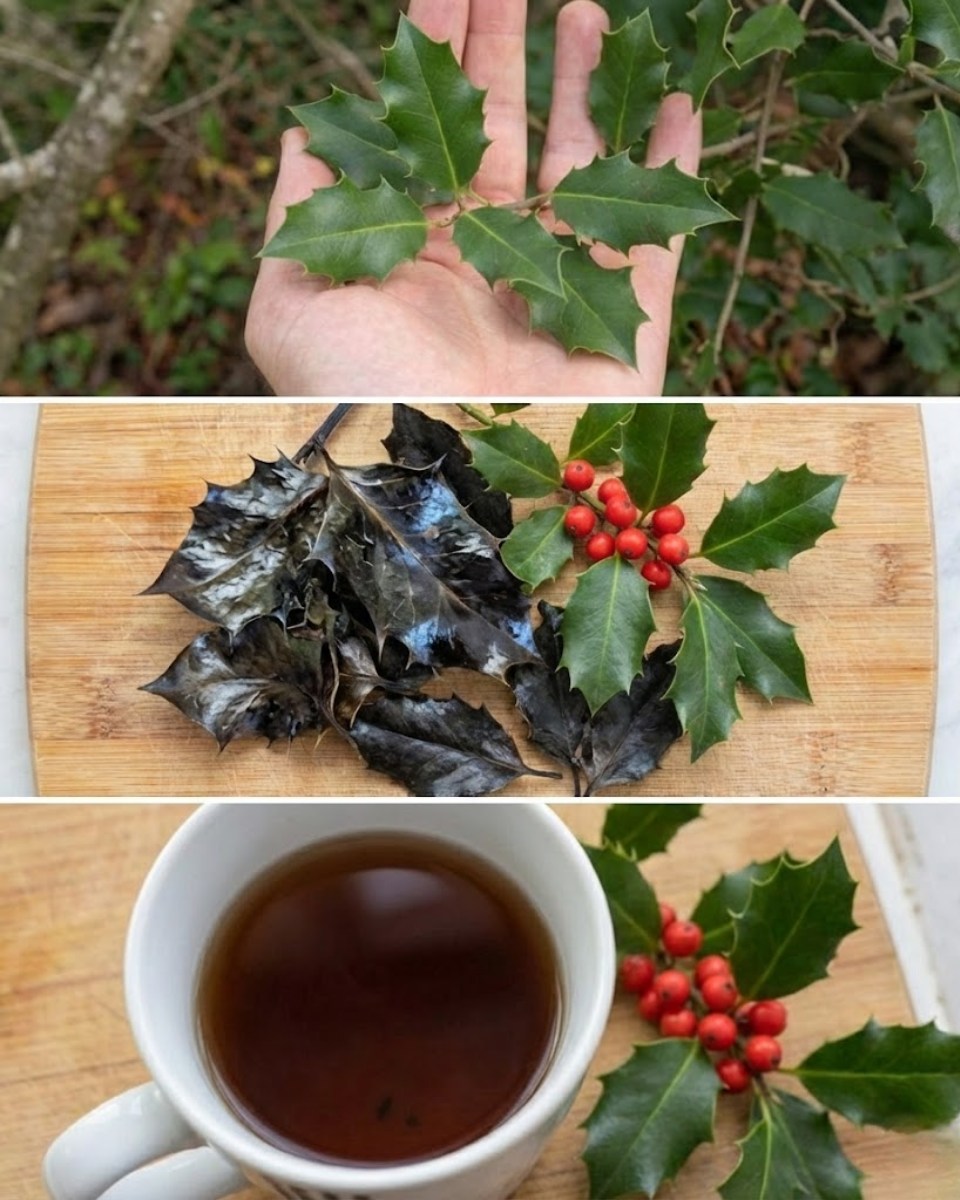
If you’ve been scrolling wellness posts lately, you may have seen a cozy-looking cup of dark tea made from holly leaves – sometimes framed as a “natural cleanse,” a calming drink, or a traditional remedy.
But here’s the part most people never realize until it’s too late: not all holly is safe to ingest. In fact, many common holly plants (especially holiday holly with red berries) can be toxic if consumed.
How to Prepare a Safer “Holly-Style” Tea Routine
If you’re using a verified, food-grade holly tea (like yerba mate or yaupon), here’s a gentle method.
Ingredients
- 1–2 teaspoons dried food-grade holly tea leaves
- 8–10 oz (240–300 ml) hot water
- Optional: lemon peel or a slice of ginger (only if you like)
How to Prepare
- Heat water to 170–185°F (77–85°C) (hot, not aggressively boiling).
- Add leaves to a cup or infuser.
- Steep 5–8 minutes.
- Strain and sip.
Best Time to Drink
- Morning or early afternoon
- Avoid late evening if you’re sensitive to stimulation
What Holly Leaves Do (And Why People Think They’re “Medicinal”)
“Holly” is a common name for plants in the Ilex genus. Here’s where it gets tricky:
- Some Ilex species are traditionally consumed as teas (for example yerba mate and yaupon holly).
- But many ornamental hollies (including classic Christmas holly) are not intended for tea, and parts of the plant—especially the berries—are commonly considered poisonous.
People assume “holly tea” is automatically safe because they’ve heard of “mate tea” or “South American holly tea.” But those are specific species, harvested and prepared intentionally.
Most people never realize this works or fails because they don’t realize they might be using the wrong plant.
The Most Important Safety Warning
Do NOT eat holly berries
The red berries shown in the image may look pretty, but holly berries are not food. In many holly species, ingestion can cause nausea, vomiting, diarrhea, and other symptoms.
Do NOT brew tea from an unidentified holly plant
Foraging mistakes are common. Different hollies look similar. A safe herbal tea should never depend on guesswork.
If you are not 100% sure the holly is a food-grade tea species, do not drink it.
If You Mean “Holly Tea” As a Traditional Caffeinated Leaf Tea
Some people use the term “holly tea” when they really mean teas made from these specific Ilex species:
- Yerba mate (Ilex paraguariensis)
- Yaupon holly (Ilex vomitoria)
These are harvested, processed, and sold as edible teas by reputable suppliers.
If your goal is the “holly tea” experience (earthy taste, gentle stimulation, antioxidant plant compounds), the safest path is:
✅ Buy a labeled, food-grade product
✅ Use reputable brands
✅ Avoid backyard holly leaves
Why People Like It (Tradition + Simple Science)
When it’s the correct edible species, holly-leaf teas are often used because they may support:
- Gentle alertness (some varieties contain natural caffeine)
- Antioxidant intake (plant polyphenols)
- A “warm ritual” that replaces sugary drinks
This is not a “detox.” It’s closer to a routine upgrade—like swapping soda for an herbal tea.
Who Might Benefit Most
A holly-style tea routine (from food-grade sources) tends to appeal to people who:
- Want a coffee alternative
- Want a warm drink that feels “cleaner” than sweet beverages
- Prefer traditional plant-based rituals
When You’ll Notice Changes
- Same day: You may feel warmer, more hydrated, and mentally “reset.”
- 3–7 days: If it replaces sugary drinks, many people notice fewer crashes.
- 2–4 weeks: Benefits show up more from the habit (less sugar, better hydration) than from the leaf itself.
Quick Notes: Who Should Avoid It
Even food-grade holly teas aren’t for everyone.
Avoid or ask a clinician first if you:
- Are pregnant or breastfeeding
- Have heart rhythm issues
- Have uncontrolled anxiety
- Are sensitive to caffeine
- Take stimulant medications
And again: never use ornamental holly leaves or berries as food.
Final Takeaway
The image is right about one thing: holly leaves can make a tea-like drink.
But the big missing detail is safety: only specific holly species are traditionally consumed, and many common hollies (especially berries) can be harmful.
If you want the benefits people associate with “holly tea,” choose a food-grade holly tea product, not backyard leaves.