If you’ve ever dealt with red, itchy, irritated legs, you know the frustration. The skin feels hot, sensitive, and reactive. Sometimes it flares after heat, friction, sweating, shaving, long walks, or even stress.
That’s why Mimosa pudica (the Sensitive Plant, also called Touch-Me-Not) keeps showing up in traditional remedy circles, the herb bundles, the feathery leaves, and a warm cup of tea – often used as a cooling, calming support for irritated skin.
Most people never realize this works best when you treat it like a gentle, steady routine, not a quick “miracle fix.”
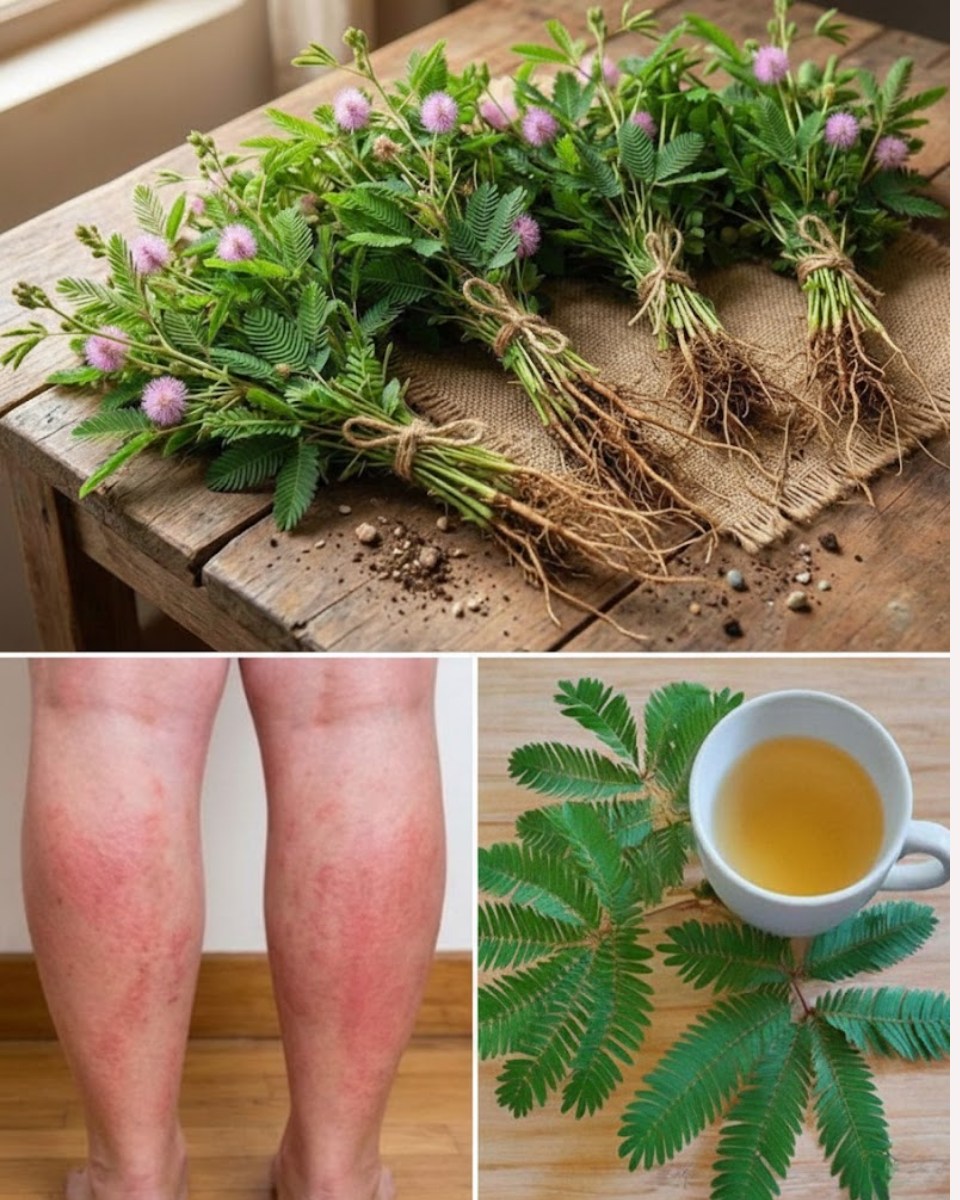
What Mimosa Pudica Does Inside the Body
Mimosa pudica is traditionally used in different cultures for skin comfort, inflammation balance, and soothing the body’s “heat” response.
In a traditional (Ayurvedic/folk) view
This herb is often described as:
- Cooling
- Astringent
- Supportive for “hot,” reactive conditions (redness, itching, irritation)
In a modern science view (simple explanation)
Mimosa pudica contains natural plant compounds that may support calm skin by helping the body manage irritation:
- Flavonoids (antioxidant support)
- Tannins (astringent, tightening, skin-calming feel)
- Other phytochemicals studied for anti-inflammatory and antimicrobial potential
This does not mean it cures skin disease. But it helps explain why people use it as a gentle, supportive herb for redness and discomfort.
Simple Preparation Method
The image suggests a basic herbal tea approach. Here’s a safe, beginner-friendly way to do it.
Ingredients
- 1–2 teaspoons dried Mimosa pudica leaves (or a small fresh sprig if you’re experienced and sure of the plant)
- 1 cup (240 ml) hot water
- Optional: a squeeze of lemon or a little honey (only if it does not trigger your skin)
How to Make Mimosa Pudica Tea
- Bring water to a near-boil, then let it cool for 1 minute.
- Add the leaves to a cup or teapot.
- Pour in hot water and cover.
- Steep for 7–10 minutes.
- Strain and sip slowly.
Taste tip: It’s mild and earthy. If it tastes very bitter, reduce steeping time.

When to Drink or Use It
Best time to drink
- Evening is often ideal, especially if your irritation is worse after heat or activity.
- You can also sip it after a warm shower when your skin tends to feel most reactive.
How often
- Start with 3–4 times per week, not every day.
- If your body feels fine, you can try once daily for 7 days, then reassess.
Gentle topical option (supportive only)
Some people also use a cooled tea as a compress:
- Brew tea as usual, let it cool fully.
- Soak a clean cloth in the tea.
- Apply to red areas for 5–10 minutes.
- Pat dry and moisturize with a simple, fragrance-free lotion.
This is often more comfortable than applying strong oils or harsh DIY blends to irritated skin.
Why It Works: A Tradition + Science Blend
When skin is red and reactive, two things usually drive the discomfort:
- Inflammation and micro-irritation in the skin barrier
- A body that’s “stuck” in a stress or heat cycle (sweating, friction, poor sleep)
Mimosa pudica routines may help by:
- Offering mild antioxidant and soothing plant compounds
- Supporting a “cooling” approach when skin feels hot
- Encouraging hydration and a calm evening ritual (which matters more than people think)
In short: it’s not just the herb. It’s the pattern—calm support, consistency, and fewer triggers.
Who Benefits Most
This gentle routine may be useful if you experience:
- Heat-related redness on legs
- Mild irritation after walking, shaving, or sweating
- Reactive skin during stress or poor sleep weeks
- Skin that flares when your routine gets too harsh
If your redness is severe, spreading, painful, or accompanied by fever, this is not the right tool.
Quick Relief Timeline (Realistic Expectations)
Here’s what “real” looks like:
- Same day: skin may feel slightly calmer if you use a cool compress
- 3–7 days: less “hot” or tight sensation, fewer reactive moments
- 2–4 weeks: more stable skin comfort if triggers are reduced (friction, heat, harsh skincare)
If you see no change after 2 weeks, consider that the cause may be different (allergy, eczema, infection, circulation issues) and get medical guidance.
Safety and Who Should Avoid
Mimosa pudica is not a casual herb for everyone.
Avoid internal use if:
- You are pregnant or breastfeeding
- You have a history of strong plant allergies
- You are taking medications and are unsure about interactions
Topical safety:
- Always do a patch test first
- Do not apply to broken skin, open sores, or infected rashes
- Stop if burning, itching, or worsening redness occurs
Get medical care urgently if:
- One leg becomes suddenly swollen, hot, and painful
- Redness spreads quickly, oozes, or you develop fever
- You suspect infection or blood clot symptoms
Final Takeaway
Mimosa pudica tea is best thought of as a gentle cooling ritual for irritated, reactive skin – especially when heat, friction, or stress plays a role. Keep it simple, use it consistently, and pair it with barrier-friendly habits.