Menstrual cramps can hit like a wave: tight lower belly, achy back, and that “I can’t focus on anything” heaviness. The good news is that relief is often more about simple body signals than complicated hacks.
Most people never realize this works because cramps are not “just pain.” They are a whole-body stress response involving inflammation, uterine muscle contractions, and nervous system tension.
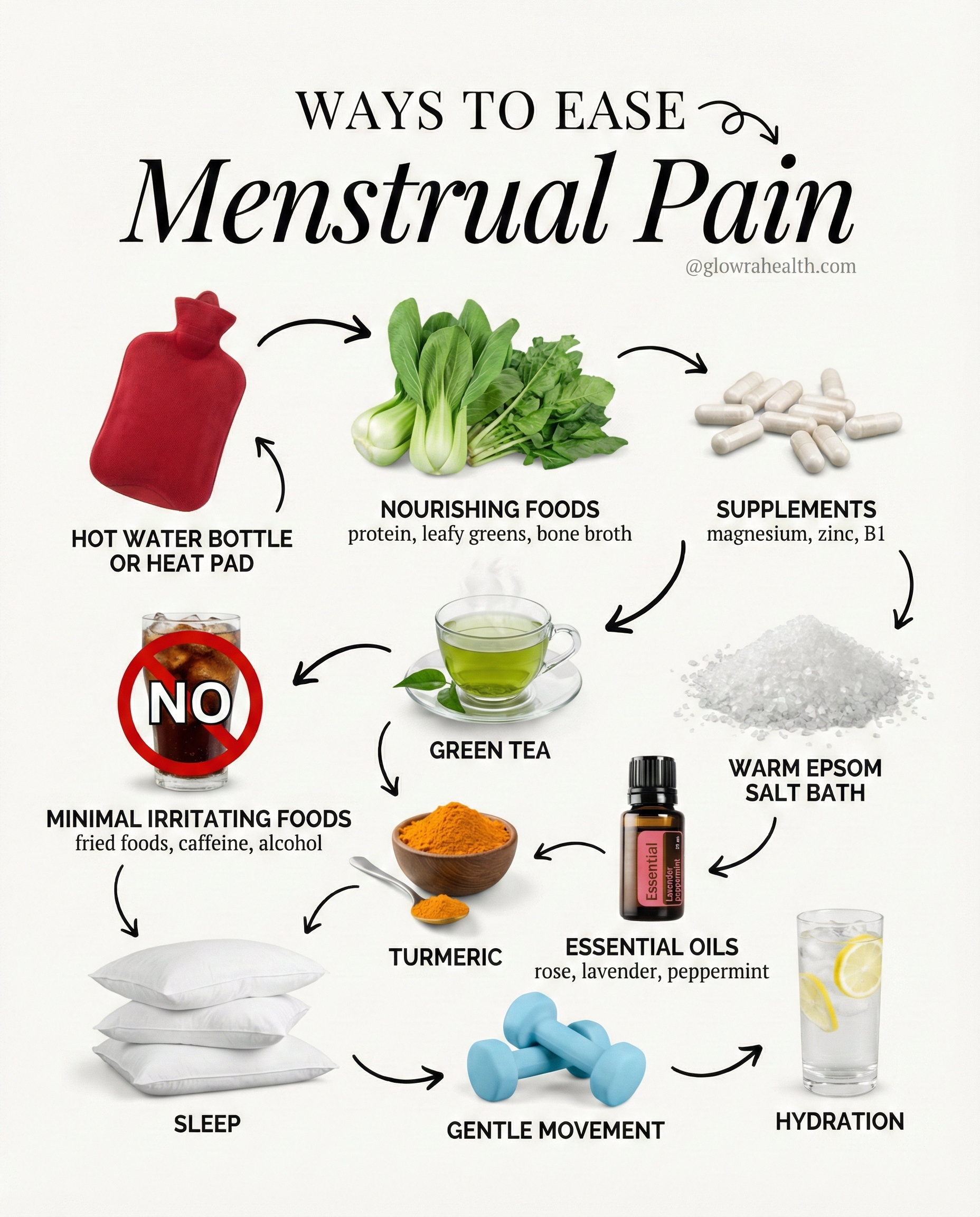
1) Hot Water Bottle or Heat Pad (Fastest Comfort)
Heat is one of the most reliable at-home tools for cramps. It helps relax muscle tension and can reduce the “spasm” feeling in the lower abdomen. Research reviews suggest heat therapy can meaningfully reduce primary dysmenorrhea pain.
How to use
- Place on lower belly or lower back for 15–20 minutes
- Repeat as needed throughout the day
- Add a thin cloth layer if your skin is sensitive
2) Nourishing Foods: Protein, Leafy Greens, Bone Broth
When you’re cramping, your body is doing extra work. A steady meal can help stabilize energy and mood—especially if you tend to skip meals or live on snacks during your period.
Try building a “cramp-friendly plate”
- Protein: eggs, fish, chicken, tofu, beans
- Leafy greens: spinach, kale, bok choy, chard
- Bone broth: warm, mineral-rich, easy-to-digest comfort
Even one warm, balanced meal can feel like a reset when pain makes you nauseous or shaky.
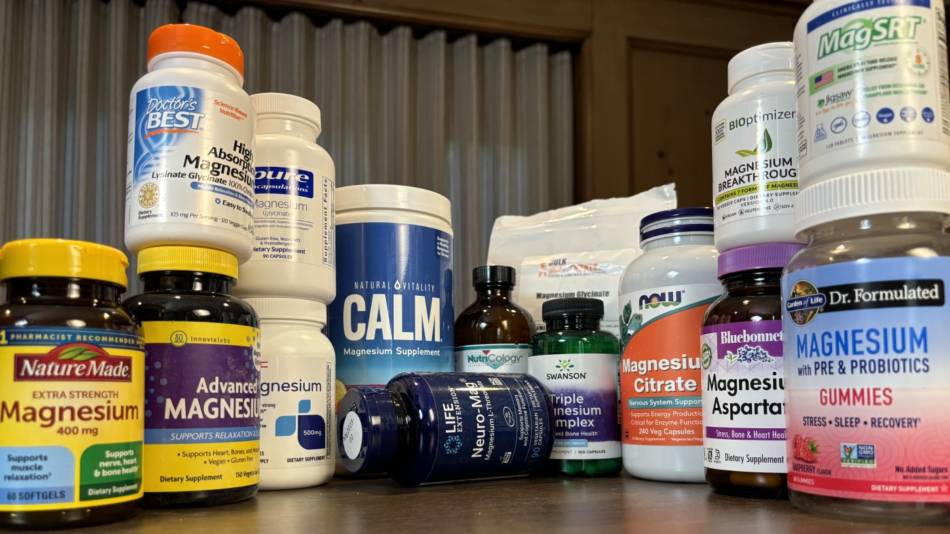
3) Supplements: Magnesium, Zinc, B1 (Targeted Support)
Some nutrients have been studied for menstrual discomfortb – especially in people with low intake.
- Magnesium is often researched for muscle relaxation and cramp intensity in primary dysmenorrhea.
- Vitamin B1 (thiamine) has been studied in trials for menstrual pain support.
- Zinc is commonly discussed for inflammation and tissue repair support (evidence varies by person and dose).
Simple approach
- If you already take a multivitamin, check if it includes B1 and zinc.
- For magnesium, many people tolerate magnesium glycinate well.
- Give supplements 2–8 weeks to judge effect (they’re rarely instant).
Safety note: If you have kidney disease, take blood thinners, are pregnant, or use multiple medications, check with your clinician before supplementing.
4) Minimal Irritating Foods: Fried Foods, Caffeine, Alcohol
This is not about perfection. It is about reducing things that can worsen inflammation, bloating, reflux, or nervous system jitter – especially when your body already feels reactive.
If cramps are intense, try a 24–48 hour “gentler choices” window:
- Choose baked/steamed foods over fried
- Keep caffeine modest (or switch to half-caff)
- Skip alcohol (it can worsen dehydration and sleep)
5) Green Tea (A Calmer Caffeine Option)
Green tea gives warmth and a lighter caffeine lift than coffee, plus beneficial polyphenols. Some research reviews discuss green tea compounds in gynecologic health contexts.
Best time: morning or early afternoon
Tip: If caffeine makes you more anxious or crampy, choose decaf green tea.
6) Warm Epsom Salt Bath (Relaxation > “Detox”)
A warm bath can soften muscle tension and help your nervous system downshift. Claims about absorbing large amounts of magnesium through the skin are not strongly proven, so treat this as a comfort ritual – not a cure.
How to use
- Warm (not scalding) water, 15–20 minutes
- Hydrate afterward
- Stop if you feel dizzy or overheated
7) Turmeric (Anti-Inflammatory Support)
Turmeric’s active compound (curcumin) is studied for inflammation pathways, and research suggests it may help some people with menstrual-related symptoms.
Easy ways to add it
- Stir into soup or broth
- Add to scrambled eggs or roasted vegetables
- Use a supplement only if it fits your health history
Safety note: Curcumin may interact with blood thinners and can aggravate reflux in some people.
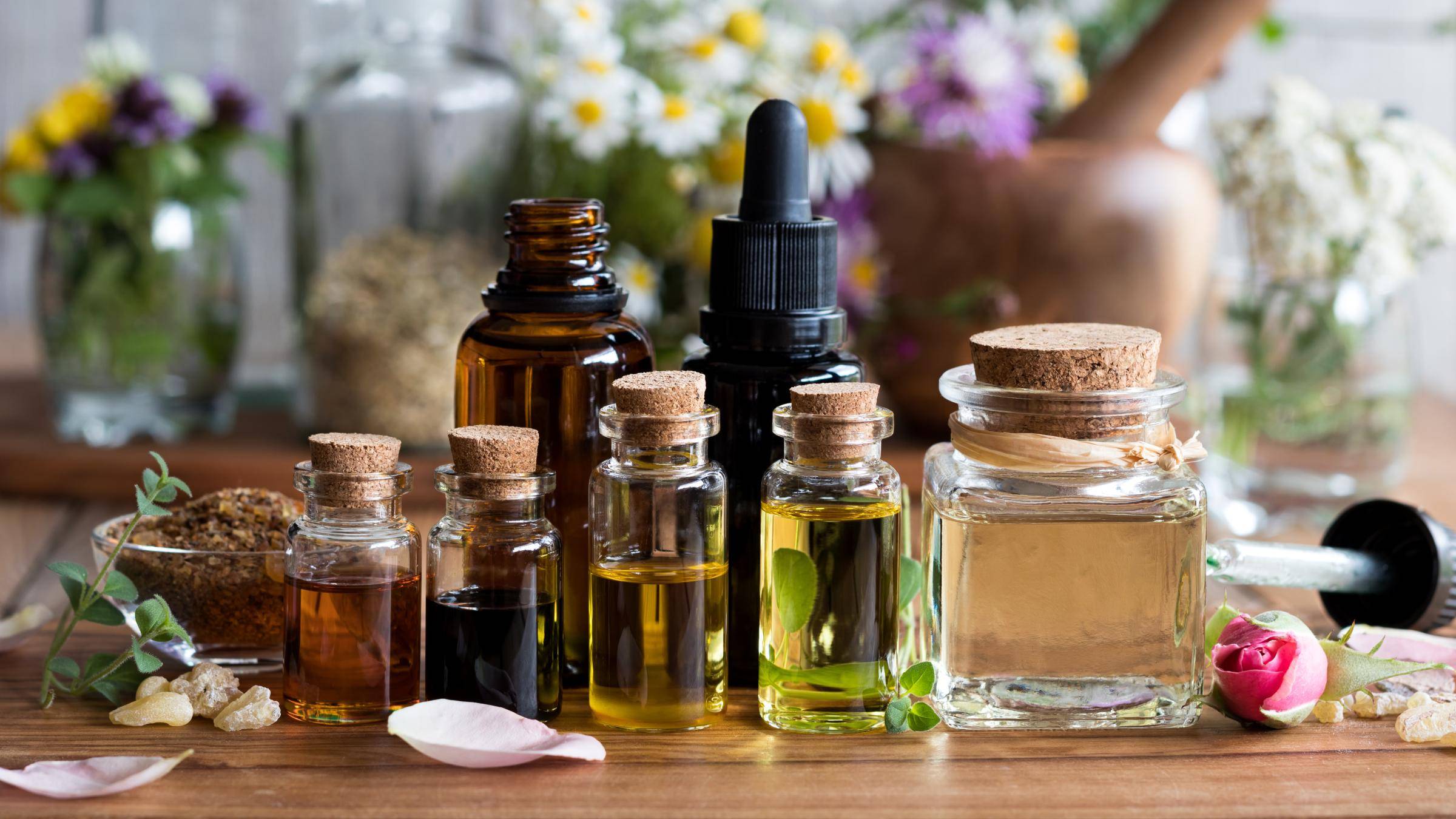
8) Essential Oils: Rose, Lavender, Peppermint (Gentle Nervous System Support)
Aromatherapy and massage with essential oils (especially lavender) have been studied for primary dysmenorrhea pain relief.
How to use safely
- Inhale: 1–2 drops on a tissue, slow breathing for 60 seconds
- Massage: dilute in a carrier oil (do not apply undiluted)
- Avoid if scents trigger headaches or nausea
9) Sleep + Gentle Movement + Hydration (The Trio That Changes the Whole Day)
- Sleep: Poor sleep is linked with worse menstrual symptoms in research on sleep and menstrual disturbances.
- Gentle movement: Walking, stretching, and light yoga are supported by evidence reviews for reducing dysmenorrhea pain intensity.
- Hydration: Helps with circulation, headaches, and constipation-bloating that can amplify cramps.
Try this combo
- 10–15 minute walk + warm drink + early bedtime
- Sip water steadily (not all at once)
When You’ll Notice Relief (Realistic Timeline)
- 10–20 minutes: heat pad / hot water bottle
- Same day: warm meals, hydration, gentle movement, essential oil breathing
- 1–3 days: turmeric in meals, reducing irritating foods, better sleep rhythm
- 2–8 weeks: magnesium/B1 routines (best judged over multiple cycles)
Quick Safety Notes
Seek medical advice urgently if you have:
- Sudden severe pain, fainting, fever, or vomiting
- Very heavy bleeding (soaking pads hourly), bleeding between periods
- New pain after an IUD insertion, or possible pregnancy
- Pain that is worsening month after month (possible endometriosis, fibroids, infection)
Final Takeaway
If you want the simplest “starter kit,” begin with heat + hydration + a nourishing meal + gentle movement. Then layer in sleep and consider magnesium/B1 if cramps are a recurring problem. Small steps add up – especially when repeated every cycle.
Related Source Science
https://www.acog.org/womens-health/faqs/dysmenorrhea-painful-periods
https://www.frontiersin.org/journals/medicine/articles/10.3389/fmed.2025.1730505/full
https://www.ajog.org/article/S0002-9378(18)30278-3/fulltext
https://link.springer.com/article/10.1186/s12905-023-026290
https://europepmc.org/article/PMC/5405632
https://pdfs.semanticscholar.org/fdce/40c1ff1d6ce42fde411020f07721ea782a5a.pdf
https://www.nationalgeographic.com/science/article/epsom-salt-bath-benefits-magnesium