If you’ve seen the viral egg white peel off mask for blackheads, you’re not alone. It’s a classic DIY: egg white + tissue layers, let it dry, then peel.
It can feel satisfying and may lift some surface buildup, but it’s not a permanent “blackhead cure.” Blackheads are clogged pores, and keeping them clear usually takes a simple routine (and sometimes the right products).
Below is the exact method, how to do it with less irritation, and what to buy if you want a more reliable option.
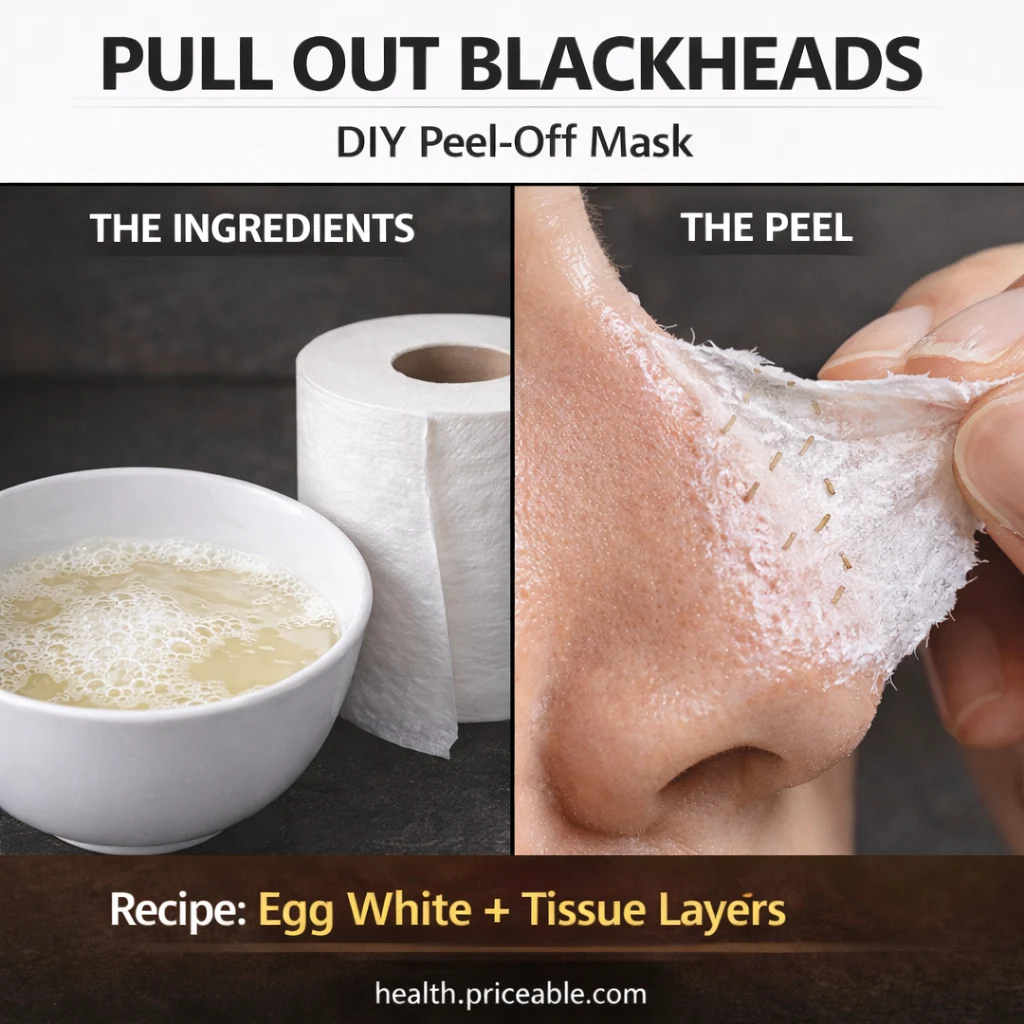
Egg white peel off mask for blackheads: what it is (and what it can’t do)
This mask forms a temporary film as egg white dries. When you peel it off, it may pull away:
-
Loose dead skin
-
Surface oil and debris
-
Some tiny plugs near the top of the pore
What it typically can’t do:
-
“Pull out” deeper, hardened blackheads every time
-
Replace consistent exfoliation (like BHA/salicylic acid)
-
Shrink pores permanently (pores can look smaller when they’re clean, but they don’t truly “close”)
Ingredients and tools you’ll need
Keep it simple. More add-ins usually mean more irritation.
You’ll need:
-
1 egg (you’ll use the egg white only)
-
2–3 facial tissues (the kind that can separate into thin layers)
-
Small bowl
-
Clean makeup brush or cotton pad
-
Clean towel + warm water
Optional (for less tugging):
-
A gentle, fragrance-free moisturizer for after
-
A soft washcloth to help remove residue
Tip: Facial tissue works better than toilet paper because it’s smoother and less likely to crumble.
Step-by-step: DIY tissue peel-off mask
Best for: nose, chin, and the center of the forehead (T-zone)
Time: about 20–30 minutes total (including drying)
1) Cleanse first (2 minutes)
Wash with a gentle cleanser and lukewarm water. Pat completely dry.
If you wear makeup or sunscreen, a cleansing balm or oil cleanser first can help remove buildup before you start.
2) Warm compress (3–5 minutes)
Hold a warm, damp towel over your nose/chin. Don’t use hot water. You want “comfortable warm,” not steaming.
3) Prep the tissue layers (1 minute)
Separate facial tissue into thin layers. You want pieces that fit your nose and chin without covering eyebrows or hair.
4) Apply a thin layer of egg white (30 seconds)
Crack the egg and separate the white into a bowl. Brush a thin, even layer onto the area.
Avoid: eyebrows, hairline, and anywhere with peach fuzz you don’t want tugged.
5) Add tissue, then seal it (1 minute)
Press the tissue onto the wet egg white. Smooth it down gently.
Brush another thin layer of egg white on top until the tissue looks saturated and sticks flat.
You can repeat for a second tissue layer if you want, but don’t go overboard. Thick layers are harder to remove and more irritating.
6) Let it dry fully (10–20 minutes)
Wait until it feels stiff and dry to the touch. If it’s still tacky, it’s not ready.
7) Peel slowly (1–2 minutes)
Start at an edge and peel slowly, keeping the skin slightly taut with your other hand.
If it hurts or feels stuck, don’t force it. Wet it with warm water and gently lift it off instead.
8) Rinse and calm the skin (1–2 minutes)
Rinse with lukewarm water, then a splash of cool water.
Pat dry and apply a light, non-comedogenic moisturizer.
How often to use it (and where not to)
Max frequency: once a week (or less)
Best spots: nose and chin
Skip it on:
-
Active pimples, irritated acne, or broken skin
-
Very sensitive areas (cheeks if you flush easily)
-
Eczema/rosacea-prone skin
-
Anywhere with hair you don’t want pulled
Common mistakes (and quick fixes)
Mistake: Applying too thick
Fix: Do thin layers only. Thick masks crack, tug, and leave residue.
Mistake: Peeling before it’s fully dry
Fix: Wait until it’s stiff and matte. If it’s tacky, it will pull and sting.
Mistake: Using it on active breakouts
Fix: Keep it to blackhead-prone areas only. Peeling can irritate inflamed skin.
Mistake: Tugging hard to “get more out”
Fix: Peel slowly. If it’s stuck, wet it and remove gently.
Mistake: Doing it too often
Fix: Overdoing peel-off masks can trigger more oiliness and sensitivity. Stick to weekly max.
Mistake: Skipping aftercare
Fix: Always moisturize after. A damaged barrier can make pores look worse.
Safety notes (please read)
-
Allergy check: If you’re allergic to eggs, skip this entirely.
-
Patch test: Try a small area on the jawline first and wait 24 hours.
-
Raw egg handling: Use clean tools, wash hands, and don’t save leftovers.
-
Irritation risk: Peel-off methods can cause redness or tiny skin tears, especially if you’re using retinoids or strong acids. If you’ve used a retinol/retinoid, glycolic acid, or a strong peel recently, it’s smarter to skip.
If you get stinging, swelling, or a rash, rinse immediately and stop.
What to do after (to keep blackheads from coming back fast)
If blackheads are your main issue, consistency usually beats a one-time peel.
A simple routine many people tolerate:
-
Gentle cleanser morning and night
-
BHA/salicylic acid (0.5%–2%) a few nights per week as a leave-on toner/serum
-
Clay mask 1x weekly if you’re oily (kaolin or bentonite)
-
Lightweight, oil-free moisturizer labeled non-comedogenic
-
Broad-spectrum SPF 30+ every morning (especially if you exfoliate)
Avoid aggressive walnut shell scrubs or super high-alcohol products that leave you tight and dry.
Buying guide: better options than DIY peel-off masks
If you’re comparing products, here’s what to look for so you don’t waste money (or irritate your skin).
Best product types for blackheads
-
Leave-on BHA (salicylic acid) exfoliant: often the most effective for clogged pores over time
-
Clay mask: helpful for oil control and surface congestion
-
Gentle cleansing oil or balm: great if sunscreen/makeup is part of the problem
-
Non-comedogenic moisturizer: keeps your barrier calm so you can exfoliate consistently
Ingredients to consider (and ones to avoid)
Helpful:
-
Salicylic acid (BHA)
-
Niacinamide (oil-control support for some people)
-
Azelaic acid (often gentler for texture, depending on your skin)
Be cautious with:
-
Heavy fragrance (can be irritating)
-
Very high alcohol denat. (can be drying for many)
-
Harsh physical scrubs with sharp particles
Pore strips and peel-off masks: worth it?
Pore strips can remove surface plugs and look dramatic, but results are temporary. If you use them, pick a gentler option and don’t combine them the same day as strong exfoliants.
Price range and where to buy
Most solid blackhead basics (a BHA product, a clay mask, a gentle cleanser) are easy to find at drugstores, big-box retailers, or reputable online skincare shops. Price varies, but you don’t need luxury products to get results.
A quick, brand-free checklist
When you’re shopping, look for:
-
“Non-comedogenic” or “won’t clog pores” (helpful, not perfect)
-
Fragrance-free if you’re sensitive
-
A BHA percentage listed clearly (0.5%–2%)
-
Simple ingredient list if you react easily
-
Packaging that protects actives (pump or opaque bottle for many formulas)
When to skip DIY and get help
Consider professional advice if you have:
-
Painful, deep breakouts
-
Skin that cracks, bleeds, or stays inflamed
-
Persistent acne that won’t improve with gentle over-the-counter routines
FAQ
Does an egg white mask actually remove blackheads?
It may lift some surface debris and make pores look cleaner temporarily. For ongoing blackheads, BHA/salicylic acid tends to work better over time.
Can I use toilet paper instead of tissue?
You can, but it often crumbles and sticks unevenly. Facial tissue that separates into thin layers is usually smoother and easier to remove.
How long should I leave the mask on?
Usually 10–20 minutes, until it’s fully dry and stiff. Peeling too early is when irritation happens.
Can I do this every day?
Not a good idea. Daily peel-off masks can irritate your skin barrier and sometimes make oiliness and texture worse.
Will this shrink my pores?
Pores don’t permanently shrink, but they can look smaller when they’re clean and less congested.
What if I have sensitive skin?
Skip peel-off methods and try gentler options like a low-strength BHA a few nights per week plus a barrier-friendly moisturizer.
Can I add lemon juice or baking soda?
I wouldn’t. Those can be harsh and unpredictable on facial skin, especially around the nose.
Is a blackhead extractor tool better?
Only if used correctly. Poor technique can bruise or scar. If you’re considering one, look for a stainless-steel comedone extractor with smooth edges and use it after a warm shower with very light pressure.
If you want, I can also turn this into a tighter “how-to” version or a more shopping-forward version (with more product comparison language) while keeping it natural.