Most people think cooking vegetables is simple: just throw them into a pot and boil. But what many don’t realize is how you start cooking — in cold water or boiling water — can completely change texture, flavor, and even nutrient retention.
This small detail is what separates soggy, bland vegetables from ones that are crisp, evenly cooked, and actually enjoyable to eat.
Let’s break it down in a practical way so you know exactly which foods go into cold water and which should go straight into boiling water.
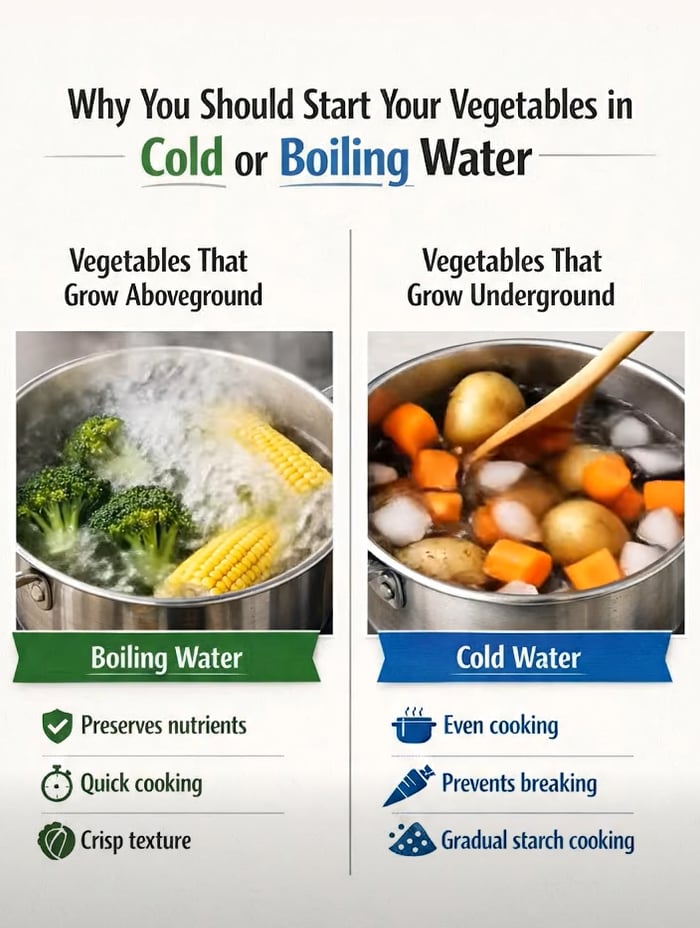
Vegetables That Should Start in Boiling Water (Above-Ground Vegetables)
These are typically soft, delicate, and grow above the soil, meaning they cook quickly and don’t need gradual heating.
Examples:
- Broccoli
- Spinach
- Green beans
- Asparagus
- Peas
- Corn
Why boiling water works better:
When you drop these vegetables into already boiling water, they:
- Cook quickly without over-softening
- Keep their bright color (especially green veggies)
- Maintain a slightly crisp texture
- Preserve more vitamins like vitamin C
How to do it properly:
- Bring water to a full boil first
- Add a pinch of salt
- Drop vegetables in
- Cook briefly (2–5 minutes depending on type)
- Remove immediately (or transfer to cold water if needed)
👉 This method is ideal when you want fresh, vibrant, slightly crunchy vegetables
Vegetables That Should Start in Cold Water (Underground Vegetables)
These are dense, starchy, and grow underground, so they need slow, even cooking from the inside out.
Examples:
- Potatoes
- Carrots
- Sweet potatoes
- Beets
- Turnips
- Parsnips
Why cold water works better:
If you throw these into boiling water directly:
- The outside cooks too fast
- The inside stays undercooked
- Texture becomes uneven or mushy
Starting in cold water allows:
- Even heat penetration
- Better structure (no breaking apart)
- More consistent texture throughout
How to do it properly:
- Place vegetables in a pot
- Cover with cold water
- Bring to a boil gradually
- Simmer until tender
👉 This method is best for soft, evenly cooked, creamy interiors
The Hidden Rule Most People Miss
It’s not just about “vegetables” — it’s about structure:
- Soft + leafy → boiling water
- Dense + starchy → cold water
Once you understand this, you can apply it to almost any food, not just vegetables.
What Happens If You Do It Wrong?
Using the wrong method doesn’t just affect taste — it changes the entire eating experience:
- Broccoli in cold water → dull color, mushy texture
- Potatoes in boiling water → outside falls apart, inside still hard
- Carrots added too late → uneven cooking
These are the small mistakes that make meals feel “off” even if the ingredients are good.
Pro Tips to Upgrade Your Cooking Instantly
- Add salt to water → improves flavor from the inside
- Don’t overcrowd the pot → keeps cooking even
- Use a timer → most veggies cook faster than you think
- Shock green vegetables in ice water → locks color and texture
Final Takeaway
Cooking vegetables isn’t just about heat — it’s about how you introduce heat.
- Start in boiling water for quick, delicate vegetables
- Start in cold water for dense, starchy ones
This one small adjustment can make your meals:
✔ Taste better
✔ Look better
✔ Feel better to eat
And once you get used to it, you’ll never go back to cooking vegetables the old way.