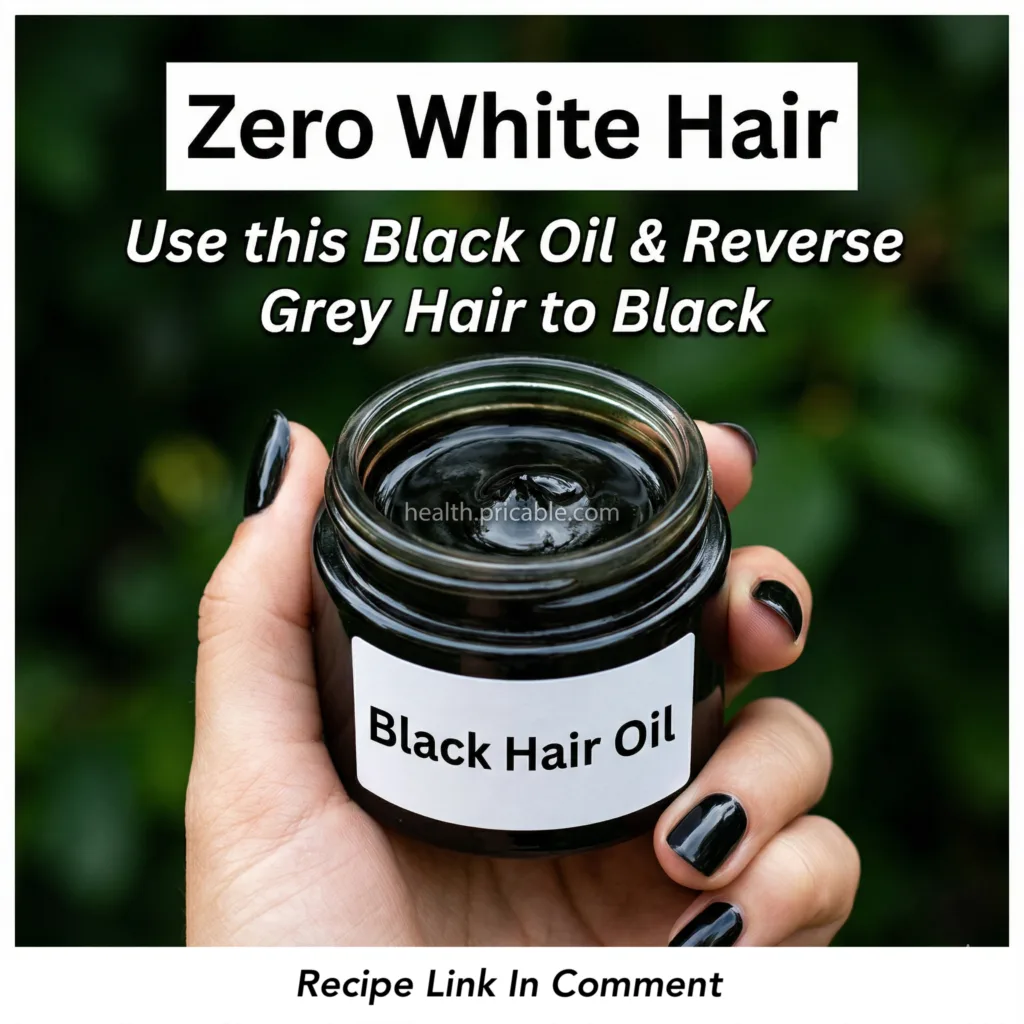
Black hair oil for gray hair is getting a lot of attention for one simple reason: people want a gentler, more natural-looking routine than constant touch-ups and harsh color products.
The idea is easy to understand. A dark herbal oil can coat dry, dull strands, add shine, soften wiry texture, and make gray hair look less harsh right away.
That is why this trend keeps spreading. It feels simple, affordable, and doable at home.
And when the blend is made well, it can double as a scalp treatment too.
Here is the softer truth. A hair oil is not the same thing as permanent hair color, and it will not reliably turn every white strand jet black overnight.
But that does not make the routine useless. A good black oil can help hair look richer, smoother, better conditioned, and less faded-looking while supporting a healthier scalp routine over time.
Why Black Hair Oil for Gray Hair Gets So Much Hype
- It helps dry gray hair look shinier, which can make color contrast feel less obvious.
- It softens coarse strands, so hair looks smoother and more polished.
- It supports the scalp, and a healthier scalp usually means a better overall hair routine.
- It is easy to use between washes, between salon visits, or as part of a weekly self-care habit.
- It can be made at home with a short ingredient list.
Black Hair Oil for Gray Hair Recipe
This version is meant to create a deep, dark herbal oil that feels rich on the scalp and works especially well on dry, frizzy, or coarse gray hair.
Ingredients
- 1/2 cup coconut oil or sesame oil
- 1 tablespoon black seed (kalonji)
- 1 tablespoon fenugreek seeds
- 10 to 15 fresh curry leaves, washed and fully dried
- 1 tablespoon dried amla pieces or 2 teaspoons amla powder
- 1 teaspoon castor oil for extra richness
- Optional: 1 vitamin E capsule
How to Make It
- Add the coconut oil or sesame oil to a small pan on very low heat.
- Add the black seed, fenugreek, curry leaves, and amla.
- Let the mixture warm slowly for 8 to 12 minutes. Do not let it smoke or fry aggressively.
- When the leaves look crisp and the oil turns darker, remove it from the heat.
- Let it cool fully.
- Strain into a clean dark glass bottle.
- Stir in the castor oil and vitamin E if using.
How to Use It
- Warm 1 to 2 teaspoons between your palms.
- Massage it into the scalp for 3 to 5 minutes.
- Pull the rest through the lengths, especially where gray hair feels dry or rough.
- Leave it on for at least 1 hour. Overnight is fine if your scalp tolerates oil well.
- Shampoo thoroughly, and repeat 2 to 3 times a week.
What This Oil Can and Cannot Do
What it can do
- Improve softness and slip
- Reduce the rough, wiry feel common with gray hair
- Add shine that makes hair appear richer and healthier
- Support a better scalp massage routine
- Help hair look less dull between color treatments
What it cannot do
- Act like permanent dye
- Guarantee full reversal of white hair
- Change hair color in one use
- Replace medical care if sudden graying or hair shedding has another cause
DIY or Store-Bought: Which Makes More Sense?
Homemade works well if you want control over ingredients, fragrance, thickness, and freshness. It is usually cheaper per bottle too.
Store-bought makes more sense if you want consistent texture, easier storage, less mess, and a formula that is ready to use immediately.
If you are new to this category, homemade is great for experimenting. If you already know your scalp is sensitive, a simpler store-bought formula with fewer ingredients may be easier to tolerate.
Buying Guide for Black Hair Oil
If you want to buy rather than make it, use these checkpoints before you spend money.
- Look for a short ingredient list. The simpler the formula, the easier it is to figure out what your scalp likes.
- Choose a real oil base first. Coconut, sesame, black seed, or castor oil should appear high on the list, not just perfume and fillers.
- Watch for herbal support ingredients. Curry leaf, amla, bhringraj, and black seed are common in this category.
- Check the texture. Very thick oils suit coarse or very dry hair. Lighter oils are easier for fine hair and frequent use.
- Avoid heavy artificial fragrance if your scalp gets itchy easily.
- Prefer dark bottles. They help protect oils from light and slow down quality loss.
- Read the rinse-out instructions. Some oils are meant for a short pre-wash treatment, while others are designed for longer wear.
- Think about staining. Very dark oils can mark pillowcases, towels, and light clothing.
- Check the amount of residue. If you dislike double-shampooing, avoid ultra-heavy blends.
- Start small. A smaller bottle is better for testing than buying the biggest jar first.
Common Mistakes and Quick Fixes
- Using too much oil
Quick fix: Start with 1 teaspoon for short hair or 2 teaspoons for longer hair. - Heating the oil too hard
Quick fix: Keep the flame low. You want infusion, not burning. - Applying to a dirty, product-heavy scalp
Quick fix: Use on a relatively clean scalp so the oil can spread more evenly. - Expecting instant black coverage
Quick fix: Use it for softness, shine, and healthier-looking hair first. - Skipping scalp massage
Quick fix: Spend at least 3 minutes massaging to improve distribution and routine consistency. - Using gritty powder without straining well
Quick fix: Strain through a fine cloth or coffee filter for a smoother finish. - Leaving it on when your scalp is already irritated
Quick fix: Wait until the scalp feels calm, then test again later. - Not washing out properly
Quick fix: Apply shampoo to dry or lightly damp oily hair first, then add water and lather.
Safety Note
- Always patch test first, especially if you use black seed, fenugreek, amla, or essential oils.
- Store the oil in a cool, dark place with the lid tightly closed.
- Stop using it if you notice burning, rash, bumps, or unusual shedding after application.
- Avoid using this kind of oil on a scalp with open cuts, active infection, or a strong irritation flare.
- Be extra careful if you have known allergies to seeds, sesame, fragrance, or botanicals.
- If you want to leave it on overnight, protect your pillowcase because dark oils can stain fabric.
Timeline: When You’ll Notice Changes
- After 1 use: Hair often feels softer, shinier, and less rough.
- After 2 to 4 weeks: Many people notice better manageability and less dryness, especially on coarse gray strands.
- After 6 to 8 weeks: Hair may look more consistently healthy, smoother, and richer in tone because it is better conditioned.
- After 2 to 3 months: You can judge whether this routine is worth keeping. For most people, the biggest visible payoff is better texture and a darker-looking sheen, not a dramatic overnight color flip.
FAQ
Can black hair oil really turn gray hair black?
It can make hair look darker, shinier, and healthier, but it does not work like permanent dye. Results are usually more about appearance and texture than instant full recoloring.
How often should I use black hair oil for gray hair?
Two to three times a week is a good starting point. Very dry hair may like more, while fine or oily scalps may prefer once or twice weekly.
Which base oil is better: coconut or sesame?
Coconut oil feels lighter for many people. Sesame oil feels richer and is often preferred for dry, coarse hair.
Can I leave black hair oil on overnight?
Yes, if your scalp tolerates it and the formula is not irritating. Start with a shorter wear time first.
Does this help dry, frizzy gray hair?
Yes, that is where it often shines most. Gray hair can be coarse and dehydrated, and oiling helps with softness and shine.
What should I look for in a store-bought black hair oil?
Look for a real oil base, a short ingredient list, low added fragrance, dark packaging, and clear directions for use.
Is homemade black hair oil better than store-bought?
Homemade gives you ingredient control. Store-bought gives you convenience and more consistent texture. The better choice depends on your scalp, budget, and patience.
Will this make my scalp greasy?
It can if you overapply. Use a small amount and focus on the scalp first, then spread the rest through the ends.
How long before I see results?
Most people notice softness and shine fast. Longer-term results depend on regular use and realistic expectations.
Can I use black hair oil with dyed hair?
Usually yes, but keep in mind rich oils can affect how freshly colored hair feels and how often you need to wash. Test gently first.
Final Takeaway
- A black hair oil routine makes the most sense if your gray hair feels dry, rough, or dull.
- The fastest visible benefit is usually softness and shine.
- The best homemade versions are simple, slow-infused, and easy to rinse out.
- Buying smart matters just as much as the ingredient list.
- Use it consistently, patch test first, and judge it by healthier-looking hair, not miracle promises.