A yellow perennial border has a special kind of energy. It feels cheerful in spring, glowing in summer, and warm well into fall. In the right planting, yellow does not look flat or repetitive. It looks alive. Soft lemon petals can cool a border. Deep gold flowers can anchor a bed. Daisy forms, spires, domes, and airy clusters can all work together to keep color moving through the season.
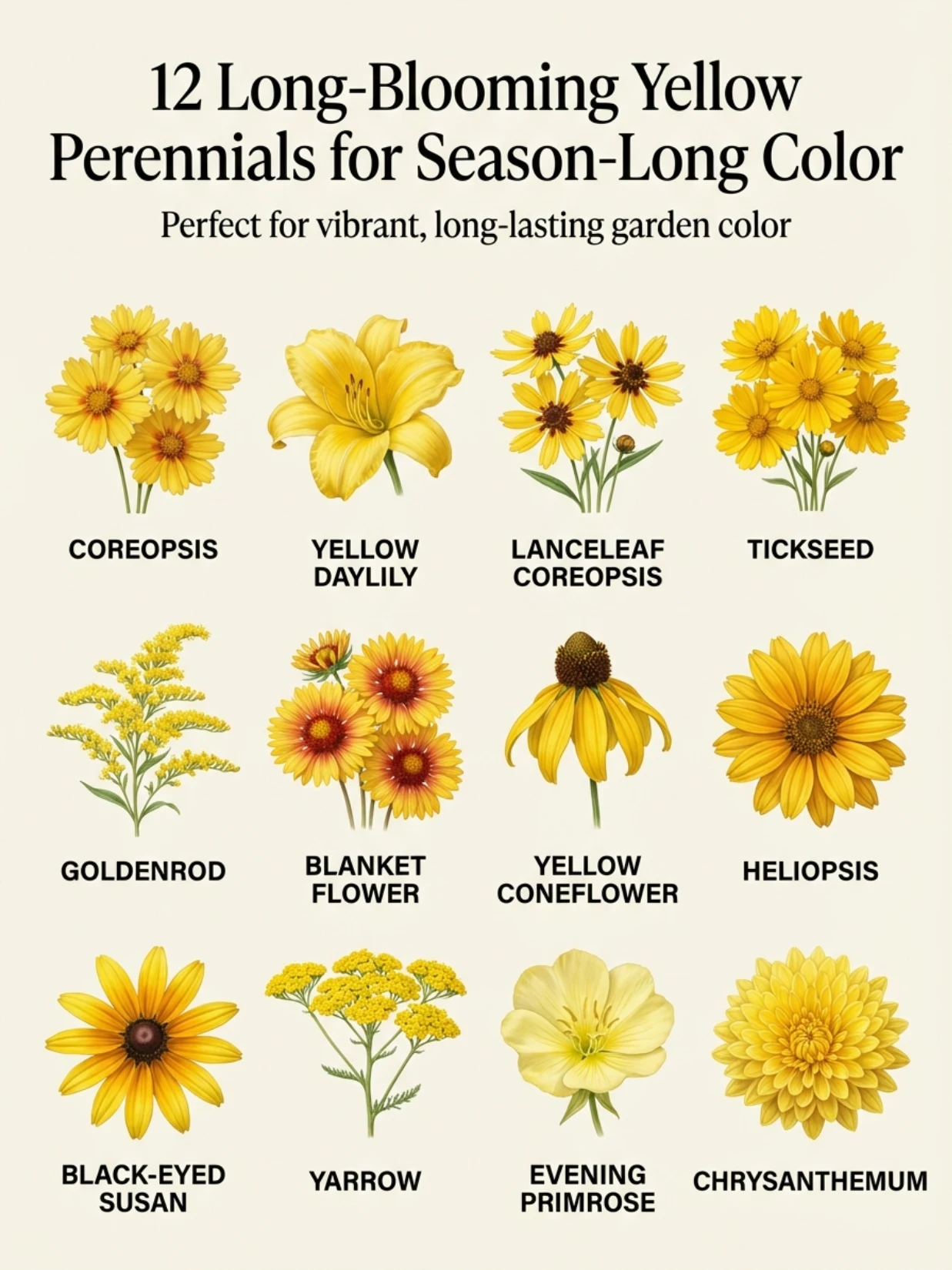
That is why long blooming yellow perennials are so useful. They do more than add brightness. They give structure, fill gaps between bloom waves, support pollinators, and help a garden stay visually active for months instead of only a few weeks. Some of the most useful choices include coreopsis, yellow daylily, lanceleaf coreopsis, tickseed, goldenrod, blanket flower, yellow coneflower, heliopsis, black-eyed Susan, yarrow, evening primrose, and chrysanthemum.
When planted thoughtfully, these flowers can turn an ordinary sunny bed into something that feels generous and well tended all season long.
Why yellow perennials work so well in the garden
Yellow is one of the easiest flower colors to use if you understand how to balance it. It pairs beautifully with purple, blue, white, burgundy, and silver foliage. It also helps unify mixed borders because so many shapes of yellow flowers exist, from daisy-like forms to flat umbels to fine-textured plumes.
Long-blooming perennials are especially valuable because they:
- reduce the need for constant replanting
- bridge gaps between seasonal bloom periods
- attract bees and other pollinators
- keep beds from looking tired in midsummer
- provide reliable color year after year
This is not just about beauty. It is also about garden management. A bed built from dependable perennials is easier to maintain than one that depends heavily on constant seasonal replacements.
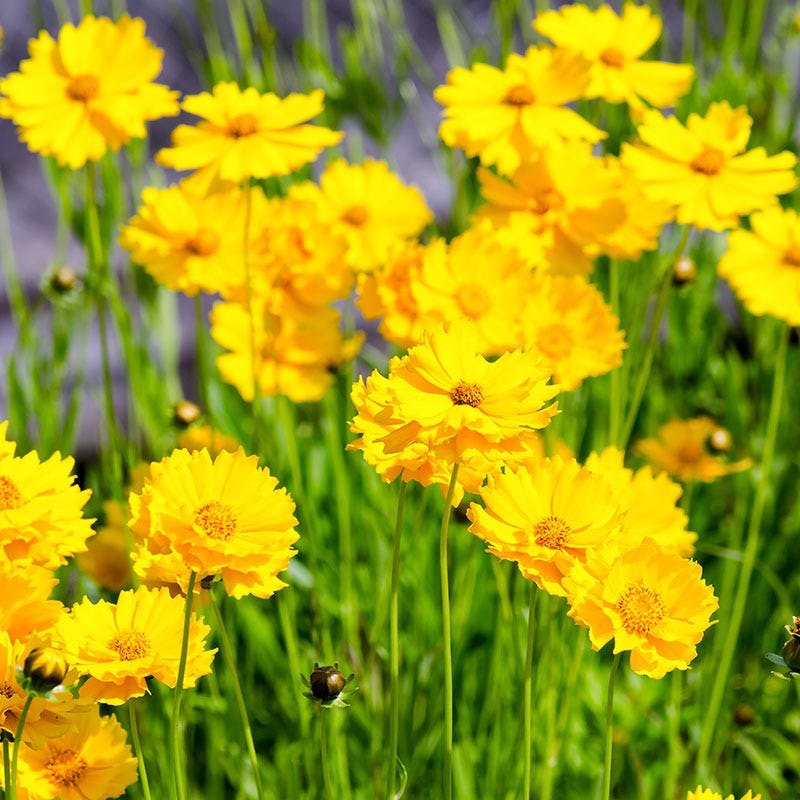
1. Coreopsis: one of the most dependable yellow bloomers
Coreopsis is one of the best yellow perennials for gardeners who want reliable color with relatively little fuss. It blooms generously, handles heat well once established, and fits easily into cottage gardens, prairie-style plantings, and mixed borders.
Why it is so useful
It flowers for a long time, attracts pollinators, and often responds well to light trimming after the first bloom flush.
Best care tip
Do not let spent flowers sit too long if you want the longest display. Deadheading or lightly shearing can encourage a fresh round of growth and bloom.
2. Yellow daylily: bold flowers with strong summer presence
Yellow daylilies bring a fuller, more substantial flower shape into the border. Their strap-like foliage also adds a different texture from all the daisy forms common in yellow plantings.
Why it earns a place
Daylilies are tough, adaptable, and visually strong. Even when not in bloom, the foliage helps give the garden body.
Best care tip
Remove spent flower stalks once blooming fades. This keeps the clump neater and directs energy back into healthy growth.

3. Lanceleaf coreopsis: airy and easy for sunny beds
Lanceleaf coreopsis has a lighter, more open feel than some larger perennials. It is especially useful when you want yellow woven through a planting without creating a dense visual block.
Why gardeners love it
It feels natural and easy rather than stiff, and it works very well with ornamental grasses and other meadow-style companions.
Best care tip
Place it where it gets strong sun and reasonable drainage. Too much shade usually weakens flowering and makes growth looser.

4. Tickseed: cheerful, long blooming, and easy to mix
Tickseed is closely associated with coreopsis in many gardens and is one of the best plants for sustained yellow color.
Why it works
It adds an informal, welcoming feel and pairs well with purple salvia, blue catmint, and white daisies.
Best care tip
Use it in groups rather than as single isolated plants. Repetition makes the yellow feel intentional and more powerful.
5. Goldenrod: a late-season yellow that deserves more respect
Goldenrod is often underestimated, but it is one of the strongest yellow perennials for late-season impact. It brings height, softness, and valuable late color.
Why it matters
A garden that looks beautiful in early summer but collapses by late summer is missing a plant like this. Goldenrod helps extend the season with confidence.
Best care tip
Choose the right variety for your space. Some are compact and garden-friendly, while others are more vigorous. Good selection matters.

6. Blanket flower: warm-toned color and strong summer bloom
Blanket flower brings a richer yellow, often blended with orange or red tones, which adds warmth and depth to a planting.
Why it is valuable
It blooms over a long period and gives the garden a sun-baked, high-summer look that works beautifully in dry borders.
Best care tip
Do not overfeed it. Blanket flower often performs better in moderately lean, well-drained soil than in very rich, lush conditions.
7. Yellow coneflower: graceful shape with pollinator value
Yellow coneflower has a slightly more relaxed and natural form than some tighter daisy flowers, which makes it very useful in looser perennial borders.
Why it stands out
The drooping petals and dark cone center create contrast and movement. It also supports pollinators well.
Best care tip
Leave some seed heads standing later in the season if you want added structure and wildlife interest.
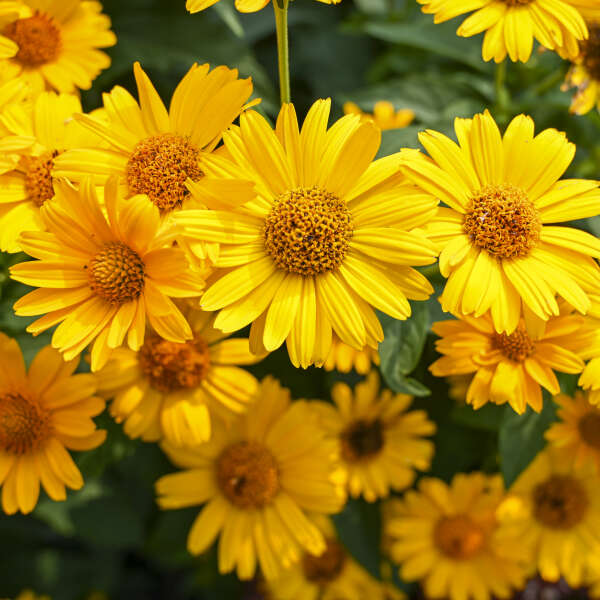
8. Heliopsis: a strong, sunflower-like perennial
Heliopsis has the look of a classic yellow daisy but with a more robust, upright garden presence. It is one of the best choices when you want bright yellow that reads clearly from a distance.
Why it works
It offers strong midsummer presence and helps anchor the center or back of a perennial border.
Best care tip
Provide decent airflow and avoid crowding. Tall, sturdy plants still perform better when light and air can move around them.
9. Black-eyed Susan: reliable and easy to love
Black-eyed Susan remains popular for a reason. It is bright, familiar, cheerful, and productive.
Why gardeners keep planting it
It is adaptable, forgiving, and easy to combine with ornamental grasses, asters, coneflowers, and salvias.
Best care tip
Divide older clumps when flowering weakens or the center becomes crowded. This keeps the plant vigorous and gives you more divisions to spread around the garden.
10. Yarrow: flat-topped flowers and drought-friendly strength
Yarrow brings a completely different flower form into the mix. Instead of daisy petals, it offers clusters of small blooms held in flat heads, which adds excellent contrast.
Why it is useful
It is especially good in sunny, drier gardens and helps break up the repetition of round yellow flower faces.
Best care tip
Do not overwater once it is established. Yarrow generally performs best when the soil drains well and the crown does not stay wet.

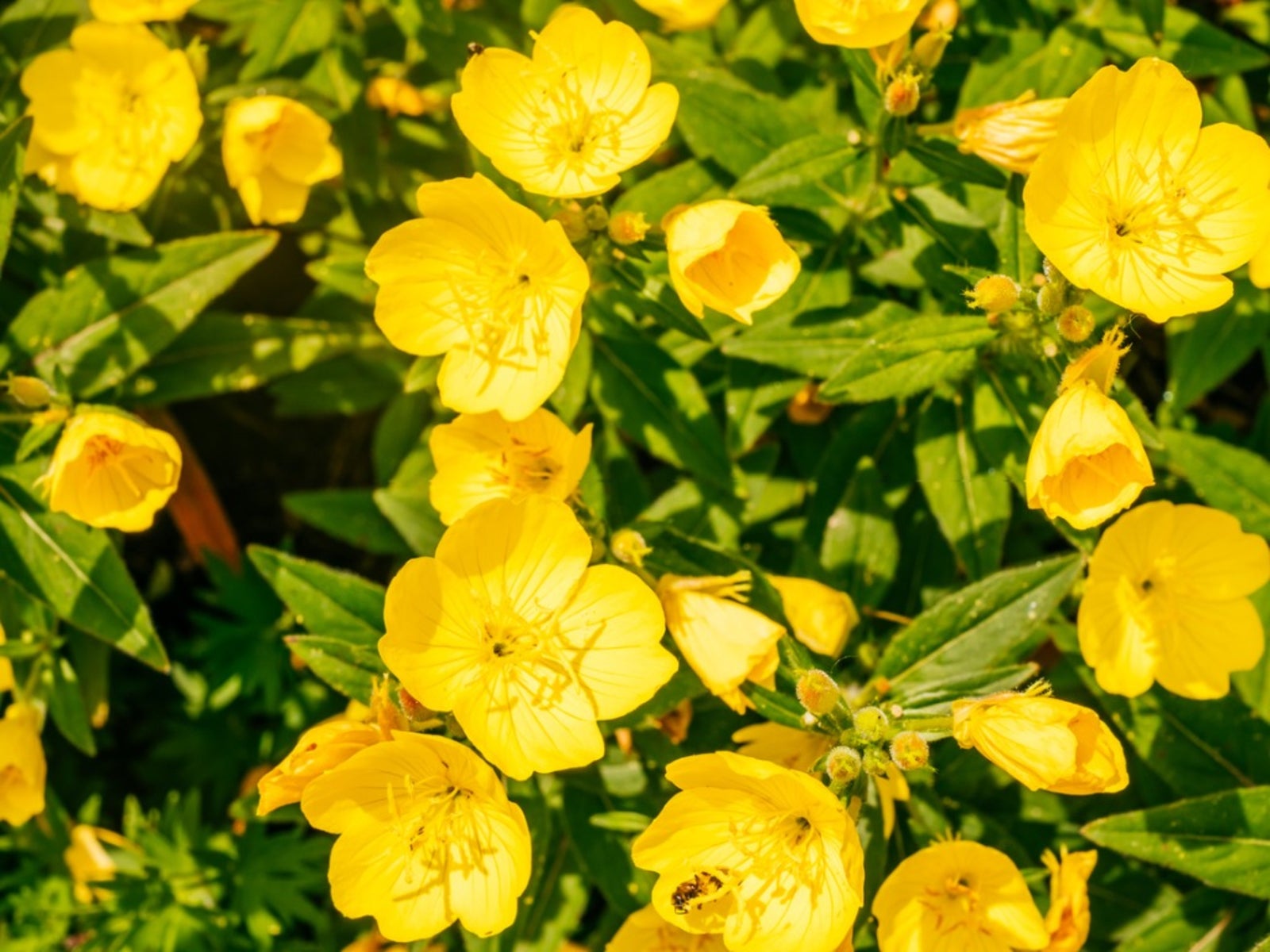
11. Evening primrose: soft yellow with an elegant feel
Evening primrose offers a lighter, more delicate yellow presence. It can soften a bold planting and create gentle transitions between stronger colors.
Why it is worth including
Not every yellow perennial has to shout. Some of the most effective borders mix bold golds with softer, paler tones.
Best care tip
Give it enough room to show its natural habit. Plants with softer flowers often look best when not packed too tightly.
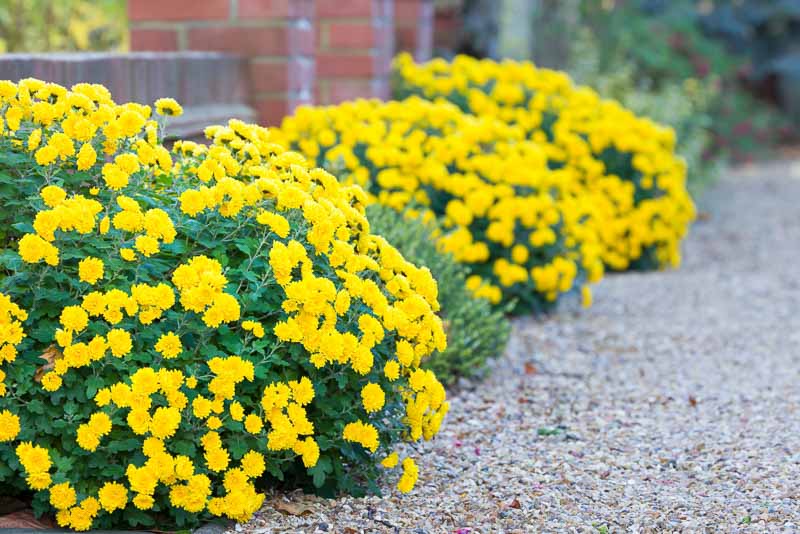
12. Chrysanthemum: the late-season finisher
Chrysanthemum is one of the best ways to make sure yellow continues into the late season. It gives fullness, strong color, and a distinctly autumn feel.
Why it matters
A garden that carries yellow all the way into fall feels complete. Chrysanthemums help provide that final strong wave of bloom.
Best care tip
Pinch growing tips earlier in the season if needed to encourage bushier, more compact plants with better late flower coverage.
How to combine these yellow perennials without making the bed feel repetitive
The secret is not to plant all yellow flowers in one flat block. The secret is to vary:
- flower shape
- plant height
- bloom time
- leaf texture
- tone of yellow
For example:
- yarrow adds flat clusters
- goldenrod adds airy vertical plumes
- daylily adds large sculptural flowers
- chrysanthemum adds rounded late-season fullness
- coreopsis and black-eyed Susan add familiar daisy forms
That variation keeps the planting rich and interesting.
The best companions for yellow perennials
Yellow becomes even more effective when paired with strong supporting colors and textures.
Excellent companions include:
- purple salvia
- blue catmint
- lavender-toned asters
- ornamental grasses
- silver foliage plants
- white flowers for relief and contrast
Yellow also looks especially beautiful with dark foliage and deep green backdrops. If your border already includes shrubs or grasses, yellow flowers can glow against them.
Care tips for a longer yellow display
If you want season-long color, planting choice matters, but maintenance matters too.
Deadhead strategically
Plants like coreopsis, tickseed, and blanket flower often bloom longer when spent flowers are removed.
Divide overcrowded clumps
Older perennials lose energy when they become crowded. Dividing keeps them blooming more strongly.
Match the plant to the soil
Dry-loving plants like yarrow and blanket flower will not be happiest in heavy, wet soil. Moisture-tolerant plants may be more forgiving. Correct placement saves effort later.
Feed moderately
Too much fertilizer often produces lush foliage and weaker flowering. Most long-blooming perennials prefer balanced rather than excessive feeding.
Mulch wisely
A moderate mulch layer helps with moisture retention and weed suppression, but keep crowns from staying buried and soggy.
A simple planting plan for season-long yellow
A strong sunny border might look like this:
- front: lanceleaf coreopsis, tickseed, yarrow
- middle: black-eyed Susan, blanket flower, yellow coneflower
- back: heliopsis, goldenrod, chrysanthemums
- accents: yellow daylily and evening primrose woven through for shape and contrast
This kind of layered planting gives bloom succession and visual depth instead of one short burst.
Final thoughts
A garden built around long-blooming yellow perennials can feel warm, bright, and alive from early summer well into fall. Coreopsis, yellow daylily, lanceleaf coreopsis, tickseed, goldenrod, blanket flower, yellow coneflower, heliopsis, black-eyed Susan, yarrow, evening primrose, and chrysanthemum each bring a different form of yellow to the landscape, and together they create a border that stays active much longer than a short-bloom planting ever could.
That is the real value of choosing the right perennials. You are not just adding color. You are building rhythm, resilience, pollinator support, and a garden that keeps giving long after the first flush of bloom has passed.