If you are trying to eat healthier, fiber is one of the first things worth paying attention to. It helps with fullness, supports smoother digestion, and usually makes meals feel more steady and satisfying. The problem is that many people think only of oats or vegetables when they hear the word fiber.
Fruit deserves more credit.
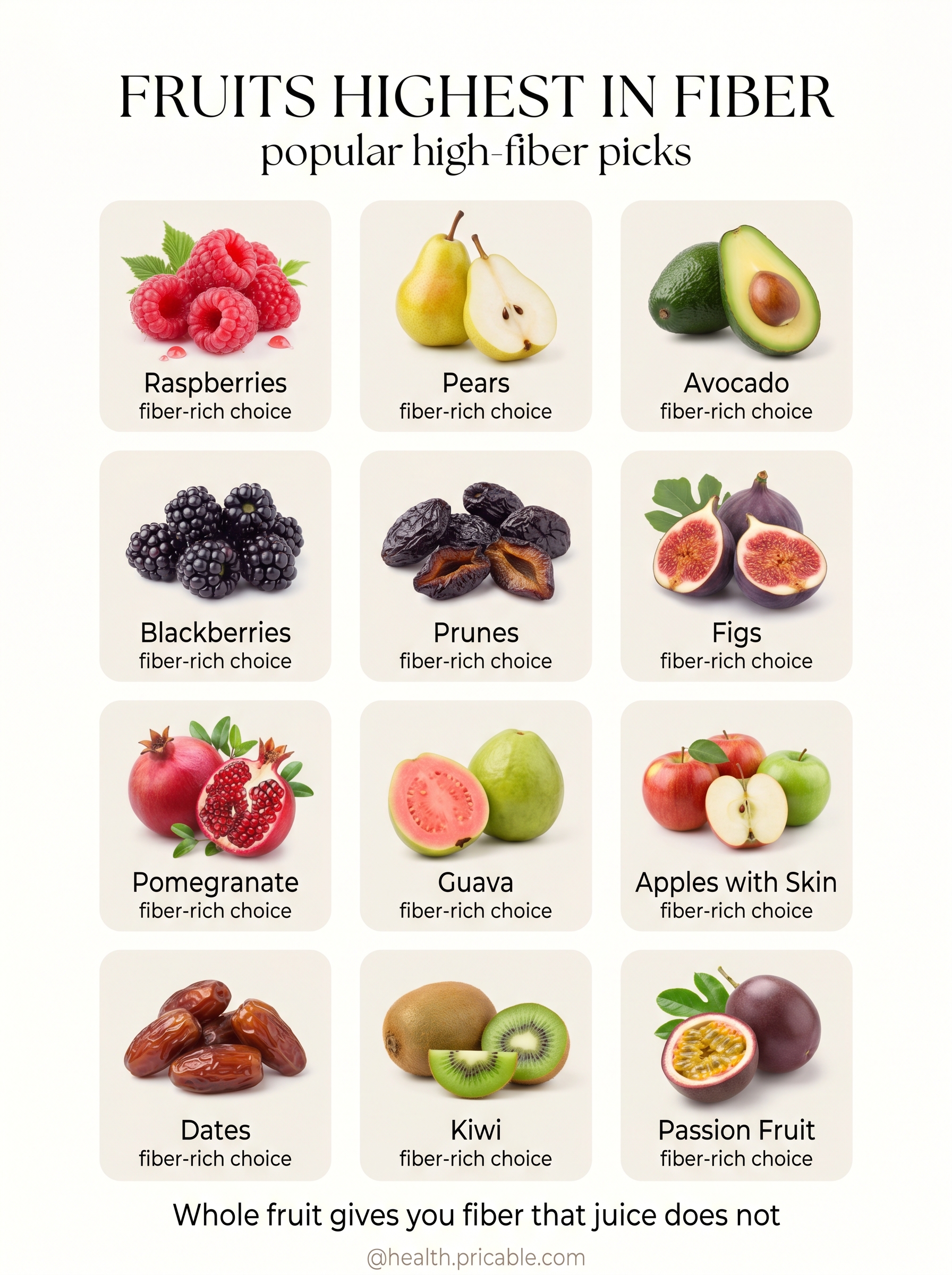
This list of fruits highest in fiber is a simple reminder that whole fruit can do much more than satisfy a sweet craving. It can help you snack smarter, support gut health, and make your day feel more balanced overall. The key message is right at the bottom of the graphic: whole fruit gives you fiber that juice does not.
That matters more than people realize. Juice may give vitamins, but once the fiber is stripped away, it usually becomes much less filling. Whole fruit slows you down, gives texture, and supports better satiety.
Why Fiber Rich Fruits Matter
Fiber helps food move through the digestive system more smoothly. It also helps many people feel fuller after eating, which can make it easier to manage appetite and avoid constant snacking. On top of that, high-fiber fruits often come packaged with water, vitamins, antioxidants, and natural sweetness.
That combination is exactly why whole fruit works so well in a healthy nutrition routine. You are not just getting sugar. You are getting a more complete food.
The Highest Fruits in Fiber to Add More Often
Raspberries
Raspberries are one of the easiest high fiber fruits to add to breakfast or snacks. They are small, bright, and naturally tart-sweet, but what makes them stand out is how much fiber they pack into a modest serving.
They work beautifully in yogurt bowls, oatmeal, chia pudding, or simply eaten with a handful of nuts.
Pears
Pears are one of the classic answers when people ask about fiber-rich fruit. They are especially helpful when eaten whole and with the skin on, since that is where part of the fiber is concentrated.
They make a great portable snack and pair well with cheese, yogurt, or nut butter.
Avocado
Avocado is a fruit that many people forget to count, but nutritionally it is one of the most satisfying on the list. It brings fiber along with healthy fats, which means it tends to keep you full longer than sweeter fruit alone.
It fits especially well on toast, in grain bowls, with eggs, or added to salads.
Blackberries
Blackberries are another berry that deserves more attention for gut-friendly eating. Like raspberries, they give you fiber in a fresh, easy-to-use form.
They are great in breakfast bowls, blended into thicker smoothies, or eaten as a simple snack with Greek yogurt.
Prunes
Prunes are well known for digestive support, and for good reason. They are a concentrated dried fruit, so they bring both natural sweetness and fiber in a smaller portion.
They can be very useful when digestion feels sluggish, but because they are concentrated, a small serving is usually enough.
Figs
Figs have a soft texture, a naturally rich sweetness, and a helpful amount of fiber. Fresh figs feel more delicate and refreshing, while dried figs are more concentrated and snack-like.
They pair nicely with yogurt, nuts, cottage cheese, or even savory plates.
Pomegranate
Pomegranate adds fiber in a very different way. The seeds give both crunch and juice, which makes this fruit feel more satisfying and interesting to eat.
It works well sprinkled over yogurt, oats, salads, or grain bowls when you want sweetness with texture.
Guava
Guava is one of the most underrated fruits in healthy eating. It is rich in fiber and also brings a lot of vitamin C, making it a very nutrient-dense choice.
It is easy to slice and eat on its own, and it also works well in fruit salads.
Apples with Skin
Apples are one of the most practical fiber fruits because they are affordable, portable, and easy to keep around. The skin matters here, which is why apples with skin are specifically listed.
They are a smart everyday snack, especially when paired with peanut butter, almonds, or cheese for better fullness.
Dates
Dates are naturally sweet and more concentrated than fresh fruit, but they also provide fiber. They can be useful when you want something sweet that still has a little more nutritional value than candy or pastries.
Because they are dense and easy to overeat, portion awareness helps. A couple of dates with nuts can make a balanced snack.
Kiwi
Kiwi is often praised for digestion support, and it also deserves a spot on a fiber-rich fruit list. It is refreshing, convenient, and gives a nice mix of fiber and vitamin C.
It is especially good in yogurt bowls, fruit salads, or eaten on its own as a lighter snack.
Passion Fruit
Passion fruit is small, but it is one of the most interesting fiber-rich fruits because of its seedy interior. Those seeds add texture and fiber while the fruit itself brings a bright, tangy flavor.
It is delicious spooned over yogurt or mixed into fruit bowls for something a little different.
How to Eat More Fiber From Fruit Without Overcomplicating It
The easiest way is to build fruit into meals you already eat.
Add raspberries, blackberries, kiwi, or pomegranate to breakfast. Use apples with skin or pears as grab-and-go snacks. Add avocado to savory meals for a fiber boost that also improves fullness. Keep dates, figs, or prunes for small portions when you want something sweet but more nourishing.
A smart tip is to pair fruit with protein or healthy fat. That could mean apple with nut butter, berries with Greek yogurt, or figs with cottage cheese. This usually makes the snack much more satisfying than fruit alone.
When You May Notice the Difference
Some people notice better fullness and more regular digestion within a few days of eating more whole fruit consistently. For others, it may take one to two weeks, especially if fiber intake was low before.
The most important thing is to increase fiber gradually and drink enough water. Adding too much too fast can feel uncomfortable for some people.
A Simple Safety Note
High-fiber fruits are helpful, but everyone tolerates them differently. Dried fruits like prunes, figs, and dates can feel intense for sensitive digestion if eaten in large amounts. People with IBS or other digestive conditions may also find that some fruits work better than others.
Final Takeaway
The best fruits highest in fiber are not just good for digestion. They also help with fullness, better snacking, and more balanced eating overall. Raspberries, pears, avocado, blackberries, prunes, figs, pomegranate, guava, apples with skin, dates, kiwi, and passion fruit all bring something useful to the table.
The bigger lesson is simple: choose whole fruit more often, because that is where the fiber lives. Juice can be refreshing, but whole fruit does much more for satiety and gut support.