Chia seeds don’t “fail”—they just behave differently depending on how you use them. When eaten dry, too diluted, or in large amounts, they can cause bloating or low satiety. When prepared correctly (soaked, balanced with protein/fat), they support digestion and long-lasting fullness.
The Real Problem Isn’t Chia Seeds
Chia seeds are often labeled as a “superfood.”
High in fiber. Omega-3s. Easy to add to anything.
But many people try them… and feel:
- Bloated
- Still hungry
- Uncomfortable digestion
So they assume:
👉 “Chia just doesn’t work for me.”
But here’s the deeper truth:
It’s not the seed. It’s the structure.
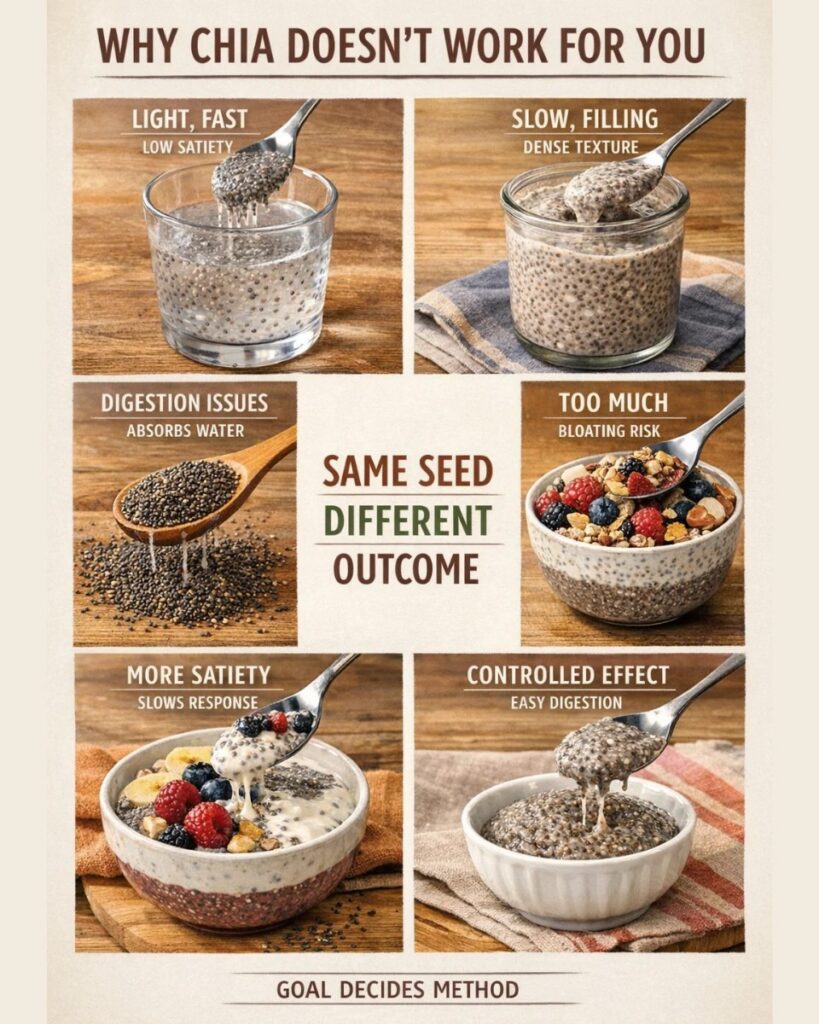
Same Seed, Different Outcome
Chia seeds are highly sensitive to how they’re used.
Because they absorb water and form a gel, small changes in preparation create very different effects in your body.
1. Light & Diluted → Low Satiety
When chia is mixed with too much liquid:
- Texture becomes thin
- Digestion becomes faster
- Satiety signals are weaker
👉 Result:
You feel like you “ate something”… but get hungry again quickly
2. Dense & Structured → High Satiety
When chia is properly soaked and thick:
- Forms a gel-like texture
- Slows digestion
- Extends fullness
👉 Result:
More stable energy + reduced cravings
3. Dry Chia → Digestive Discomfort
Dry chia seeds absorb water inside your digestive system.
This can lead to:
- Bloating
- Discomfort
- Sluggish digestion
👉 Especially if water intake is low
4. Too Much Chia → Overload Effect
Chia is extremely fiber-dense.
Large portions can overwhelm your system:
- Excess fiber → fermentation → gas
- Slower digestion → heaviness
👉 More is not better
Why Chia Affects Digestion So Strongly
Chia seeds contain soluble fiber, which:
- Absorbs water
- Expands in the gut
- Slows gastric emptying
This can be beneficial—but only when balanced correctly.
The Key Principle: Structure Controls Response
Most people focus on:
❌ Calories
❌ Ingredients
But ignore:
✔ Texture
✔ Hydration
✔ Balance
👉 These determine how your body reacts
How to Use Chia Seeds Correctly
✔ 1. Always Soak Them
Let chia absorb liquid before eating
Simple ratio:
- 1–2 tbsp chia
- 1 cup liquid
- Soak 2–4 hours (or overnight)
✔ 2. Aim for Thickness
A thicker texture slows digestion more effectively
👉 Think pudding, not water
✔ 3. Combine with Protein or Fat
Examples:
- Yogurt
- Nuts
- Protein powder
👉 Improves satiety and reduces energy crashes
✔ 4. Start Small
If new to chia:
- Begin with 1 tablespoon
- Gradually increase
✔ 5. Stay Hydrated
Chia pulls water into your digestive system
👉 Low hydration = higher discomfort risk
A Simple Chia Setup That Works
Instead of guessing, try this:
- Chia seeds + milk
- Add yogurt or protein powder
- Top with berries + nuts
👉 This creates:
- Fiber + protein + fat balance
- Slower digestion
- Better fullness
Who Should Pay Attention to This
Chia setup matters most if you:
- Feel bloated after eating fiber
- Get hungry quickly after “healthy meals”
- Use smoothies or light meals often
- Have sensitive digestion
What Changes When You Fix It
When chia is used correctly, many people notice:
- Less bloating
- Longer fullness
- More stable energy
- Better digestion
Often within a few adjustments.
Common Mistakes to Avoid
- Adding chia directly to drinks without soaking
- Using too much at once
- Making it too watery
- Skipping protein/fat
SEO Boost Section: How to Eat Chia Seeds Properly
If you’re searching for:
👉 how to eat chia seeds
👉 why chia seeds cause bloating
👉 chia seeds benefits and side effects
The key is not the seed itself—but:
- Preparation method
- Portion size
- Meal structure
Final Takeaway
Chia seeds aren’t “good” or “bad.”
They’re responsive.
And depending on how you use them,
they can either support your body—or work against it.
So the real question is: how are you using chia right now?