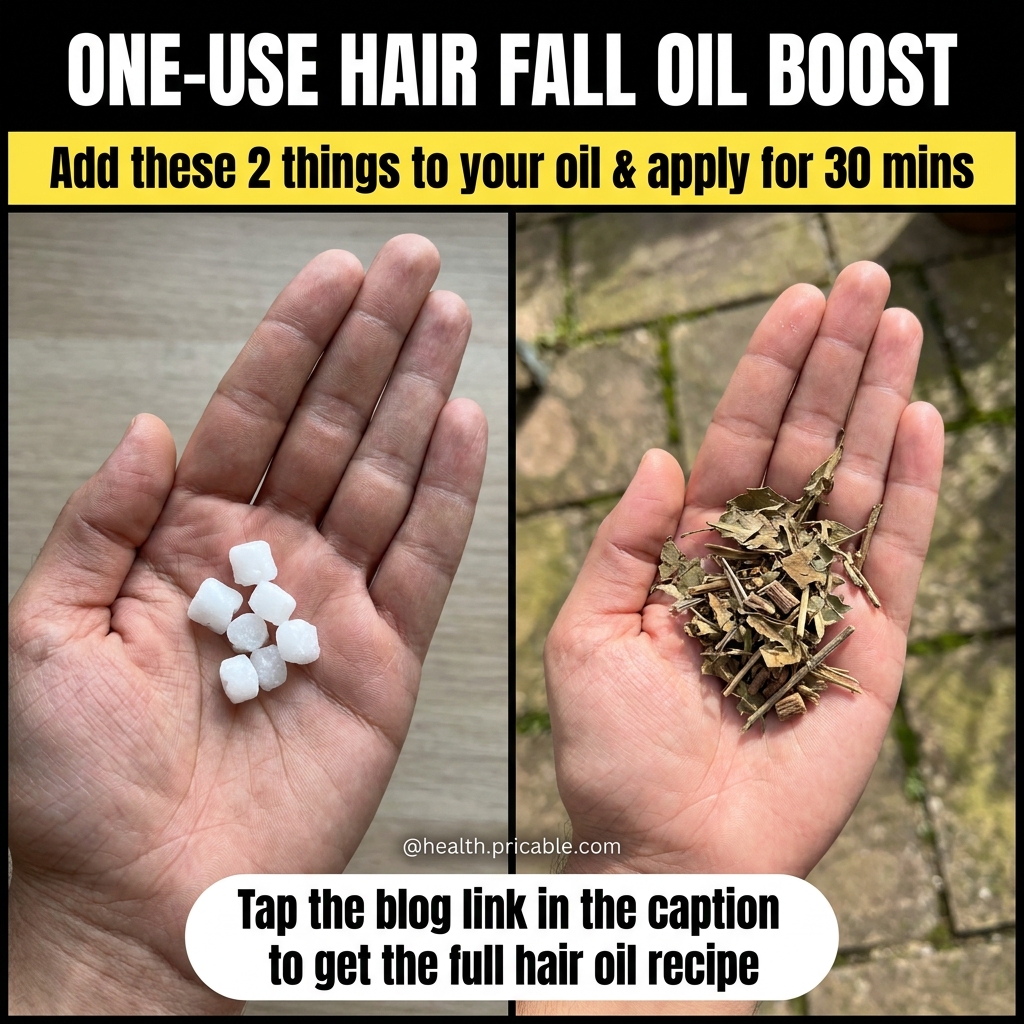
The two add-ins are usually camphor and curry leaves, mixed into a carrier oil like coconut, sesame, or olive oil.
The appeal is easy to understand: a warm oil feel, a cooling scalp sensation, and a short routine that fits before shower time.
Hair fall can come from stress, postpartum changes, low iron, thyroid issues, tight hairstyles, harsh bleaching, scalp irritation, or genetics.
But a careful scalp oiling routine may support a healthier-feeling scalp, reduce dryness, improve slip before washing, and help hair look softer and less brittle.
Why this 30-minute oil boost feels so popular
- Camphor gives a cooling feel: In tiny amounts, it can make the scalp feel refreshed, but too much can irritate.
- Curry leaves are traditionally used in hair oils: They are often infused into oil for scalp massage and shine support.
- Carrier oil reduces friction: Coconut, sesame, or olive oil can help hair feel smoother before shampooing.
- Massage encourages routine consistency: A few minutes of gentle massage can make the scalp feel less tight.
- Thirty minutes is realistic: It gives the oil time to coat the scalp and strands without requiring an overnight treatment.
The key decision is not just “which herb is best.” It is choosing the right base oil, using a tiny amount of camphor, and applying the blend in a way your scalp can tolerate.
Best oil for hair fall and thinning
The best base oil depends on your scalp type, hair texture, and how easily your roots get greasy.
For this recipe, use one carrier oil as the base instead of mixing too many oils at once.
Option 1: Coconut oil
Coconut oil is rich and popular for pre-wash oiling. It works best for dry, coarse, curly, or frizz-prone hair that can handle heavier oils.
Use less if your scalp gets oily fast.
Option 2: Sesame oil
Sesame oil has a traditional scalp-oiling feel and a medium-heavy texture. It suits dry scalps, thick hair, and people who like a warming oil massage before shampoo.
Option 3: Olive oil
Olive oil is easy to find and gives good slip, but it can feel heavy. Use it mainly on lengths and ends if your scalp gets clogged or greasy.
Option 4: Jojoba oil
Jojoba oil is lighter and often better for people who dislike heavy residue. It is a good choice for fine hair, oily roots, or beginners.
Option 5: Grapeseed oil
Grapeseed oil is lightweight and easy to spread. It is a practical option if your hair looks flat after heavier oils.
How to make hair fall oil with camphor and curry leaves
This is a one-use recipe, which means you make only enough for one scalp treatment. That is safer and fresher than storing a jar of wet herbs in oil.
Ingredients
- 2 tablespoons carrier oil: coconut, sesame, olive, jojoba, or grapeseed oil
- 1 small pinch crushed natural camphor, about the size of 1 tiny rice grain once crushed
- 1 tablespoon dried curry leaves, lightly crushed
- Optional: 2 drops rosemary essential oil only if your scalp already tolerates essential oils
Tools
- Small heat-safe bowl
- Spoon
- Fine strainer or clean cloth
- Applicator bottle or fingertips
Steps
- Add 2 tablespoons of your chosen carrier oil to a small heat-safe bowl.
- Add 1 tablespoon dried curry leaves.
- Warm the bowl using a double-boiler method for 3 to 5 minutes. Do not fry the leaves or smoke the oil.
- Turn off the heat and let the oil cool until it is comfortably warm, not hot.
- Crush a very tiny amount of camphor and stir it into the warm oil until dissolved.
- Strain out the leaves so pieces do not stick to your scalp.
- Use immediately for one 30-minute treatment.
Do not add large camphor cubes directly to your scalp oil. Camphor is strong, and more is not better.
How to use hair oil for hair fall in 30 minutes
This routine works best before shampoo, not after styling.
Apply it when your scalp is dry, your hair is detangled, and you have enough time to wash thoroughly.
30-minute application routine
- Minute 0 to 3: Part your hair into 4 to 6 sections.
- Minute 3 to 8: Apply a small amount of oil directly to the scalp using fingertips or an applicator bottle.
- Minute 8 to 12: Massage gently with finger pads. Do not scratch with nails.
- Minute 12 to 25: Let the oil sit. Clip hair loosely and avoid tight buns.
- Minute 25 to 30: Add a little oil to dry ends if needed, then prepare to shampoo.
- After 30 minutes: Shampoo once or twice depending on your hair type.
How much oil to use
- Fine hair: 1 to 2 teaspoons total
- Medium hair: 1 tablespoon total
- Thick or curly hair: 1 to 2 tablespoons total
- Very oily scalp: Apply only to dry areas and avoid soaking the roots
Your scalp should feel lightly coated, not dripping. Too much oil makes washing harder and can leave roots flat.
What to look for before you buy hair fall oil
Buying a ready-made hair fall oil can be easier than making a fresh mix every time.
The best choice is usually a simple, well-labeled oil with scalp-friendly ingredients and no exaggerated promises.
- Clear carrier oil listed first: Look for coconut, sesame, jojoba, argan, grapeseed, almond, or olive oil as the base.
- Transparent ingredient list: Avoid products that hide everything under “proprietary blend” without details.
- Low-fragrance or fragrance-free: Strong perfume can be irritating, especially if your scalp is sensitive.
- No miracle regrowth claims: Be cautious with oils promising guaranteed regrowth, instant thickness, or bald spot reversal.
- Scalp-safe add-ins: Rosemary, curry leaf, amla, bhringraj, fenugreek, and aloe may be useful in gentle formulas.
- Patch-test instructions: A serious product should tell you how to test before full use.
- Dark glass or sealed packaging: Oils stay fresher when protected from heat, light, and repeated contamination.
- No unnecessary harsh additives: Avoid drying alcohols, mystery dyes, and heavy fragrance if your scalp reacts easily.
- Texture that matches your hair: Fine hair usually does better with lighter oils; thick or dry hair may prefer richer oils.
If you are choosing between DIY and store-bought oil, start with the simpler option. A basic carrier oil used correctly is often better than a complicated blend used inconsistently.
Hair fall oil for sensitive scalp
If your scalp is sensitive, itchy, flaky, or easily irritated, use a simpler version of this recipe.
Skip camphor at first and test only a plain carrier oil with strained curry-leaf infusion.
Sensitive scalp version
- Use 1 tablespoon jojoba oil or grapeseed oil.
- Infuse with 1 teaspoon dried curry leaves for 3 minutes using gentle warmth.
- Strain well.
- Apply for 10 to 15 minutes the first time.
- Wash out with a mild shampoo.
If that feels comfortable, increase to 20 to 30 minutes next time. Add camphor only if your scalp tolerates cooling ingredients well.
Common mistakes and quick fixes
- Mistake: Using too much camphor. Why it matters: camphor can sting or irritate the scalp. Fix: use only a tiny pinch or skip it completely.
- Mistake: Applying oil to a dirty, sweaty scalp. Why it matters: buildup plus oil can feel itchy. Fix: apply before wash day when the scalp is dry, not sweaty.
- Mistake: Leaving it on overnight the first time. Why it matters: longer contact increases irritation risk. Fix: start with 20 to 30 minutes.
- Mistake: Scratching during massage. Why it matters: nails can inflame the scalp. Fix: use soft finger pads and light circular pressure.
- Mistake: Not straining the herbs. Why it matters: leaf pieces can stick and create residue. Fix: strain before applying.
- Mistake: Using heavy oil on fine hair. Why it matters: roots may look flat after washing. Fix: use jojoba or grapeseed oil and reduce the amount.
- Mistake: Expecting one use to stop shedding. Why it matters: hair cycles take time. Fix: track shedding and scalp comfort over 2 to 4 weeks.
- Mistake: Ignoring sudden hair loss. Why it matters: sudden shedding may need professional evaluation. Fix: talk with a clinician or dermatologist if shedding is severe or patchy.
Safety note before trying this recipe
Patch test before applying this oil to your whole scalp. Place a tiny amount behind the ear or on the inner arm, wait 24 hours, and do not use it if you notice burning, rash, swelling, or strong itching.
Do not use camphor oil blends on children, during pregnancy, while breastfeeding, on broken skin, or near the eyes. Do not ingest camphor or use large amounts on the body.
If you have eczema, psoriasis, scalp sores, severe dandruff, unexplained bald patches, or sudden heavy shedding, get professional guidance before trying strong DIY scalp treatments.
For storage, this one-use oil is best made fresh. If you have leftover strained oil, discard it instead of saving it for weeks.
Realistic timeline: what you may notice
Same day
Your scalp may feel refreshed, and your hair may feel softer after washing. Some people notice less dryness or less tangling right away.
After 1 week
If used once or twice, your scalp may feel more comfortable, especially if dryness was part of the problem. Shedding may still look the same because hair fall changes slowly.
After 2 to 4 weeks
With consistent gentle use, hair may look smoother and breakage may seem reduced. If shedding is caused by internal health, hormones, medication, or genetics, oil alone may not change it much.
FAQ
What is the best oil for hair fall and thinning?
The best oil depends on your scalp and hair type. Coconut or sesame oil may suit dry, thick hair, while jojoba or grapeseed oil is often better for fine hair or oily roots.
What should I look for before I buy hair fall oil?
Look for a clear carrier oil, a transparent ingredient list, low fragrance, sealed packaging, and realistic claims. Avoid products that promise guaranteed regrowth or instant bald spot reversal.
How do you make hair fall oil with camphor and curry leaves?
Warm 2 tablespoons of carrier oil with 1 tablespoon dried curry leaves for 3 to 5 minutes, cool it, add a tiny pinch of crushed camphor, strain, and use immediately before shampoo.
How do you use hair oil for hair fall in 30 minutes?
Apply a small amount to parted sections of the scalp, massage gently for a few minutes, leave it on for 30 minutes, then shampoo thoroughly. Avoid soaking the scalp with too much oil.
Is hair fall oil safe for sensitive scalp?
It can be, but sensitive scalps should start with a plain carrier oil or a very mild curry-leaf infusion. Skip camphor, essential oils, and strong fragrance until you know your scalp tolerates oiling.
Can I leave this camphor hair oil on overnight?
It is better not to leave camphor blends on overnight, especially the first time. A 20 to 30 minute pre-shampoo treatment is a safer starting point.
How often should I use this hair fall oil?
Once weekly is enough for most people. If your scalp is dry and tolerates it well, you may use it up to twice weekly.
Can this oil regrow bald spots?
This oil may support scalp care, but it should not be treated as a guaranteed bald spot regrowth solution. Patchy hair loss, widening parts, or sudden shedding should be checked by a dermatologist.
Can I use fresh curry leaves instead of dried?
Dried curry leaves are better for a quick oil infusion because they contain less water. Fresh leaves can introduce moisture, which makes storage riskier and may cause splattering if heated.
Why does more hair fall out when I oil my scalp?
Some loose hairs may come out during massage because they were already ready to shed. But if oiling causes burning, itching, or noticeably heavier shedding, stop using the blend.
Before choosing a hair oil, compare your scalp type, your wash schedule, and how much residue your hair can handle. The right oil is the one you can use consistently without irritation or greasy buildup.
Final takeaway
- Use this recipe as a 30-minute pre-shampoo scalp oil, not an overnight miracle treatment.
- Choose coconut or sesame oil for dry, thick hair, and jojoba or grapeseed oil for fine or oily hair.
- Use only a tiny pinch of camphor, or skip it if your scalp is sensitive.
- Strain curry leaves before applying so the oil rinses out cleanly.
- Avoid strong fragrance, huge regrowth claims, and heavy oils that make your roots feel coated.
- Track scalp comfort and shedding for 2 to 4 weeks, and get help for sudden, severe, or patchy hair loss.