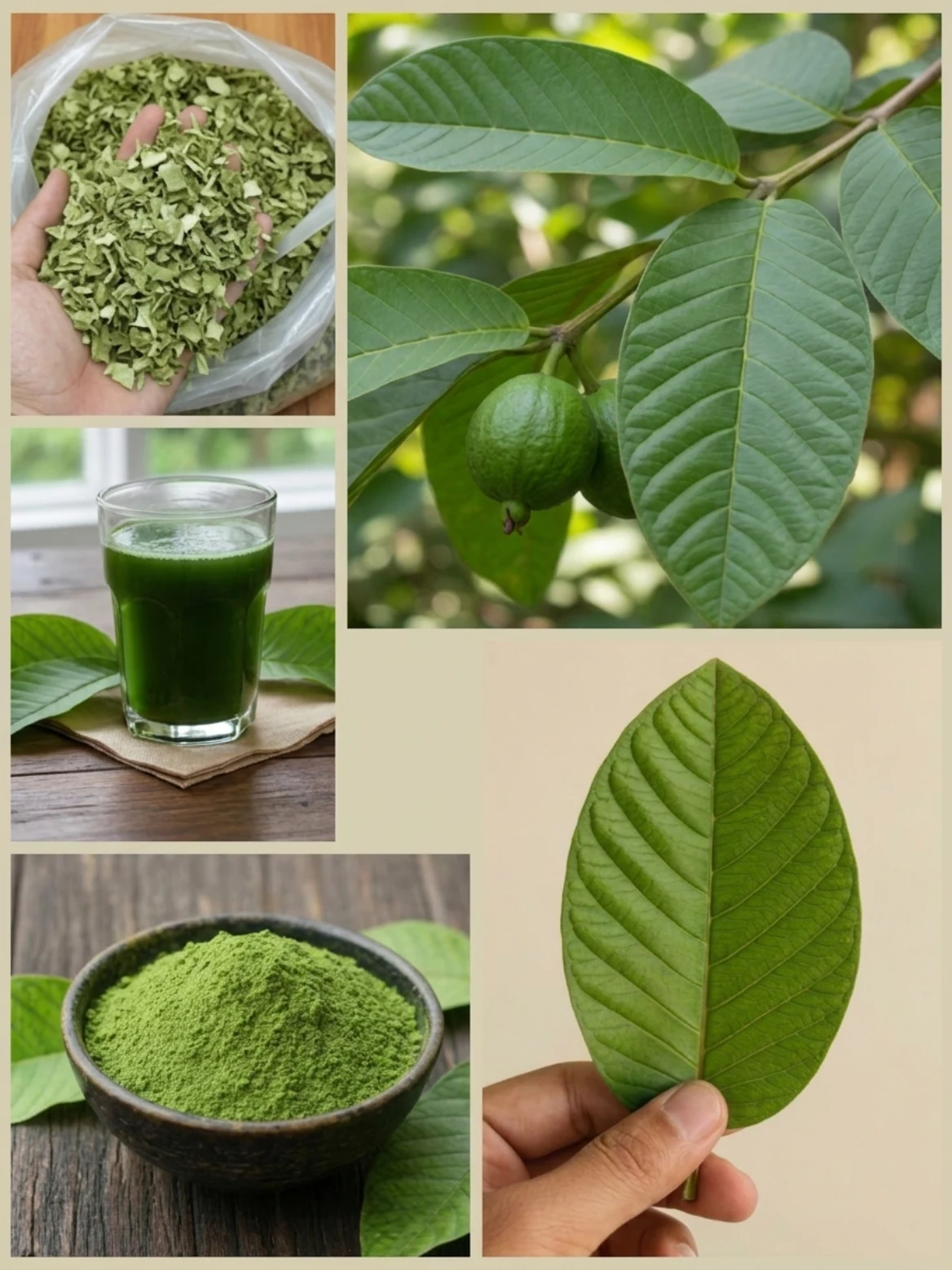
Guava is famous for its fruit, but in many traditional wellness routines, the leaves are the part people quietly save, dry, crush, and brew.
That is what makes guava leaf powder and guava leaf tea so interesting. The leaves are commonly used in traditional practice for digestion, loose stools, and blood sugar support, and modern research has paid attention to them because they contain polyphenols, flavonoids, and other plant compounds with biological activity. Reviews of Psidium guajava leaves describe compounds such as quercetin and other phenolics, and they note long-standing traditional use alongside laboratory, animal, and some human studies.
Most people never expect much from a plain green leaf. But this is one of those herbal ingredients that has stayed relevant because it is simple, practical, and surprisingly versatile.
What Guava Leaves Are Traditionally Used For
Guava leaves are often associated with a few specific traditional uses.
The best-known one is digestive support, especially for diarrhea and stomach upset. Clinical and preclinical research has explored guava leaf decoction for infectious diarrhea, and traditional medicine texts have long described decoctions of guava leaves as antidiarrheal remedies.
Another common reason people use guava leaf tea is blood sugar support. A review focused on guava leaf tea reported that an aqueous guava leaf extract tea has been studied in people with prediabetes, type 2 diabetes, and borderline hyperlipidemia, with attention to post-meal glucose and safety.
The leaves are also valued more broadly because they are rich in plant compounds with antioxidant activity, which is one reason they keep showing up in wellness conversations.
Ingredients
A simple traditional-style guava leaf drink can be made from either dried leaves or powder.
Option 1: Guava leaf tea
- 1 to 2 teaspoons dried guava leaves
- 1½ to 2 cups water
Option 2: Guava leaf powder drink
- ½ to 1 teaspoon guava leaf powder
- 1 cup warm water
The powder version is usually finer and stronger-tasting, while the leaf version feels more like a regular herbal tea.
How to Prepare It
Guava leaves are usually prepared gently, not aggressively.
For dried leaf tea
Add the dried leaves to water and bring them to a light boil. Lower the heat and simmer for about 10 minutes, then let the tea sit another 5 minutes before straining.
For guava leaf powder
Stir the powder into warm water and let it sit briefly so the particles hydrate. Some people strain it, while others drink it as-is.
If you want a milder cup, use less leaf or shorten the simmering time. Guava leaf tea can taste earthy, slightly bitter, and a little astringent.
How to Use It
This remedy is usually used in small, moderate amounts.
Many people prefer it:
After meals
This is especially common when the goal is digestion support or steadier post-meal comfort.
In the morning
Some people like it early in the day as a simple herbal routine.
During short wellness periods
It is often used for a few days at a time rather than treated like an all-day drink.
Why It Works
This is where guava leaves become more than just a folk remedy.
Guava leaves contain polyphenols, flavonoids, tannins, and quercetin-related compounds, and these are thought to contribute to their antidiarrheal, antimicrobial, and metabolic effects. Reviews of guava leaf chemistry and activity repeatedly highlight quercetin and other phenolic compounds as important constituents.
For digestion, the evidence is especially interesting. A randomized clinical trial evaluated guava leaf decoction in adults with acute infectious diarrhea over five days, and the broader literature describes traditional and experimental support for guava leaf use in diarrhea care.
For blood sugar support, the evidence is more moderate and still developing. The review on guava leaf tea reported human studies suggesting effects on post-meal glucose and longer-term metabolic markers in some groups, but this does not mean guava leaves replace diabetes treatment.
So the realistic takeaway is this: guava leaf tea may be a useful supportive herbal drink, especially for digestion and post-meal balance, but it is not a cure.
Who May Benefit Most
Guava leaf tea or powder may appeal most to people who:
- want a gentle digestion remedy
- are interested in traditional guava leaf tea benefits
- prefer simple plant-based wellness habits
- want an herbal option with some research behind it
It is especially appealing for people who like using one plant in more than one way, since guava leaves can be brewed, powdered, or added to blends.
When You May Notice Changes
For digestion-related use, some people may notice a difference within the same day or over a few days, especially if the issue is mild loose stool or post-meal discomfort. Clinical work on infectious diarrhea used a short five-day time frame.
For broader metabolic support, expectations should be slower and more modest. Studies looking at blood sugar and lipid-related outcomes used repeated intake over weeks, not a single cup.
Safety Notes
This part matters.
Guava leaves have been studied for safety, and the guava leaf tea review discussed safety observations in clinical settings, but that does not mean every homemade product is risk-free.
A few practical cautions:
- Do not use guava leaf tea as a substitute for treatment if you have persistent diarrhea, fever, dehydration, blood in stool, or severe abdominal pain.
- If you take diabetes medication, be cautious with regular guava leaf use because of its potential effect on glucose handling.
- Use clean, correctly identified leaves from a safe source.
- Start with a small amount if you are trying the powder for the first time.
General federal guidance on complementary products also advises checking safety, side effects, and interactions rather than assuming every herbal product is harmless just because it is natural.
Final Takeaway
Guava leaf powder and guava leaf tea are traditional remedies with a stronger reputation than many people realize. They are most commonly linked with digestive support, loose stool relief, and post-meal wellness, and there is some clinical and review literature to explain why the leaves have remained popular.
Used carefully, they can be a practical addition to a wellness routine. The key is to keep expectations realistic, use moderate amounts, and remember that traditional support is not the same as a medical cure.
Related Source Science
Reviews of Psidium guajava leaves describe a rich phytochemical profile that includes quercetin, flavonoids, tannins, and other polyphenols, while human and experimental studies have explored guava leaf preparations for infectious diarrhea, post-meal glucose control, and metabolic support. The strongest practical evidence is around digestive use and modest supportive benefits, not miracle results.