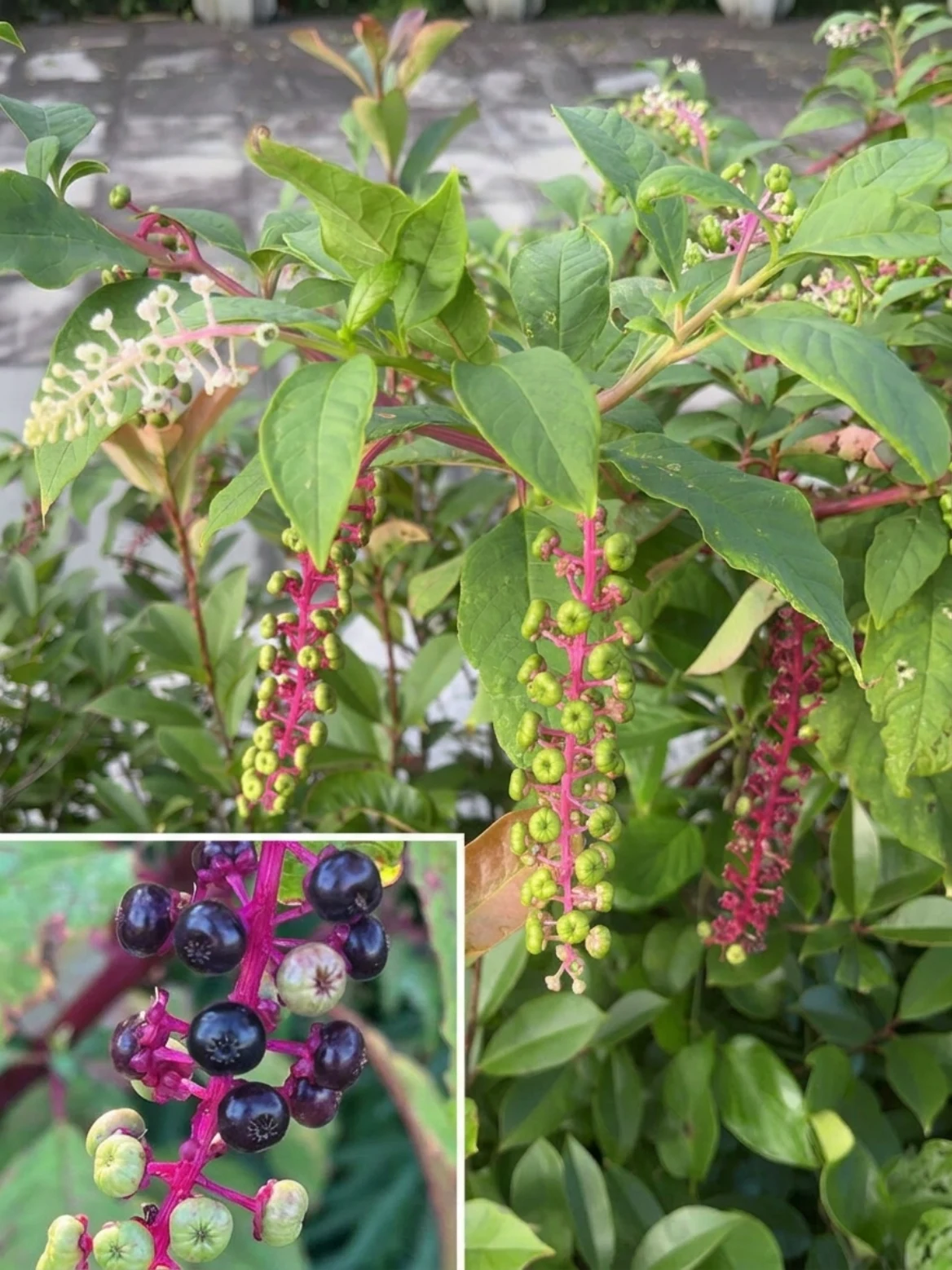
This striking plant is most likely American pokeweed (Phytolacca americana), recognized by its bright pink-red stems, drooping clusters, and berries that ripen from green to deep purple-black. It is one of those plants that instantly attracts attention because it looks dramatic, medicinal, and almost edible at the same time. That is exactly why it causes so much confusion.
In traditional practice, pokeweed has been discussed for uses linked to rheumatism, inflammation, and other folk remedies, especially involving the root. But this is the part many people miss: pokeweed is toxic, and poison experts warn that eating the berries, roots, or other parts can cause serious illness, including severe vomiting, diarrhea, and low blood pressure.
That makes this a very different kind of herbal topic. It is not a gentle kitchen remedy. It is a plant with a strong traditional reputation and a real poisoning risk.
What Plant This Likely Is
American pokeweed is a tall perennial in the pokeweed family. It commonly shows:
Bright reddish-pink stems
These colorful stems are one of the easiest visual clues.
Hanging berry clusters
The fruits begin green and later turn dark purple to black.
Smooth, broad leaves
The leaves are simple, pointed, and arranged alternately along the stems.
Poison Control specifically describes pokeberries as growing in grape-like clusters on tall plants with purple-red stems, which matches this plant very closely.
Why People Traditionally Used It
Pokeweed has a long folk-medicine history, especially the root, which has been referenced in traditional medicine sources. Scientific and taxonomy references also note that the plant has been introduced or studied partly because of its medicinal reputation.
Traditional uses commonly mentioned in historical or research contexts include:
Rheumatism and pain-related folk use
Some sources note traditional use linked to rheumatism and inflammation.
Strong “cleansing” or stimulating remedies
This is one reason the plant became known in folk traditions, but it is also one reason it can be dangerous.
Root-based medicinal use
References specifically note the root as the part most associated with traditional medicinal use.
Still, traditional use does not mean safe home use.
Why This Plant Is So Risky
This is the most important part of the breakdown.
Poison Control warns that pokeberries can cause stomach pain, nausea, vomiting, and diarrhea, and adults have also become seriously ill after eating the roots by mistake. Severe cases have included bloody vomiting, bloody diarrhea, and low blood pressure.
There are also medical reports of toxicity after pokeweed ingestion. One published case report described a heart conduction abnormality after ingestion of raw or cooked pokeweed leaves in the setting of vomiting.
Research also identifies toxic compounds from Phytolacca americana, including saponins isolated from the root.
So even though the plant has medicinal history, it is not appropriate to treat it like a casual tea herb or wellness green.
Is There a Safe Traditional Recipe?
This is where the answer needs to stay very clear: I do not recommend giving ingredients or instructions for preparing pokeweed as a home remedy.
Because this plant is toxic, sharing a recipe for ingestion would be unsafe. The same applies to encouraging root use, berry use, or DIY medicinal experiments.
A lot of traditional plants can still be discussed in a kitchen-remedy format. Pokeweed is not one of them.
What People Often Misunderstand
The biggest misunderstanding is that “natural” and “traditional” automatically mean “safe.”
In reality, pokeweed is a good example of the opposite. It has a folk-medicine history, but modern poison guidance makes it clear that ingestion can cause significant harm.
Another misunderstanding is that the berries look harmless because they resemble edible fruits. Poison Control even highlights pokeberries as a look-alike that can be confused with safe fruits such as grapes.
Who Should Be Especially Careful
Extra caution matters for:
Children
The berries can look tempting.
Anyone foraging wild plants
A strong-looking medicinal plant is not necessarily safe to use.
People relying on folk plant advice online
Pokeweed is exactly the kind of plant that should not be used based on viral remedy posts.
Anyone with nausea, vomiting, diarrhea, or suspected ingestion
That situation needs poison-center or medical guidance, not more home treatment.
What to Do Instead
If the interest here is in traditional herbs for inflammation, digestion, or wellness, it is much safer to choose plants with a better-established safety profile.
Pokeweed is better treated as:
- a plant identification topic
- a traditional medicine history topic
- a toxic plant awareness topic
Not as a practical wellness recipe.
Final Takeaway
American pokeweed is a visually striking plant with deep pink stems, dangling berry clusters, and a long traditional medicinal reputation. But the modern safety message is much more important than the folklore: this plant is toxic, and it should not be casually prepared or consumed at home.
Sometimes the most useful thing to know about a traditional remedy is not how to make it. It is when to leave it alone.
Related Source Science
Poison-control guidance describes pokeweed ingestion as a cause of nausea, vomiting, diarrhea, abdominal pain, and potentially more serious effects, while scientific references identify toxic saponin-type compounds in the plant and document its traditional medicinal history, especially involving the root.