If you are trying to eat better for energy, immunity, bones, and overall strength, four nutrients deserve a lot more attention: calcium, iron, vitamin D, and zinc.
These are not trendy nutrients. They are foundational. Calcium helps support bones, teeth, and muscle function. Iron helps carry oxygen through the body and supports energy. Vitamin D helps your body use calcium properly and plays a role in immune health. Zinc supports immunity, healing, and many everyday body functions.
The problem is that many people focus on one nutrient at a time and miss the bigger picture. Real nutrition works better when you build meals that combine several supportive foods together. That is exactly why this list is useful. It gives you practical foods that can help fill common nutrient gaps without making healthy eating feel complicated.
Why These 4 Nutrients Matter So Much
A lot of everyday symptoms can feel worse when your diet is low in these nutrients. Low-energy days, poor meal satisfaction, weaker diet quality, or meals that look healthy but lack staying power often come back to poor nutrient balance.
That does not mean one food will fix everything. But it does mean smarter combinations matter.
A strong nutrition routine usually includes:
- foods rich in calcium for bones and muscle support
- foods rich in iron for oxygen transport and energy
- foods rich in vitamin D to support calcium balance
- foods rich in zinc for immune and repair support
Calcium Foods to Build Into Your Week
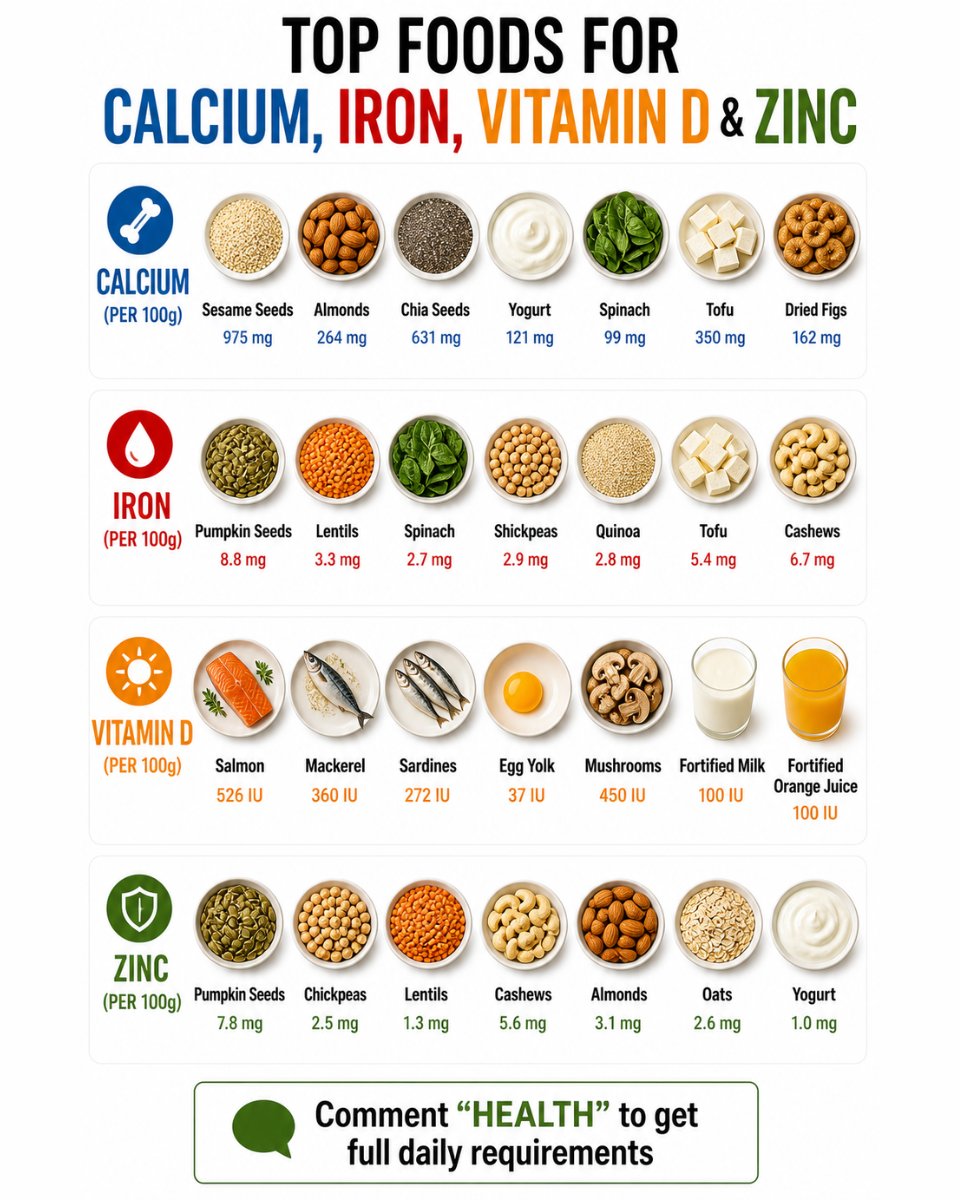
The image highlights these calcium-rich foods: Sesame Seeds, Almonds, Chia Seeds, Yogurt, Spinach, Tofu, and Dried Figs.
Best calcium foods from this list
Sesame seeds and chia seeds are tiny foods with impressive mineral density. They are easy to sprinkle into meals without changing the flavor too much.
Yogurt is one of the easiest calcium foods for daily use because it is practical, protein-friendly, and works for breakfast or snacks.
Tofu is especially useful because it can support calcium intake while also giving plant protein.
Almonds and dried figs are helpful as snack additions, while spinach can support overall nutrient quality when added to meals regularly.
Easy ways to eat calcium foods
Try yogurt with chia seeds and berries. Add sesame seeds to salads or grain bowls. Use tofu in stir-fries with vegetables. Pair almonds and dried figs as a simple snack. Add spinach to eggs, soups, or lentil dishes.
Iron Foods That Help Build More Balanced Meals
The image lists these iron-rich foods: Pumpkin Seeds, Lentils, Spinach, Chickpeas, Quinoa, Tofu, and Cashews.
Best iron foods from this list
Pumpkin seeds stand out because they are concentrated and easy to use. Lentils and chickpeas are especially valuable because they bring both iron and fiber, which helps make meals more satisfying.
Tofu is another strong option for people wanting plant-based variety. Quinoa is useful because it supports a meal with better energy structure, rather than acting only as a side. Spinach and cashews help round things out.
How to absorb plant iron better
This is one of the most important healthy eating tips: pair iron foods with vitamin C-rich foods. That can help your body use plant-based iron more effectively.
A good example is:
- lentils with tomatoes
- chickpeas with lemon
- spinach with orange segments
- tofu with bell peppers or citrus dressing
That small upgrade can make a nutrient-rich meal much smarter.
Vitamin D Foods That Support the Bigger Picture
The vitamin D foods shown are Salmon, Mackerel, Sardines, Egg Yolk, Mushrooms, Fortified Milk, and Fortified Orange Juice.
Best vitamin D foods from this list
Salmon, mackerel, and sardines are some of the most useful foods here because they provide vitamin D along with protein and healthy fats.
Egg yolk can contribute smaller amounts in an easy everyday form. Fortified milk and fortified orange juice are practical options for people who use these foods regularly. Mushrooms are also included as a helpful food source.
Easy ways to eat vitamin D foods
Try salmon with roasted vegetables. Add sardines to toast or salad. Use egg yolks in balanced breakfasts with greens. Drink fortified milk with oats or smoothies. Pair mushrooms with eggs or tofu for a nutrient-dense savory meal.
Zinc Foods for Immunity and Recovery
The zinc foods in the image are Pumpkin Seeds, Chickpeas, Lentils, Cashews, Almonds, Oats, and Yogurt.
Best zinc foods from this list
Pumpkin seeds stand out again because they support both iron and zinc intake. That makes them one of the smartest pantry staples on the whole list.
Chickpeas and lentils are strong plant foods because they offer zinc, fiber, and some protein. Cashews and almonds work well in snacks and bowls. Oats and yogurt make it easier to build zinc into breakfast.
Easy ways to eat zinc foods
Add pumpkin seeds to yogurt, oats, or salads. Pair chickpeas with roasted vegetables and tahini. Use lentils in soups and bowls. Add cashews or almonds to fruit and yogurt snacks.
How to Combine These Foods Into Smarter Meals
This is where healthy nutrition becomes more practical.
Breakfast idea
Yogurt + oats + chia seeds + almonds
This gives you calcium, zinc, and a more filling start to the day.
Lunch idea
Lentils + spinach + quinoa + lemon dressing
This supports iron, fiber, and steadier energy.
Snack idea
Dried figs + almonds + yogurt
A simple combo that gives calcium, texture, and better satiety than sugary snacks.
Dinner idea
Salmon + tofu and spinach stir-fry on the side
This brings vitamin D, calcium, protein, and overall nutrient density.
Small topping upgrade
Pumpkin seeds can be added to almost anything. They are one of the easiest ways to support both iron and zinc.
When You Might Notice the Difference
You will not feel dramatically different after one meal. But over a few weeks, many people notice better meal quality, improved fullness, and more consistency in how they eat when they start building meals around foods like these.
The key is repetition. A little more calcium here, a little more iron there, more vitamin D-rich foods across the week, and a few zinc-supportive choices each day can add up more than people expect.
Quick Safety Note
Food is a strong foundation, but it is not always enough for every person. Some people may still need individualized advice, especially if they have low iron, low vitamin D, restricted diets, pregnancy, digestive issues, or higher nutrient needs. It is also important not to rely on one food alone.
Final Takeaway
The best foods for calcium, iron, vitamin D, and zinc are often simple foods you can start using right away: Sesame Seeds, Almonds, Chia Seeds, Yogurt, Spinach, Tofu, Dried Figs, Pumpkin Seeds, Lentils, Chickpeas, Quinoa, Cashews, Salmon, Mackerel, Sardines, Egg Yolk, Mushrooms, Fortified Milk, Fortified Orange Juice, and Oats.
The real goal is not perfection. It is building meals that work harder for you. When you combine these foods thoughtfully, your diet becomes more supportive, more balanced, and much more useful in real life.
Related nutrition note: meals that combine minerals, protein, healthy fats, fiber, and vitamin-rich foods are usually much more supportive than focusing on one “superfood” at a time.