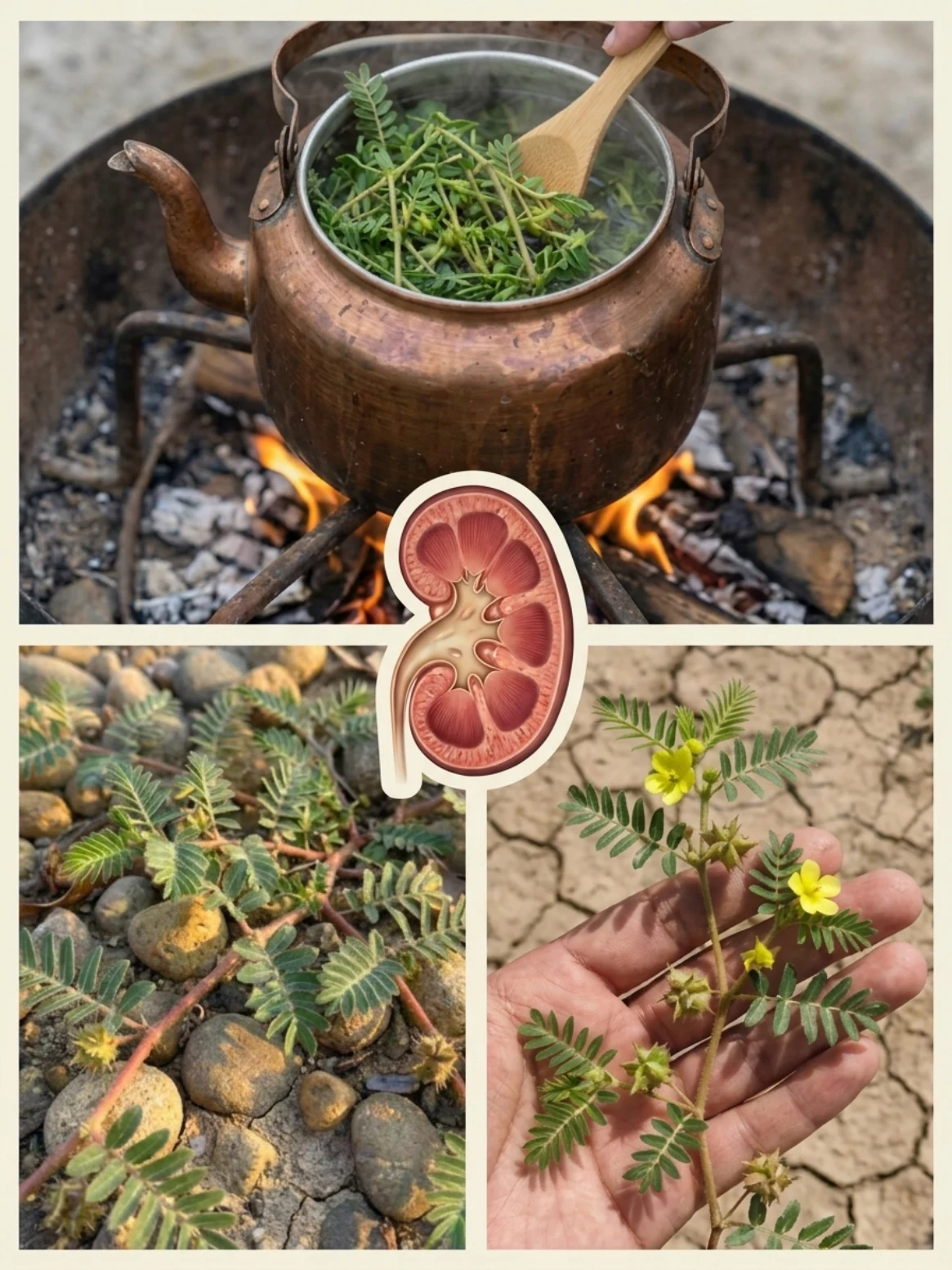
At first glance, this low-growing plant does not look useful at all. It creeps across dry soil, carries tiny yellow flowers, and later forms hard burrs with sharp spines. But that rough little plant is very likely Tribulus terrestris, often called gokshura, puncture vine, or caltrop. Botanically, it is a prostrate herb with opposite pinnate leaves and yellow flowers, and it is native to the Old World but now widespread in dry and warm regions.
In traditional medicine, Tribulus terrestris is often linked with urinary comfort, kidney support, and kidney stone remedies. That is why it keeps showing up in folk wellness posts. But there is an important reality check here: traditional use is not the same as proven treatment. Research interest exists, especially around kidney stones and urinary health, but human evidence is still limited, and safety is not fully settled. The European Medicines Agency has even noted that there is not enough toxicological data to properly assess the safety of Tribulus plant parts in food supplements.
What This Herb Is Traditionally Used For
This plant is best understood as an herbal ingredient spotlight with a traditional decoction use.
In traditional systems, gokshura is commonly associated with:
- urinary flow support
- kidney comfort
- kidney stone support
- mild fluid-balance support
A scientific review focused specifically on urinary stones notes that Tribulus terrestris has long been used in different traditional systems for the management of urinary calculi, which helps explain why it is so often associated with kidney health online. Experimental work has also explored its antiurolithic potential, meaning its possible role in kidney stone formation and crystal-related processes.
Ingredients
A simple traditional-style preparation usually uses the whole herb or aerial parts.
What you need
- 1 small handful fresh Tribulus terrestris herb
or 1 to 2 teaspoons dried herb - 2 cups water
Some traditions focus more on the fruit or whole plant, but for a simple home-style decoction, a light herb tea or boil is the usual idea. Because safety is not fully established, stronger is not better here. (European Medicines Agency (EMA))
How to Prepare Gokshura Tea
This remedy is usually made as a decoction, not just a fast steep.
Step 1: Wash the herb well
Rinse the fresh herb thoroughly to remove dirt, grit, and any debris from the ground.
Step 2: Add to water
Place the herb in a pot with 2 cups of water.
Step 3: Simmer gently
Bring it to a light boil, then lower the heat and simmer for about 10 to 15 minutes.
Step 4: Let it rest
Turn off the heat and allow it to sit for another 5 minutes.
Step 5: Strain and drink
Strain and serve warm.
This is best treated as a light traditional herbal drink, not a concentrated medicinal extract.
How to Use It
People who use gokshura traditionally usually take it in small, moderate amounts.
Best times to take it
Earlier in the day
Since it is often linked with urinary support, daytime use makes more sense than late-night use.
During mild urinary heaviness
Some people reach for it when they want a gentle herbal tea for urinary comfort or a puffy, heavy feeling.
Quick Relief Timeline
This is where realistic expectations matter.
If the tea feels helpful at all, the first thing most people would notice is usually very general: a warm, light herbal effect within the same day. But it is not realistic to expect a cup of tea to dissolve kidney stones overnight or fix kidney disease quickly. Even the research interest around Tribulus and stones is mostly experimental, not strong proof that a simple homemade tea works as a treatment in humans.
Why People Believe It Works
The reputation of Tribulus terrestris comes from both history and chemistry.
Reviews describe the plant as rich in compounds such as saponins and flavonoids, and modern research has explored antioxidant, anti-inflammatory, and antiurolithic effects. That scientific interest is one reason gokshura keeps its reputation in kidney and urinary support traditions.
But there is a big difference between “promising plant chemistry” and “proven kidney remedy.” That gap is exactly where a lot of herbal misinformation begins.
Who May Be Interested in This Herb
This tea may appeal to people who:
- enjoy traditional kidney support herbs
- want a simple urinary comfort tea
- are curious about gokshura benefits
- prefer food-style herbal routines over strong supplements
It makes the most sense for people interested in traditional wellness, not for anyone expecting it to replace medical care.
Important Safety Notes
This part matters most.
There are real reasons to be cautious. The EMA says there is insufficient toxicological data to assess the safety of Tribulus in food supplements. There are also published case reports describing acute kidney injury linked to self-prescribed Tribulus use, and another report has described severe liver and kidney injury associated with Tribulus exposure.
That means:
- do not use large or concentrated amounts
- do not self-treat kidney pain, blood in urine, fever, or severe urinary symptoms with this herb
- avoid casual long-term use without professional advice
- use extra caution if you already have kidney disease, liver disease, or take regular medications
If symptoms suggest kidney stones, infection, dehydration, or reduced kidney function, medical care matters far more than any herbal tea.
Final Takeaway
This plant is very likely Tribulus terrestris, a traditional herb widely associated with kidney support, urinary comfort, and kidney stone wellness. Its long folk use helps explain why people still boil it into tea today. But the smarter, more accurate view is this: gokshura tea is a traditional support remedy, not a proven cure, and safety concerns mean it should be used carefully.
Sometimes the most useful herbal advice is not just knowing how to prepare a plant. It is knowing where tradition ends and caution begins.
Related Source Science
Scientific reviews and experimental studies have explored Tribulus terrestris for urinary stones, antioxidant effects, and anti-inflammatory activity, which supports why it has such a strong traditional reputation. At the same time, regulatory and case-report evidence shows that safety is not fully resolved, especially with self-prescribed use or concentrated preparations.