My dear gardening friends, have you ever looked at that corner of your patio or balcony, the one that only gets a kiss of morning sun or dappled light through the trees, and sighed? You probably thought, ‘Nothing edible will ever grow there!’ Well, I’m here to tell you that’s a common misconception, and it’s time to put that worry to rest. Gardening isn’t just for those with sun-drenched acres; it’s for everyone, even those of us with a bit of shade to contend with.
Many of us dream of fresh, homegrown produce, but life often gives us small spaces, urban environments, or simply less-than-ideal sun exposure. The good news is, you absolutely can cultivate a bountiful harvest right where you are, using containers, and embracing the shade. It’s about working with nature, not against it, and choosing the right plants for the right spots.
Debunking the ‘Full Sun Only’ Myth
When you start gardening, you often hear the golden rule: ‘Most vegetables need full sun!’ While many fruiting plants like tomatoes and peppers do indeed crave those long, sunny days, a surprising number of our favorite edibles are perfectly content, and sometimes even prefer, a little respite from the intense midday glare. In fact, for many leafy greens and root vegetables, partial shade can actually extend your harvest and prevent bolting (going to seed prematurely) in hotter climates.
What does ‘shade’ mean for our container gardens? We’re not talking about deep, dark corners where nothing grows. For most shade-tolerant container crops, the sweet spot is bright, indirect light for much of the day, or about 3-5 hours of gentle morning or late afternoon sun. Think of it as a cozy spot where they’re protected from the harshest rays but still get enough energy to grow.
Why Container Gardening in the Shade is a Game-Changer
Container gardening offers incredible flexibility, especially when dealing with tricky light conditions. Here’s why it’s your secret weapon:
- Mobility: You can move your pots around to chase the sun as the seasons change, or pull them into deeper shade during scorching summer afternoons.
- Soil Control: You get to create the perfect soil mix, tailored specifically for your chosen plants, ensuring good drainage and nutrient availability.
- Space Efficiency: Balconies, patios, small yards, or even a sunny windowsill can become a productive garden space.
- Pest Management: It’s often easier to spot and deal with pests in a smaller, controlled environment.
Your Shady Garden Stars: 20 Vegetables to Grow in Containers
Prepare to be inspired! There’s a whole world of delicious vegetables and herbs that don’t demand a full day of sun. From crisp greens to earthy roots, your shady spots can become incredibly productive. Let’s explore some fantastic choices:
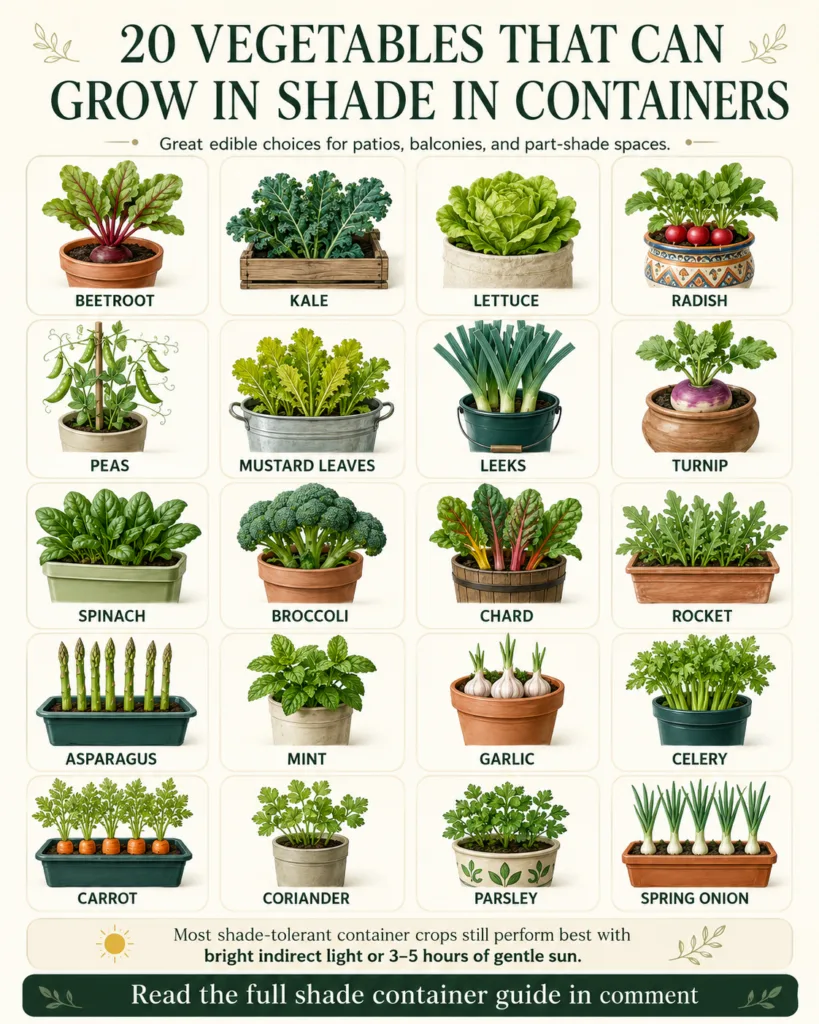 Discover a wealth of edibles that thrive in less-than-sunny spots!
Leafy Greens – The Shade Champions
These are perhaps the most reliable group for shadier conditions. They appreciate cooler temperatures and protection from intense sun, which can make them bitter or cause them to bolt.
- Lettuce & Spinach: These classic salad greens absolutely love partial shade. Plant them in wide, shallow containers and harvest the outer leaves regularly for a continuous supply.
- Kale & Swiss Chard: Tough and nutritious, these leafy powerhouses tolerate a surprising amount of shade. Their vibrant colors can even brighten up a dim corner!
- Arugula & Mustard Greens: For a peppery kick, these fast-growing greens are excellent choices. Partial shade can keep their flavor from becoming too intense in hot weather.
- Bok Choy & Collard Greens: Versatile and delicious, these Asian and Southern favorites thrive with a few hours of sun and consistent moisture.
Root Vegetables – Happy Underground
Don’t let their underground nature fool you; some root crops do wonderfully with less direct sun, especially if they get good light for a few hours.
- Radishes: These speedy growers are perfect for quick harvests. They prefer cooler soil, so shade helps keep them from getting too spicy or woody.
- Carrots (shorter varieties): Look for ‘Paris Market’ or ‘Danvers Half Long’ types. While they appreciate some sun, a little shade won’t stop them from forming sweet roots in a deep pot.
- Beetroot & Turnips: Not only do you get the nutritious roots, but their greens are also edible! Both appreciate cooler conditions, and partial shade can help them grow steadily.
Herbs – Fragrant & Flexible
Many herbs are quite adaptable and can add fragrance and flavor to your shady container garden.
- Mint: This vigorous herb almost prefers some shade, especially in hot climates. Keep it contained, as it loves to spread!
- Parsley & Cilantro: Both of these fresh herbs benefit from partial shade, which can prevent them from bolting too quickly.
- Chives: Easy to grow and lovely with their purple flowers, chives are very forgiving of less-than-full sun.
Other Notable Container Crops for Shade
- Bush Beans & Peas: While pole varieties often need more sun, some bush bean and pea varieties can produce well with 4-5 hours of gentle sun. Provide a small trellis for bush peas.
- Broccoli Raab: This quick-growing relative of broccoli is less demanding than its larger cousin and does well in cooler, shadier spots.
- Leeks: With patience, you can grow these flavorful alliums in deep containers in partial shade.
Essential Care Tips for Your Shady Container Garden
Growing in containers, especially in shade, has its own set of guidelines. Here’s how to set your plants up for success:
Choosing the Right Containers
Drainage is key! No matter the material (terracotta, plastic, wood, metal), ensure your containers have drainage holes. Root vegetables need depth, while leafy greens can do well in wider, shallower pots. Darker pots absorb more heat, which can be a pro or con depending on your climate and the amount of sun. Lighter colored pots or those made of breathable materials like terracotta can help keep roots cooler.
The Perfect Potting Mix
Skip the garden soil! It compacts too much in containers. Invest in a good quality, organic potting mix that’s light and well-draining. You can enrich it with a little compost to boost nutrients. A good soil mix will ensure your plants get the air and moisture balance they need, which is especially important where less sun means less evaporation.
Watering Wisely
Shady container gardens tend to dry out slower than their sunny counterparts, but they still need consistent moisture. Stick your finger an inch or two into the soil; if it feels dry, it’s time to water. Avoid overwatering, which can lead to root rot. Keep an eye on moisture levels, especially during dry spells, as containers can still dry out surprisingly quickly, even in shade.
Feeding Your Hungry Plants
Since plants in containers have a limited amount of soil, they’ll eventually use up the available nutrients. Start with a good slow-release organic fertilizer mixed into your potting soil, and then supplement with a liquid organic feed (like a diluted fish emulsion or seaweed extract) every 2-4 weeks during the growing season. Healthy soil and consistent feeding make for happy, productive plants.
Pest Patrol
Just like in sunny gardens, pests can visit. Keep a watchful eye for common container garden pests like aphids or slugs. Often, a strong spray of water or a quick hand-pick is all that’s needed. Healthy plants are always more resilient!
Embrace Your Shady Spots!
Don’t let a lack of full sun deter you from the joy of growing your own food. By choosing the right plants and giving them a little extra care in containers, you can transform even the shadiest corner into a vibrant, productive edible garden. It’s an empowering way to connect with nature, enjoy fresh produce, and make the most of every inch of your space.
So, grab some pots, pick out a few of these wonderful shade-tolerant vegetables, and start your own shady oasis. You’ll be amazed at what you can grow, and the satisfaction of harvesting your own food, regardless of how much sun your garden gets, is truly unmatched. Happy gardening!