In the vast tapestry of nature, some of the most profound remedies often hide in plain sight. One such unassuming hero, frequently dismissed as a common ‘weed,’ is the humble plantain (Plantago major or Plantago lanceolata). Far from being a nuisance, plantain is a powerhouse of traditional healing, revered across cultures for centuries. Join us as we uncover the secrets of this remarkable plant, from identification to preparation, and unlock its potential for your natural health and beauty regimen.
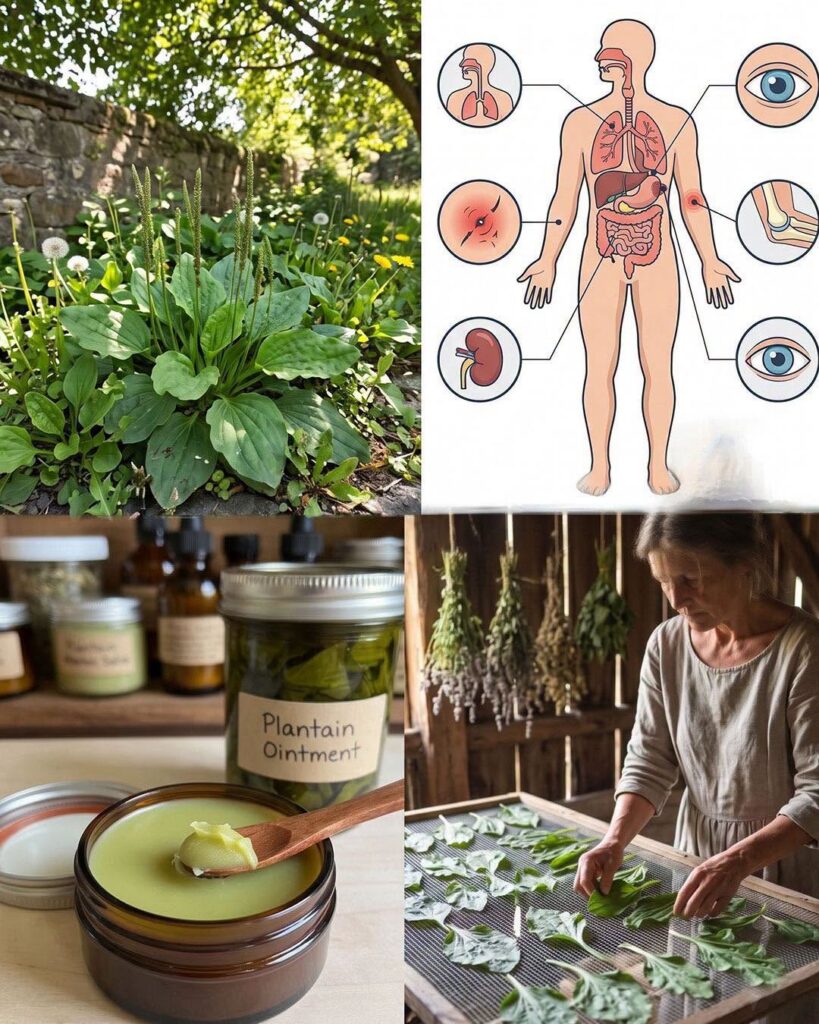 The journey of plantain, from wild growth to powerful herbal remedy.
Identifying Your Green Ally: Finding Plantain in the Wild
Before you can harness plantain’s benefits, you need to know how to find it. Plantain thrives in disturbed soils – you’ll often spot it growing abundantly in your lawn, garden pathways, cracks in pavements, or along roadsides. It’s truly a testament to nature’s accessibility!
Common Plantain (Plantago major)
- Leaves: Broad, oval, distinctively ribbed with 3-7 prominent veins running parallel from the base. They grow in a rosette pattern close to the ground.
- Stems: Fleshy, light green.
- Flowers/Seeds: A tall, slender flower stalk emerges from the center, bearing tiny, inconspicuous flowers that develop into seed heads.
Ribwort Plantain (Plantago lanceolata)
- Leaves: Narrower, lance-shaped, also with prominent parallel veins.
- Stems: Taller, ribbed flower stalks topped with a distinctive, short, cone-like flower head.
Both varieties offer similar healing properties, so you can confidently gather whichever you find.
The ‘Weed’ with Wonders: Traditional Uses & Implied Science
For generations, herbalists and home healers have turned to plantain for a remarkably wide array of ailments. Its traditional wisdom is now increasingly supported by modern understanding of its rich biochemical composition.
External Applications: Skin Soothing & Topical Relief
Plantain is perhaps best known for its incredible soothing properties for the skin. It’s a go-to remedy for:
- Cuts, Scrapes, and Minor Wounds: Traditionally applied as a poultice, plantain is believed to help cleanse wounds and support natural skin repair.
- Insect Bites and Stings: Its ability to draw out irritants and reduce discomfort makes it invaluable for mosquito bites, bee stings, and even nettle rashes.
- Inflamed Skin Conditions: For centuries, it has been used to calm various forms of skin irritation, including minor rashes and eczema flare-ups, thanks to its mucilage content.
- Joint Discomfort: Applied topically, plantain preparations have been used in traditional practices to provide relief for minor aches and discomfort in joints.
The implied science points to compounds like aucubin, an iridoid glycoside with potential anti-inflammatory properties, and mucilage, which creates a protective barrier on the skin, aiding hydration and soothing irritation.
Internal Support: Digestive and Respiratory Wellness
Beyond topical uses, plantain leaves have also been traditionally consumed as a herbal tea or in infusions to support internal well-being:
- Digestive Comfort: The mucilage in plantain can help soothe irritated mucous membranes in the digestive tract, potentially offering relief from occasional indigestion or mild stomach upset.
- Respiratory Support: Traditionally, plantain has been used to assist with minor coughs and to soothe the respiratory passages.
Its historical application for these internal uses underscores its versatile nature and the deep wisdom of herbal traditions.
Harvesting and Preparation: Unlocking Plantain’s Potential
Respectful and sustainable harvesting is key to enjoying plantain’s gifts.
Ethical Foraging Tips:
- Choose Clean Areas: Gather leaves from areas free from pesticides, pollutants, or heavy traffic.
- Identify Correctly: Always be 100% sure you have identified the plant correctly.
- Harvest Mindfully: Take only what you need and leave plenty for the plant to regenerate and for wildlife.
- Best Time: Harvest younger, tender leaves in spring and early summer for the best potency and flavor, though mature leaves are still effective.
Simple Preparations:
Drying Plantain Leaves
Drying is an excellent way to preserve plantain for year-round use. Wash leaves thoroughly, pat dry, and spread them in a single layer on a clean screen or cloth in a well-ventilated area away from direct sunlight. Once completely brittle, store them in airtight containers.
Crafting Plantain Infused Oil
This oil forms the base for salves and balms, concentrating plantain’s soothing properties.
- Ingredients: Fresh or dried plantain leaves, a carrier oil (e.g., olive oil, almond oil).
- Method: Fill a clean, dry jar about two-thirds full with loosely packed, slightly wilted (if fresh) or dried plantain leaves. Cover completely with your chosen carrier oil, ensuring all plant material is submerged to prevent mold.
- Infusion: Seal the jar and place it in a cool, dark place for 4-6 weeks, shaking daily. For a quicker method, a gentle double boiler can be used to heat the oil and leaves for a few hours, being careful not to overheat.
- Strain: Strain the oil through cheesecloth, squeezing out all the goodness from the leaves. Store the finished infused oil in a dark glass bottle in a cool place.
DIY Plantain Soothing Salve (Ointment)
Transform your infused oil into a powerful, portable balm!
- Ingredients: 1 cup plantain-infused oil, 1-2 tablespoons beeswax pellets (adjust for desired consistency).
- Melt: Gently heat the infused oil and beeswax in a double boiler until the beeswax is completely melted and combined.
- Pour: Pour the warm mixture into clean, sterile tins or jars.
- Cool: Let it cool completely until solid. Label and store in a cool, dry place.
REMEDY’s Wisdom: This salve is a true traditional secret for soothing irritated skin, minor cuts, and insect bites. A small tin of homemade plantain salve is a medicine cabinet essential!
A Note of Caution
While plantain is generally considered very safe for topical and occasional internal use, it is always wise to exercise prudence. If you have known allergies, are pregnant, breastfeeding, or taking medications, consult with a qualified health professional before incorporating new herbal remedies into your routine. Always perform a patch test when using new topical preparations. This information is for educational purposes and is not intended to diagnose, treat, cure, or prevent any disease.
Embrace the Power of the Unseen
The next time you see plantain growing in your yard, remember its profound potential. This humble plant, often overlooked, holds a treasure trove of traditional wisdom and natural healing properties. By understanding, harvesting, and preparing plantain, you connect with an ancient lineage of natural wellness and empower yourself with remedies directly from Mother Earth.