Demystifying Dairy: Greek Yogurt vs. Cottage Cheese for Your Healthy Meals
In the world of healthy eating, Greek yogurt and cottage cheese often stand side-by-side on grocery shelves, both celebrated for their protein power and versatility. But despite their similar appearance and nutritional prowess, these dairy champions aren’t interchangeable. Knowing when to reach for one over the other can elevate your meals, optimize your nutrient intake, and ensure you’re getting exactly what your body needs. This guide will demystify the differences, helping you choose the perfect dairy companion for your next delicious creation.
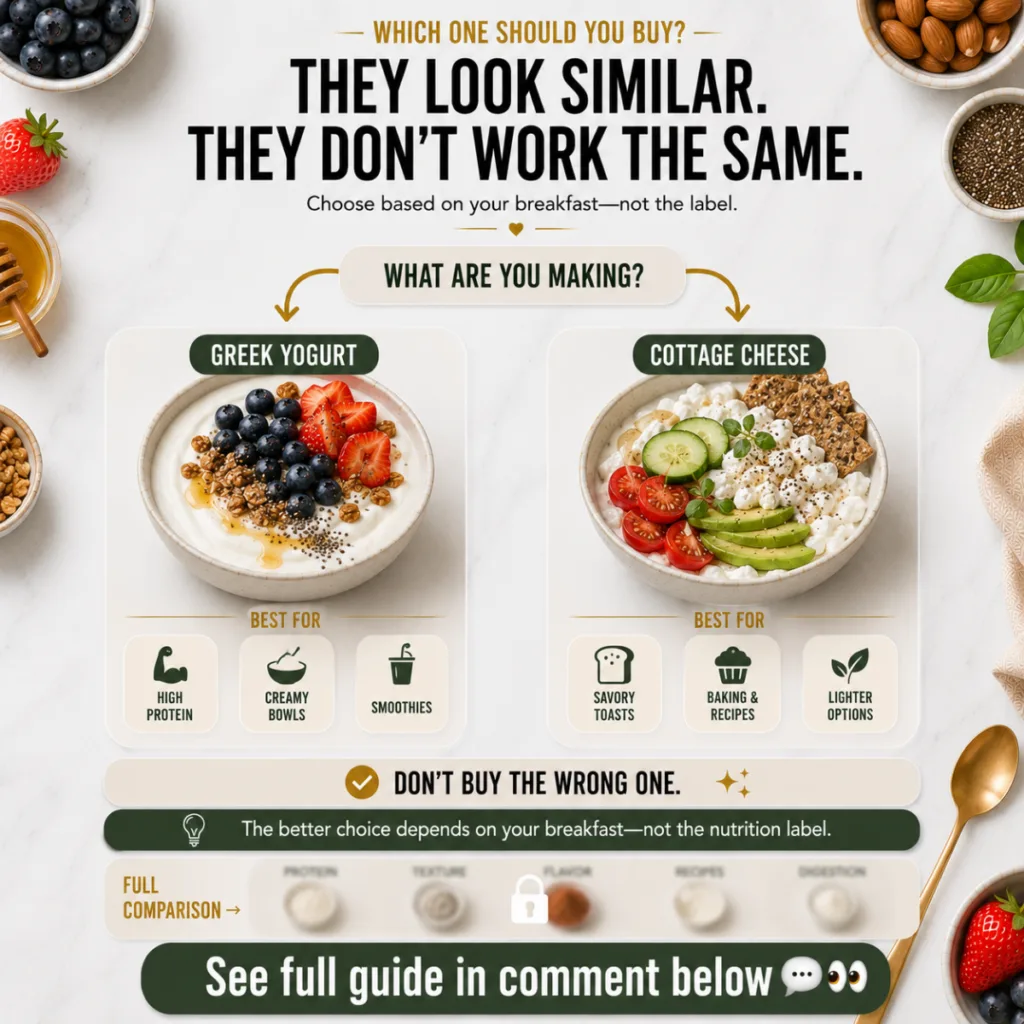 Understanding the unique strengths of Greek yogurt and cottage cheese can transform your meal choices.
The Nutritional Snapshot: More Than Just Protein
Both Greek yogurt and cottage cheese are nutritional powerhouses, particularly when it comes to protein. However, their distinct textures, flavor profiles, and culinary applications set them apart. While Greek yogurt is known for its thick, creamy consistency and tangy taste, making it ideal for sweet bowls and smoothies, cottage cheese offers a milder flavor with a unique curd texture, lending itself beautifully to savory dishes and baking.
- Protein Content: Both are excellent sources, crucial for muscle repair, satiety, and metabolic health. Amounts can vary slightly by brand and fat content.
- Texture: Greek yogurt is incredibly smooth and creamy. Cottage cheese has a characteristic lumpy (or small curd) texture.
- Flavor: Greek yogurt is tangier and more acidic. Cottage cheese is milder and slightly salty.
- Digestion: Both contain beneficial cultures for gut health, though the specific strains and quantities vary.
Greek Yogurt: Your Creamy Canvas for Sweet & Tangy Delights
Greek yogurt is a fermented dairy product that has been strained to remove most of its whey, resulting in a thicker, creamier texture and a higher protein concentration than regular yogurt. Its distinct tang makes it a fantastic base for a variety of dishes.
Best Uses for Greek Yogurt:
- High Protein Breakfast Bowls: Combine with fruits, nuts, and seeds for a filling start to your day.
- Smoothies & Shakes: Adds creaminess and a protein boost without altering flavor too much.
- Dips & Spreads: A healthier alternative to sour cream or mayonnaise in savory dips.
- Baking: Can add moisture and protein to muffins, cakes, and quick breads.
Recipe Spotlight: The Ultimate High-Protein Greek Yogurt Power Bowl
This vibrant bowl is packed with flavor, texture, and sustained energy, making it perfect for a busy morning or a satisfying snack.
Ingredients:
- 1 cup plain Greek yogurt (full-fat or 2% for creaminess)
- 1/2 cup mixed berries (fresh or frozen blueberries, sliced strawberries)
- 2 tablespoons granola or rolled oats
- 1 tablespoon chia seeds
- 1 tablespoon chopped almonds (or other nuts like walnuts, pecans)
- 1 teaspoon honey or maple syrup (optional, for sweetness)
- A few mint leaves for garnish (optional)
Preparation:
- Spoon Greek yogurt into a bowl.
- Arrange berries, granola, chia seeds, and chopped almonds over the yogurt.
- Drizzle with honey or maple syrup if desired.
- Garnish with mint leaves for a refreshing touch.
Tips & Substitutions:
- Fruit: Experiment with sliced banana, kiwi, raspberries, or peaches.
- Crunch: Add pumpkin seeds, flax seeds, or a sprinkle of toasted coconut flakes.
- Sweetener: Adjust honey/maple syrup to taste, or omit for a sugar-free option.
- Flavor Boost: A dash of cinnamon or vanilla extract can elevate the taste.
Storage:
Prepare individual portions of yogurt and dry toppings in separate containers. Combine just before eating to maintain crunch and freshness.
Cottage Cheese: Your Savory Sidekick & Baking Buddy
Cottage cheese is a fresh cheese curd product with a mild flavor. Its unique texture, ranging from small to large curds, makes it incredibly versatile, especially in savory applications and as a secret ingredient in healthy baking.
Best Uses for Cottage Cheese:
- Savory Toasts & Crackers: A quick, protein-rich topping for your favorite bread or crackers.
- Baking & Cooking: Adds moisture and protein to lasagna, casseroles, pancakes, and even protein muffins.
- Lighter Snack Options: Enjoy plain or with a sprinkle of everything bagel seasoning for a satisfying, low-calorie snack.
- Salad Topping: A great alternative to other cheeses for a protein boost.
Recipe Spotlight: Quick & Easy Savory Cottage Cheese Toast
This simple yet satisfying toast is perfect for a light lunch, snack, or even a protein-packed breakfast when you’re craving something savory.
Ingredients:
- 1-2 slices whole-grain toast or savory crackers
- 1/2 cup cottage cheese (small curd or large curd, based on preference)
- 1/4 cucumber, thinly sliced
- 5-6 cherry tomatoes, halved
- 1/4 avocado, sliced
- A pinch of black pepper or “everything bagel” seasoning
- Fresh mint or basil leaves for garnish (optional)
Preparation:
- Toast bread or arrange crackers on a plate.
- Spread cottage cheese evenly over the toast/crackers.
- Arrange cucumber slices, cherry tomato halves, and avocado slices on top.
- Season with black pepper or everything bagel seasoning.
- Garnish with fresh mint or basil leaves if desired.
Tips & Substitutions:
- Veggies: Try radish slices, bell pepper strips, spinach, or roasted red peppers.
- Spices: A sprinkle of chili flakes, dill, chives, or a dash of hot sauce adds a kick.
- Bread: Sourdough, rye, or gluten-free bread all work wonderfully.
- Added Protein: Top with a fried egg or smoked salmon for an extra boost.
Storage:
Assemble just before serving to prevent the toast from getting soggy. Store leftover cottage cheese in an airtight container in the fridge.
Making Your Choice: It’s All About What You’re Making!
The core message is simple: don’t choose based on the label alone, but on what you intend to create. Consider these factors:
- Sweet or Savory? If your craving leans sweet (think fruit, granola, honey), Greek yogurt is your go-to. If you’re after something savory (veggies, herbs, spices), cottage cheese will shine.
- Texture Preference: Do you prefer smooth and creamy, or a distinct, curdy texture?
- Culinary Role: Are you making a thick dip, a fluffy pancake, or a sturdy toast topping?
Beyond the Bowl: Smart Swaps & Everyday Tips
- Healthy Sour Cream Alternative: Plain Greek yogurt can seamlessly replace sour cream in many recipes, offering a protein boost and fewer calories.
- Moisture in Baking: Cottage cheese (blended smooth, if desired) can add incredible moisture and a hidden protein punch to baked goods like pancakes, muffins, and even savory casseroles.
- Snack Pairing: Pair Greek yogurt with berries for a quick sweet treat, or cottage cheese with vegetable sticks for a crunchy, savory option.
- Read Labels: Always opt for plain, unsweetened versions of both to control added sugars and sodium.
 Elevate your dairy dishes with a colorful array of fresh and wholesome toppings.
Empower Your Plate: Make Informed Dairy Choices
Ultimately, both Greek yogurt and cottage cheese are fantastic additions to a balanced diet, offering substantial protein and valuable nutrients. By understanding their unique characteristics and culinary applications, you’re empowered to make choices that perfectly fit your cravings, your recipes, and your health goals. Experiment with both, savor their differences, and enjoy the journey of creating delicious, health-conscious meals!
Ready to try these ideas? Share your favorite Greek yogurt or cottage cheese creation with us!