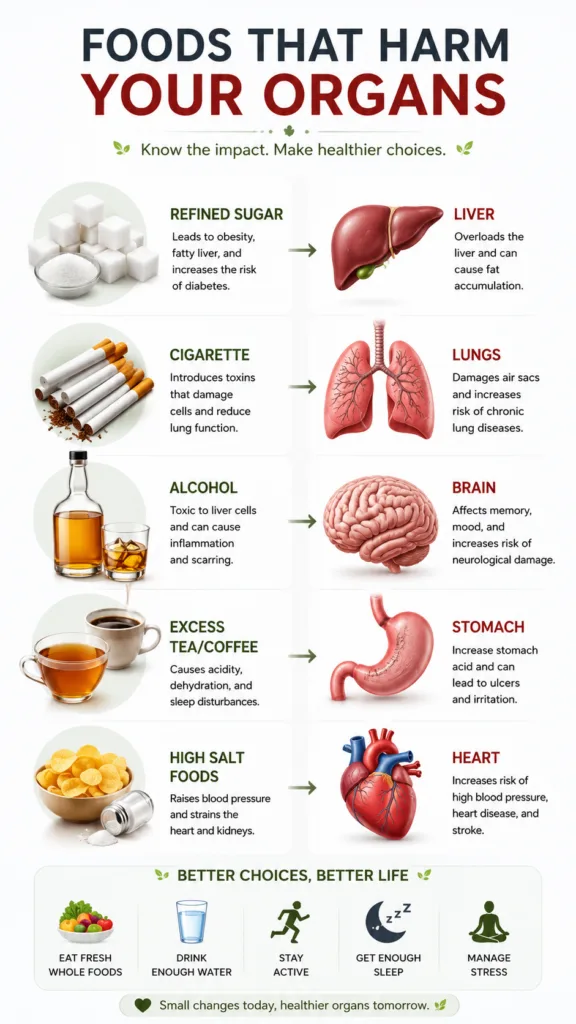
The foods and drinks we consume every day can either support our organs—or slowly place them under unnecessary stress. While enjoying your favorite treats in moderation is perfectly normal, regularly consuming certain foods may increase the risk of chronic health problems over time.
Here’s a closer look at five common dietary habits that can negatively affect major organs and what you can do instead.
1. Refined Sugar → Liver
Refined sugar is found in soft drinks, candies, pastries, breakfast cereals, and many processed snacks. Consuming too much added sugar—especially fructose—can contribute to fat buildup in the liver.
Over time, this may increase the risk of:
- Non-alcoholic fatty liver disease (NAFLD)
- Obesity
- Insulin resistance
- Type 2 diabetes
Healthier Alternatives
- Fresh fruit
- Plain yogurt with berries
- Oats
- Nuts
- Naturally sweet foods without added sugar
2. Cigarette Smoke → Lungs
Although cigarettes aren’t food, they introduce thousands of harmful chemicals into the body. Smoking damages the tiny air sacs in the lungs and significantly increases the risk of chronic respiratory diseases.
Smoking is linked to:
- Chronic bronchitis
- COPD
- Lung cancer
- Reduced oxygen delivery throughout the body
Better Choice
The single best step is quitting smoking. Even after years of smoking, lung function and overall health can improve over time.
3. Excess Alcohol → Brain and Liver
Your liver is responsible for breaking down alcohol, but excessive drinking can overwhelm this process.
Heavy alcohol intake may contribute to:
- Liver inflammation
- Fatty liver
- Cirrhosis
- Memory problems
- Poor concentration
- Mood changes
Better Choice
Drink alcohol in moderation—or avoid it entirely. Staying hydrated and eating balanced meals also helps support liver health.
4. Too Much Tea or Coffee → Stomach
Tea and coffee can be part of a healthy lifestyle, but excessive caffeine may irritate the digestive system in some people.
Possible effects include:
- Acid reflux
- Heartburn
- Stomach irritation
- Sleep disruption
- Increased anxiety
Better Choice
Enjoy caffeine in moderation and avoid drinking coffee on an empty stomach if you’re prone to acid reflux.
5. High-Salt Foods → Heart
Many processed foods contain far more sodium than we realize.
Examples include:
- Chips
- Instant noodles
- Processed meats
- Frozen meals
- Fast food
Excess sodium can contribute to:
- High blood pressure
- Increased strain on the heart
- Greater risk of stroke
- Cardiovascular disease
Better Choice
Flavor meals with herbs, garlic, lemon, and spices instead of relying heavily on salt.
Protect Your Organs Every Day
Your body works around the clock to keep you healthy. Small daily habits make a big difference over the years.
Simple ways to support your organs:
- Eat more whole foods
- Drink plenty of water
- Exercise regularly
- Get 7–9 hours of quality sleep
- Manage stress
- Limit processed foods and sugary drinks
- Avoid smoking
- Consume alcohol responsibly
Final Thoughts
There is no single “superfood” that can protect every organ, and no single food will immediately damage them either. The key is consistency. A balanced diet rich in vegetables, fruits, whole grains, lean proteins, and healthy fats provides your body with the nutrients it needs to function at its best.
Think of every healthy meal as an investment in your liver, heart, lungs, brain, and digestive system—because taking care of your organs today helps build a healthier tomorrow.