Have you ever stumbled upon a tall, striking plant with vibrant purple berries in your garden or along a fence line and wondered what it was? Chances are, you’ve met Pokeweed (Phytolacca americana)! This fascinating plant often sparks curiosity and a bit of caution, and for good reason. It holds a surprising dual role in our environment: a potential danger to humans and pets, yet a vital food source for our feathered friends. Let’s dig in and learn how to manage this garden paradox safely and responsibly, turning a potential worry into a harmonious part of your outdoor space.
Meet Pokeweed: A Striking Garden Presence
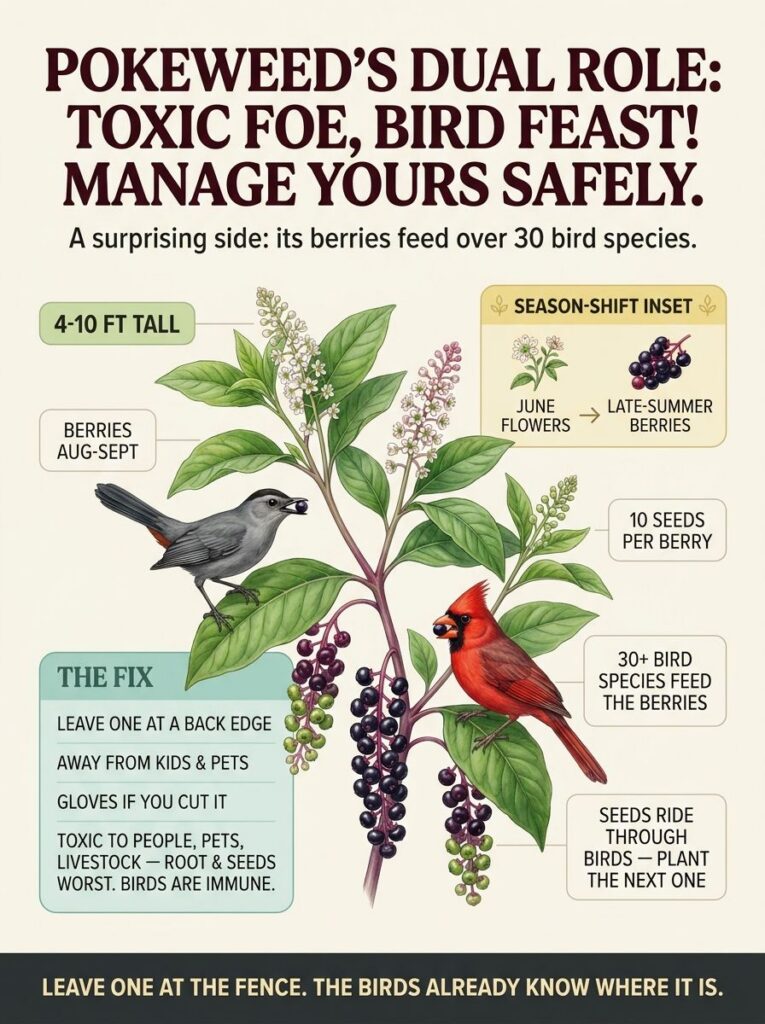
Pokeweed is a common native plant across much of the United States, especially in the eastern and central regions. It’s known for its robust growth, often reaching impressive heights of 4 to 10 feet. Its distinctive features include large, broad green leaves, white to pinkish flowers that bloom in June, and later, attractive clusters of dark purple berries. These berries are particularly noticeable from August to September, adding a pop of color to the late summer landscape.
While beautiful, every part of the pokeweed plant—roots, stems, leaves, and berries—contains saponins and oxalic acid, making it toxic if ingested by humans, pets, and livestock. This is an important distinction to make, as its toxicity to us is a key factor in how we approach its management.
The “Foe” Side: Why Caution is Key
As a neighbor sharing garden wisdom, I can’t stress this enough: pokeweed is toxic to people, pets, and livestock. Ingesting any part of the plant can cause nausea, vomiting, diarrhea, and other uncomfortable symptoms. While mature leaves and stems are less toxic after being cooked multiple times (a practice sometimes seen in traditional Southern cuisine, carefully prepared as ‘poke sallet’), it’s generally best to avoid consuming it due to the high risk. The berries, though tempting in appearance, contain about 10 seeds each, and are especially dangerous.
Important Safety Guidelines:
- Keep Away from Kids & Pets: If you have young children or curious pets who might sample plants, it’s safest to remove pokeweed entirely from areas they frequent.
- Wear Gloves When Handling: Even contact with the sap can cause skin irritation for some people. Always wear gloves when weeding, pruning, or cutting down pokeweed.
- Proper Disposal: After removing, dispose of the plant material carefully, ideally in your municipal yard waste or by bagging it, rather than composting, to prevent accidental ingestion or regrowth.
The “Feast” Side: A Lifeline for Birds
Now, here’s where pokeweed truly shines in the ecological sense! While toxic to us, the berries are a valuable and safe food source for a remarkable array of over 30 bird species. Birds like Northern Cardinals, Gray Catbirds, Robins, Mockingbirds, and many others eagerly feast on the dark purple berries, especially during the late summer and fall migration seasons. The birds are immune to the toxins that affect mammals, and they help disperse the seeds, playing a crucial role in the plant’s life cycle.
Observing birds flocking to a pokeweed plant is a truly delightful sight and a testament to its role in supporting local wildlife. It’s a natural bird feeder, providing essential sustenance when other food sources might be scarcer.
Striking a Balance: Safe Management Strategies
Given its dual nature, how can we manage pokeweed responsibly in our gardens? The goal is to balance safety for our families and animals with providing valuable resources for wildlife. It’s about finding that sweet spot!
Practical Tips for Coexisting with Pokeweed:
- Designate a Safe Zone: If you want to support birds, consider leaving a pokeweed plant or two in a secluded area of your yard—perhaps at the very back edge, away from common pathways, play areas, or pet enclosures. This keeps it out of reach while still providing for birds.
- Regular Monitoring: Keep an eye on its growth. Pokeweed can spread quite readily, so regular weeding of unwanted seedlings will help keep it contained to your chosen safe zone.
- Pruning for Safety and Aesthetics: You can prune pokeweed to manage its size and prevent it from shading out other plants. Remember to wear gloves! Removing the berries before they ripen can also be an option if you want to completely eliminate the risk to ground-feeding pets or very small children, though this removes the benefit for birds.
- Education is Key: Teach everyone in your household, especially children, about the plant. Explain that while birds love the berries, they are not for humans or pets to eat. Knowledge is the best defense!
A Seasonal Shift Story
It’s fascinating to watch pokeweed transform throughout the year. In June, it’s all about delicate white and pink flowers. But as summer deepens and shifts towards late August and September, those flowers give way to the signature clusters of shiny, dark purple berries. This seasonal shift highlights its purpose, moving from attracting pollinators to providing a crucial late-season food source for birds just before the colder months set in.
Embracing the Garden’s Complexities
Gardening is often about understanding and embracing the intricate relationships within nature. Pokeweed is a perfect example of a plant that challenges us to look beyond a simple