When it comes to heart health, understanding the warning signs is paramount, especially for women over 30. While many people are familiar with the ‘classic’ heart attack symptoms, such as crushing chest pain, women often experience more subtle, atypical signs that can be easily overlooked or mistaken for less serious conditions. Recognizing these distinct heart attack warning signs can be life-saving. Equipping yourself with this essential information is a crucial step toward proactive prevention and better protecting your heart.
Ignoring even mild or unusual symptoms can have serious consequences. This article will shed light on three critical heart attack warning signs specifically relevant for women over 30, helping you identify them early and take appropriate action.
Understanding Heart Attacks in Women Over 30
Heart disease remains a leading cause of death for women in many parts of the world. While heart attacks can affect anyone, research indicates that women’s symptoms often differ from those commonly reported by men. This difference can sometimes lead to delays in diagnosis and treatment, making awareness of these specific signs even more critical.
For women over 30, hormonal changes, lifestyle factors, and existing health conditions can all influence heart health. It’s essential to move beyond the stereotype of a dramatic chest-clutching scene and learn to recognize the more nuanced indicators that your body may be sending.
Key Heart Attack Warning Signs for Women Over 30
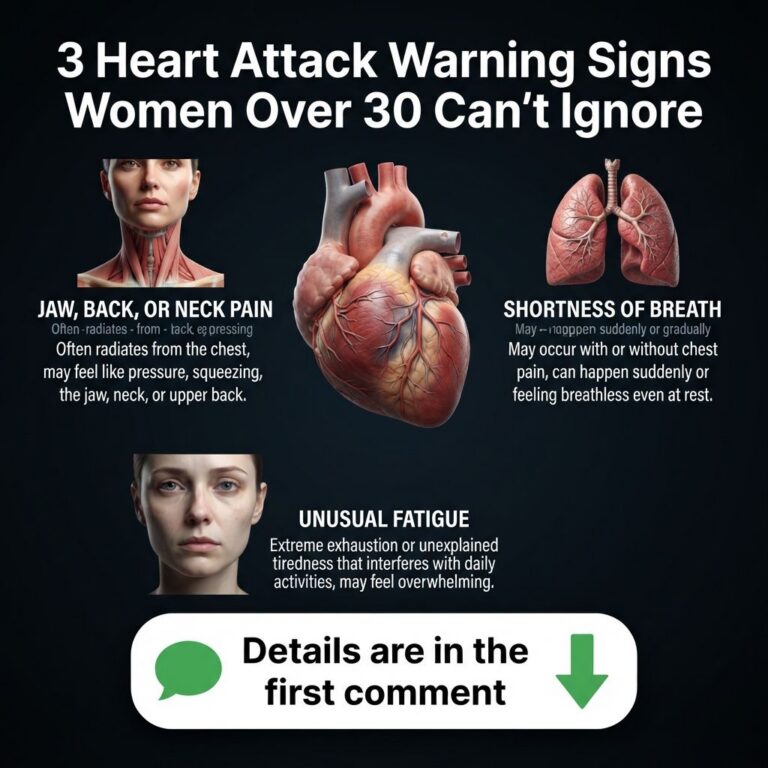
The infographic highlights three significant warning signs that women over 30 should be particularly attuned to:
1. Jaw, Back, or Neck Pain
Unlike the localized, sharp pain often associated with a heart attack, women may experience pain that radiates to other areas, particularly the jaw, back, or neck. This discomfort might feel more like a dull ache, pressure, or tightness rather than a sharp pain. It can occur in:
- The Jaw: Often described as pain that travels up to the jaw, sometimes on one or both sides, or even feeling like a toothache.
- The Back: A persistent ache or pressure in the upper back, which might be mistaken for muscle strain or fatigue.
- The Neck: A feeling of tightness or pain that wraps around the neck, potentially confused with a stiff neck.
This pain might come and go, or it could be constant. It’s crucial not to dismiss it as ordinary muscle pain, especially if it’s new, unusual, or accompanied by other symptoms.
2. Shortness of Breath
Feeling out of breath after strenuous activity is normal. However, experiencing shortness of breath without exertion, or disproportionate to your activity level, can be a significant heart attack warning sign for women. This symptom may present as:
- Sudden difficulty taking a deep breath.
- Feeling winded even when resting or performing light tasks.
- Waking up at night feeling breathless.
- A sensation of being unable to catch your breath.
If you find yourself struggling for air unexpectedly, or if this feeling is accompanied by chest discomfort or lightheadedness, it warrants immediate medical attention. It can indicate that your heart isn’t pumping blood effectively.
3. Unusual Fatigue
Women often report extreme and unusual fatigue in the days or even weeks leading up to a heart attack. This isn’t just feeling tired after a long day; it’s a profound, debilitating tiredness that doesn’t improve with rest. It can manifest as:
- Sudden and overwhelming exhaustion, even after minimal activity.
- Difficulty performing routine tasks that were once easy.
- Feeling unusually weak or heavy in your limbs.
- Persistent tiredness that seems to have no clear cause.
This type of fatigue can be particularly concerning if it’s a new symptom for you and significantly impacts your daily life. It’s often dismissed as stress or a sign of aging, but for women over 30, it can be a critical signal from the heart.
Why Early Recognition Matters
The key to successful treatment and recovery from a heart attack is prompt medical intervention. Women are sometimes less likely to seek immediate help because their symptoms can be vague or attributed to other causes. By being aware of these subtle signs, you empower yourself to recognize a potential problem early, allowing for timely diagnosis and treatment that can significantly improve outcomes and save lives.
When to Seek Medical Help
If you experience any of these heart health warning signs, especially if they are new, severe, or occur in combination, it is imperative to seek emergency medical attention immediately. Do not try to ‘tough it out’ or wait for the symptoms to subside. Call emergency services (e.g., 911 in the US) right away. Time is muscle when it comes to heart attacks, and every minute counts.

Final Thoughts
For women over 30, understanding the unique presentation of heart attack warning signs is an essential component of proactive health awareness and prevention. Jaw, back, or neck pain; unexplained shortness of breath; and unusual fatigue are not to be dismissed. By knowing these critical indicators, you can take control of your heart health, recognize when something is wrong, and ensure you receive the care you need promptly. Prioritize your heart, stay informed, and always listen to your body.
Medical Disclaimer
This article is intended for informational purposes only and does not constitute medical advice. Always consult with a qualified healthcare professional for any health concerns or before making any decisions related to your health or treatment. If you believe you are experiencing a medical emergency, call emergency services immediately.