Your brain, though only weighing about three pounds, is the control center for every thought, memory, movement, and emotion you experience. Every second, billions of brain cells communicate through tiny electrical signals, helping you solve problems, remember names, learn new skills, and make decisions.
Just like every other organ, your brain depends on proper nutrition. The foods you eat today don’t just fuel your body—they also help nourish your most powerful organ. While no single food can make you instantly smarter, research suggests that certain nutrients support normal brain function, protect brain cells, and contribute to long-term cognitive health.
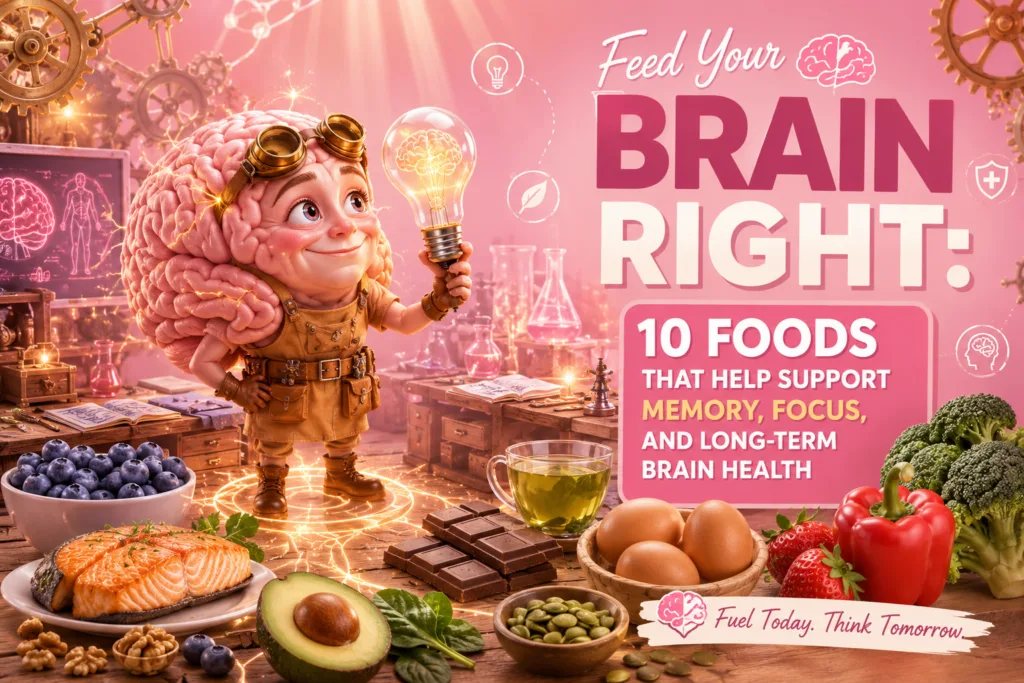 Fuel your brain today for a brighter tomorrow!
Nourish Your Brain with a Vibrant Array of Wholesome Foods
Let’s explore ten everyday foods that your brain loves and how they contribute to supporting memory, focus, and long-term brain health.
1. Fatty Fish – Fuel for Brain Cells
When people think about brain foods, salmon usually comes first—and for good reason. Fatty fish like salmon, sardines, trout, and mackerel are rich in omega-3 fatty acids, especially DHA, an important structural component of brain tissue. Omega-3s help support:
- Learning
- Memory
- Healthy nerve communication
- Normal brain function
Try eating fatty fish two or three times per week if possible.
2. Blueberries – Tiny Berries, Big Benefits
Blueberries are packed with natural compounds called anthocyanins, which act as antioxidants. These compounds help protect cells from oxidative stress and support healthy aging. Add them to:
- Oatmeal
- Yogurt
- Smoothies
- Salads
They’re small, sweet, and surprisingly powerful.
3. Walnuts – Nature’s Brain-Shaped Snack
It’s no coincidence that walnuts resemble the human brain. They’re rich in healthy fats, vitamin E, and plant-based omega-3s. A small handful makes an excellent snack that supports overall nutrition.
4. Eggs – More Than Just Protein
Eggs provide choline, an important nutrient involved in producing acetylcholine, a neurotransmitter that helps support memory and communication between brain cells. They’re also packed with:
- Protein
- Vitamin B12
- Selenium
- Vitamin D
A simple breakfast can provide lasting brain fuel.
5. Leafy Greens – Food for Every Age
Spinach, kale, Swiss chard, and broccoli contain vitamins and minerals that support overall health. They’re especially rich in:
- Folate
- Vitamin K
- Vitamin C
- Lutein
Colorful vegetables don’t just benefit your heart—they benefit your brain too.
6. Pumpkin Seeds – Small but Mighty
Pumpkin seeds contain several minerals involved in normal nervous system function, including:
- Magnesium
- Zinc
- Iron
- Copper
Sprinkle them over salads or yogurt for an easy nutrition boost.
7. Dark Chocolate – A Delicious Bonus
Good news for chocolate lovers! Dark chocolate contains cocoa flavonoids, which may support healthy blood flow. Choose chocolate with at least 70% cocoa and enjoy it in moderation.
8. Avocados – Healthy Fats for Healthy Minds
Avocados provide monounsaturated fats that fit well into a balanced eating pattern. They also contain:
- Potassium
- Folate
- Fiber
- Vitamin E
Creamy, satisfying, and incredibly versatile.
9. Green Tea – Calm Focus
Green tea offers a unique combination of caffeine and L-theanine. Together, they may promote alertness while helping you stay calm and focused. Swap one sugary drink each day for green tea if you enjoy its flavor.
10. Colorful Fruits and Vegetables – Eat the Rainbow
Your brain doesn’t need just one superfood. It benefits from variety. Aim to “eat the rainbow” by including different colors every day. Each color provides different plant compounds that contribute to overall health. Consider adding:
- Blueberries
- Strawberries
- Carrots
- Broccoli
- Tomatoes
- Bell peppers
- Spinach
Brain-Friendly Habits Go Beyond Food
Nutrition is only one piece of the puzzle. Your brain also benefits from a holistic approach to wellness. Consider incorporating these habits into your daily routine:
- Quality sleep
- Regular exercise
- Managing stress
- Staying hydrated
- Lifelong learning (e.g., reading, puzzles, new skills)
- Social connection
- Limiting smoking and excessive alcohol
Healthy habits work together to support overall cognitive well-being.
A Simple Brain-Boosting Meal Plan Example
Here’s an example of a simple day that incorporates many brain-friendly foods:
- Breakfast: Greek yogurt, blueberries, walnuts, and oats.
- Lunch: Grilled salmon with quinoa and spinach salad.
- Snack: Pumpkin seeds and green tea.
- Dinner: Chicken, broccoli, avocado, and brown rice.
Simple. Balanced. Brain-friendly.
Final Thoughts
Your brain works around the clock—even while you sleep. Every memory you create, every conversation you have, every new skill you learn depends on the health of this incredible organ. You don’t need expensive supplements or trendy “brain hacks.” Instead, build your plate around whole foods rich in healthy fats, colorful fruits and vegetables, quality proteins, and essential nutrients.
Small choices made consistently can help support your brain for years to come. Because a healthy life doesn’t begin in the mirror. It begins inside your body. And every great journey starts by taking care of the organ that guides every step: your brain.