High blood pressure, often dubbed the “silent killer,” is a condition that can stealthily damage your most vital organs without presenting obvious symptoms. Many people live with high blood pressure (hypertension) for years without knowing it, allowing it to wreak havoc internally until serious health issues emerge. Understanding how this silent threat impacts your body is the first step toward proactive health management and prevention.
In this comprehensive guide, we’ll explore the specific ways high blood pressure affects your brain, heart, kidneys, and eyes, and share practical, science-backed strategies you can implement today to protect your long-term health. Knowledge is power, especially when it comes to your well-being.
The Silent Assault: How High Blood Pressure Damages Your Vital Organs
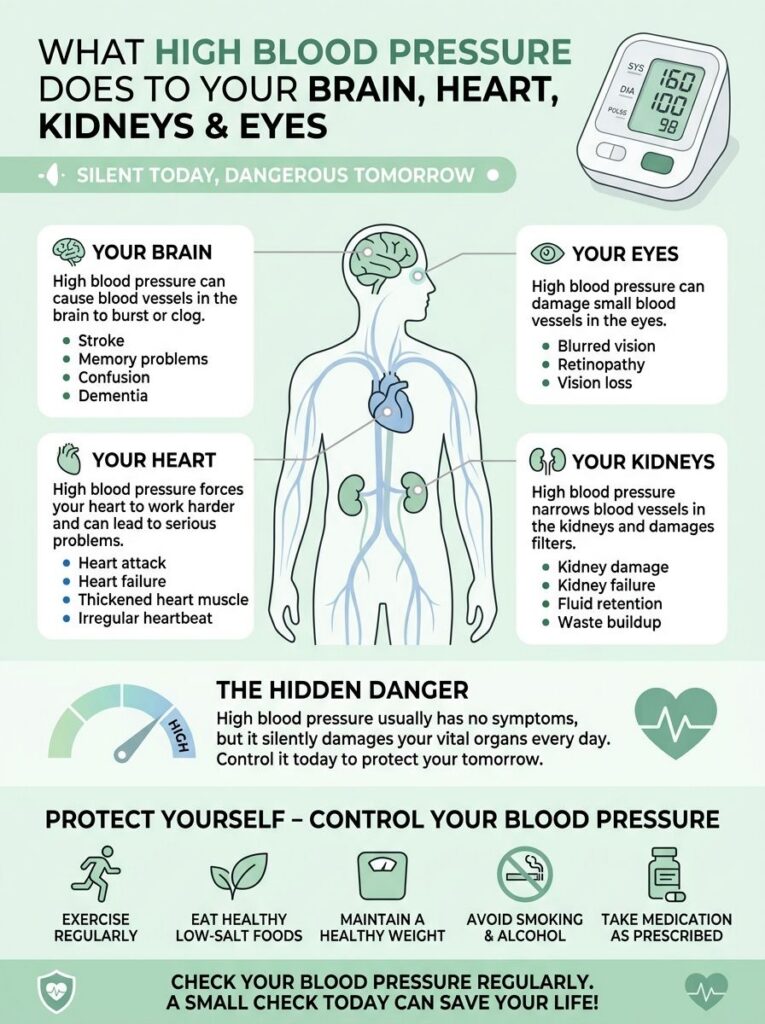
When your blood pressure is consistently high, the force of blood against your artery walls is too strong. Over time, this constant pressure damages the delicate tissues inside your arteries, making them less elastic and narrowing them. This restricts blood flow, leading to a cascade of problems for organs that depend on a steady supply of oxygen and nutrients.
1. Your Brain: Risk of Stroke and Cognitive Decline
Your brain relies on a rich network of blood vessels to function optimally. High blood pressure can have several devastating effects:
- Stroke: This is one of the most serious consequences. High blood pressure can weaken blood vessels, leading to a burst (hemorrhagic stroke) or cause blockages (ischemic stroke) by promoting clot formation.
- Dementia: Chronic high blood pressure, especially in midlife, is a significant risk factor for vascular dementia, a type of dementia caused by reduced blood flow to the brain.
- Cognitive Impairment: Even without a full-blown stroke, consistent high pressure can damage small blood vessels in the brain, leading to subtle changes in memory, thinking, and executive functions.
2. Your Heart: The Workhorse Under Strain
Your heart is constantly working to pump blood throughout your body. High blood pressure forces your heart to work harder, leading to several complications:
- Coronary Artery Disease: High blood pressure contributes to atherosclerosis, the hardening and narrowing of arteries, including those supplying blood to your heart. This can lead to chest pain (angina), heart attack, and other forms of heart disease.
- Heart Attack: If the blood flow to a part of the heart is completely blocked, it can cause a heart attack.
- Heart Failure: Over time, the constant strain can cause the heart muscle to thicken and weaken, making it less efficient at pumping blood, leading to heart failure.
3. Your Kidneys: Essential Filters Under Threat
Your kidneys play a crucial role in filtering waste and excess fluid from your blood. High blood pressure can damage the blood vessels in and around your kidneys, impairing their ability to function:
- Kidney Disease: Damaged blood vessels mean the kidneys can’t effectively filter waste, leading to a buildup of toxins in your body.
- Kidney Failure: In severe cases, uncontrolled high blood pressure can lead to kidney failure, requiring dialysis or a kidney transplant.
4. Your Eyes: Protecting Your Vision
The tiny, delicate blood vessels in your eyes are highly susceptible to damage from high blood pressure:
- Hypertensive Retinopathy: High blood pressure can damage the blood vessels in the retina, the light-sensitive tissue at the back of the eye. This can lead to blurred vision, bleeding in the eye, or even vision loss.
- Optic Neuropathy: Reduced blood flow can damage the optic nerve, which transmits images to your brain, potentially leading to vision problems or blindness.
Protect Yourself: Practical Steps to Control Your Blood Pressure
The good news is that high blood pressure is often preventable and manageable. Taking proactive steps can significantly reduce your risk of serious complications. Here are key strategies:
1. Embrace a Heart-Healthy Diet
- Reduce Sodium: Limit processed foods, canned goods, and fast food. Focus on fresh ingredients and season with herbs and spices instead of salt.
- DASH Diet: Consider the Dietary Approaches to Stop Hypertension (DASH) diet, which emphasizes fruits, vegetables, whole grains, lean protein, and low-fat dairy, while limiting saturated and total fats, cholesterol, and sodium.
- Increase Potassium: Foods rich in potassium like bananas, avocados, spinach, and sweet potatoes can help balance sodium levels.
2. Get Regular Physical Activity
- Aim for at least 150 minutes of moderate-intensity aerobic activity or 75 minutes of vigorous-intensity activity per week.
- Activities like brisk walking, jogging, swimming, cycling, or dancing can make a significant difference.
- Even short bursts of activity throughout the day are beneficial.
3. Maintain a Healthy Weight
- Losing even a small amount of weight can have a positive impact on your blood pressure.
- Combine healthy eating with regular exercise to achieve and maintain a healthy weight.
4. Limit Alcohol and Quit Smoking
- Alcohol: Excessive alcohol consumption can raise blood pressure. If you drink, do so in moderation (up to one drink per day for women, up to two for men).
- Smoking: Nicotine in tobacco constricts blood vessels and damages artery walls, significantly increasing blood pressure and heart disease risk. Quitting smoking is one of the best things you can do for your overall health.
5. Manage Stress Effectively
- Chronic stress can contribute to high blood pressure. Find healthy ways to cope with stress, such as mindfulness, meditation, yoga, spending time in nature, or engaging in hobbies.
- Ensure you get adequate sleep, as poor sleep can also impact blood pressure.
6. Regular Check-ups and Medication Adherence
- Regularly monitor your blood pressure at home and have it checked by your doctor.
- If prescribed medication, take it exactly as directed, even if you feel fine. Do not stop without consulting your doctor.
Take Control of Your Health Today
High blood pressure is a serious condition, but it doesn’t have to define your health future. By understanding its impact and taking consistent, proactive steps, you can protect your brain, heart, kidneys, and eyes, and live a healthier, fuller life. Start today by making small, sustainable changes and discussing your blood pressure management plan with your healthcare provider.