It’s time to rethink where your protein comes from! Many people associate protein primarily with meat, dairy, or eggs, overlooking the incredible power packed into the plant kingdom. The truth is, a wide array of vegetables are not only excellent sources of protein but also contribute vital nutrients, fiber, and antioxidants, offering a powerful boost to your overall health.
Integrating more plant-based protein into your diet can support muscle health, aid in satiety, and provide a diverse range of vitamins and minerals. In this article, we’re busting the myth that vegetables are low in protein by highlighting 10 common vegetables that can significantly contribute to your daily protein intake.
Busting the Myth: Why Vegetables Are Protein Powerhouses
While individual vegetables may not contain as much protein per serving as a cut of steak, their cumulative effect and the additional nutritional benefits they offer make them invaluable. Plant-based proteins are often accompanied by fiber, which is crucial for digestive health and blood sugar regulation, and are typically lower in saturated fat than animal proteins. Choosing these nutrient-dense options can diversify your diet and introduce a wealth of health-promoting compounds.
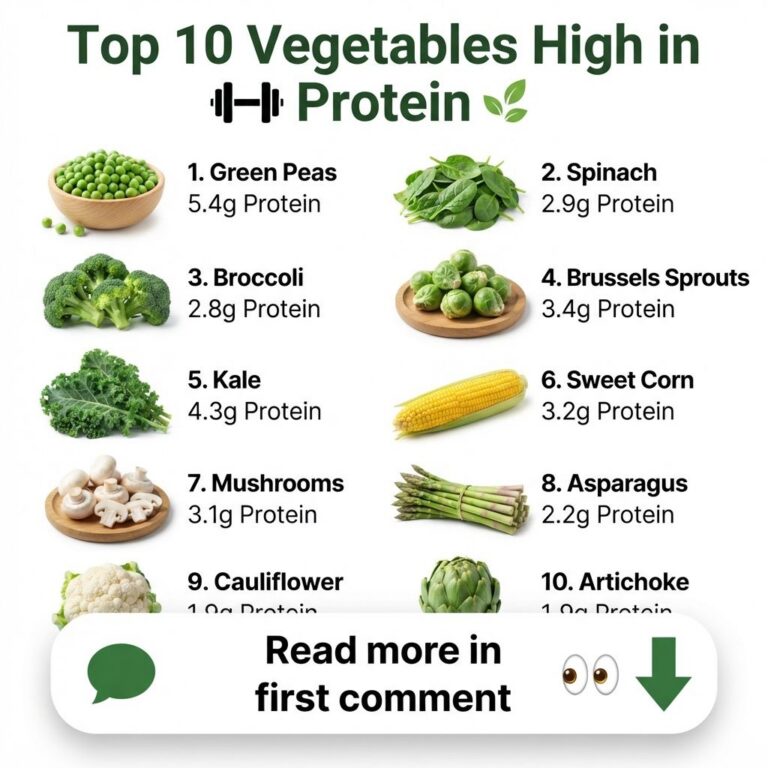
Your Top 10 High-Protein Vegetables: Fueling Your Body Naturally
Let’s dive into the specifics and explore the vegetables that are leading the charge in delivering a significant protein punch.
1. Green Peas: Small Wonders, Big Protein
Don’t underestimate these tiny green spheres! Green peas are a fantastic source of plant-based protein, offering approximately 8 grams per cup when cooked. Beyond protein, they’re rich in fiber, vitamins A, K, and C, and several B vitamins. They are incredibly versatile, perfect for adding to soups, stews, salads, or simply enjoyed as a side dish.
2. Spinach: Leafy Green Strength
Known for its iron content, spinach also boasts a notable amount of protein, providing around 5 grams per cooked cup. This leafy green powerhouse is packed with vitamins K, A, C, and folate. Incorporate spinach into smoothies, sautés, omelets, or as a base for hearty salads to easily boost your nutrient intake.
3. Broccoli: The Florets of Fortitude
A member of the cruciferous family, broccoli offers about 4 grams of protein per chopped cup, along with an impressive amount of fiber, Vitamin C, and Vitamin K. Its crunchy texture and mild flavor make it a family favorite, whether steamed, roasted, or added to stir-fries and casseroles.
4. Brussels Sprouts: Bite-Sized Boosters
Often misunderstood, Brussels sprouts are a nutritional gem, delivering around 4 grams of protein per cooked cup. They are also high in Vitamin K, Vitamin C, and fiber. Roasting them with a drizzle of olive oil brings out their nutty flavor and makes them a delicious addition to any meal.
5. Kale: King of the Greens
Another superstar leafy green, kale provides approximately 3-4 grams of protein per chopped raw cup, alongside an abundance of vitamins A, K, and C, and powerful antioxidants. Add kale to your smoothies, massage it into salads, or bake it into crispy chips for a healthy snack.
6. Sweet Corn: Golden Grains of Goodness
Often thought of as a starchy vegetable, sweet corn actually offers a good protein contribution, providing about 5 grams per cooked cup. It’s also rich in fiber and antioxidants like lutein and zeaxanthin. Enjoy it grilled, boiled, or added to salsas and soups.
7. Mushrooms: Umami-Rich Protein
While technically a fungus, mushrooms are commonly consumed as vegetables and offer about 3 grams of protein per cup (sliced). They are unique in providing Vitamin D when exposed to sunlight and contain B vitamins. Their savory, umami flavor makes them an excellent meat substitute in stir-fries, pasta dishes, and sandwiches.
8. Asparagus: Spears of Sustenance
These elegant spears are not just delicious but also nutritious, with approximately 3 grams of protein per cup (chopped). Asparagus is an excellent source of folate, Vitamin K, and antioxidants. It’s fantastic roasted, grilled, steamed, or blanched and added to salads.
9. Cauliflower: The Versatile Crusader
This cruciferous vegetable is incredibly versatile and provides about 2.5 grams of protein per chopped cup. Cauliflower is also low in calories and carbs, high in Vitamin C, and can be transformed into rice, pizza crust, or mashed