Welcome, fellow food lovers! Have you ever wondered how chefs achieve that perfect, juicy steak or perfectly roasted chicken every time? The secret isn’t magic; it’s mastering meat doneness, and it all comes down to internal temperature. Whether you’re exploring new international recipes or perfecting classic dishes, understanding these temperatures is your key to unlocking incredible flavor and texture. Say goodbye to dry, overcooked meals and hello to consistently delicious results!
From grilling succulent steaks to slow-roasting a tender pork shoulder, knowing the right internal temperature ensures your meat is not only flavorful and juicy but also safe to eat. Forget guessing by color alone – a reliable food thermometer is your best friend in the kitchen.
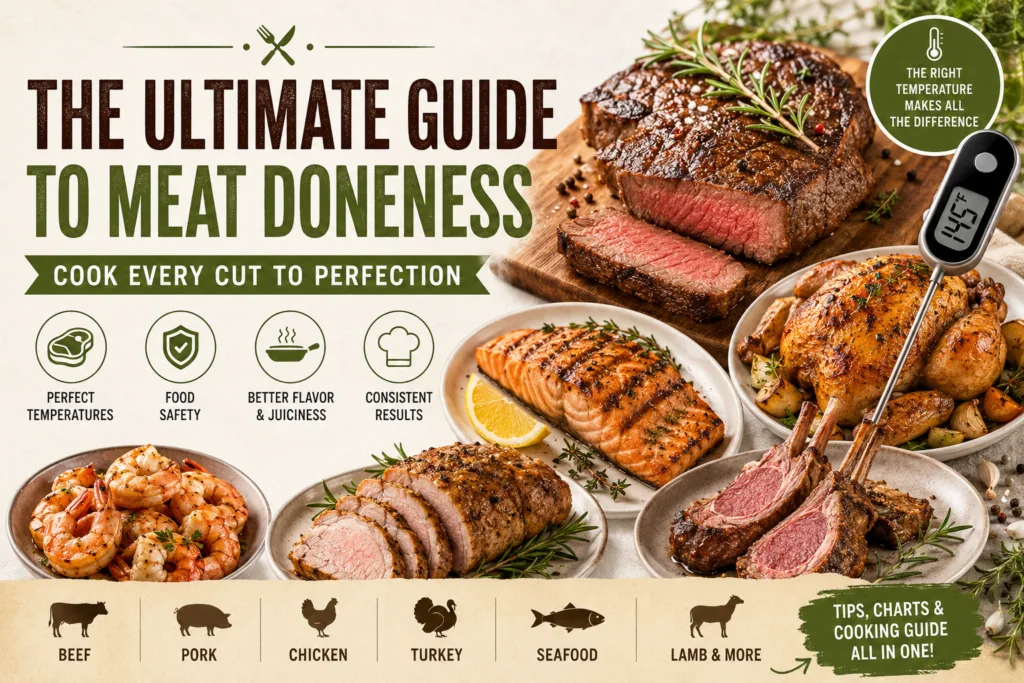 Your ultimate visual guide to perfectly cooked meats.
Why Internal Temperature Matters
Many home cooks rely on visual cues like color or touch to determine if meat is done, but these methods can be misleading. Different cuts of meat, various cooking methods, and even kitchen lighting can all affect how cooked a piece of meat appears. This is where a digital meat thermometer becomes indispensable. It gives you an accurate reading, taking the guesswork out of cooking.
Using a food thermometer helps you:
- Prevent Overcooking: Keep your meat tender and moist, avoiding that dreaded dry texture.
- Keep Meat Juicy: Lock in all those delicious natural juices.
- Ensure Food Safety: Cook to safe temperatures, eliminating harmful bacteria.
- Achieve Consistent Results: Recreate your favorite dishes perfectly every time, just like a pro!
Mastering Doneness for Every Meat
Beef Doneness Guide
Beef is wonderfully versatile and can be enjoyed at various levels of doneness, each offering a unique experience. Remember, quality beef ingredients make all the difference!
DonenessInternal TemperatureAppearanceRare120–125°F (49–52°C)Cool red centerMedium Rare130–135°F (54–57°C)Warm red centerMedium140–145°F (60–63°C)Pink centerMedium Well150–155°F (66–68°C)Slightly pinkWell Done160°F+ (71°C+)Brown throughout
Best for: Ribeye, Strip steak, Tenderloin, T-bone
Pro Tip: Remove steaks from heat about 5°F (2-3°C) before your target temperature. They continue to cook while resting, a process known as carryover cooking!
Pork Doneness Guide
Modern pork is much leaner than it used to be, so it doesn’t need to be cooked until it’s completely dry. A slightly pink center is now perfectly safe and incredibly delicious!
- Recommended Temperature: 145°F (63°C)
Then let it rest for 3 minutes for optimal juiciness.
Perfect for: Pork chops, Pork loin, Pork tenderloin
For cuts like pork shoulder or when making pulled pork, you’ll want to cook it longer for that fall-apart tender texture:
- Pulled Pork/Pork Shoulder: Cook until 195–205°F (90–96°C)
Chicken Doneness Guide
Chicken should always be cooked thoroughly to ensure food safety. It’s a staple in many healthy meals and international recipes!
- Safe Temperature: 165°F (74°C)
This temperature applies to all chicken parts:
- Chicken breast
- Chicken thighs
- Wings
- Drumsticks
- Whole chicken
Pro Tip: Insert your thermometer into the thickest part of the meat without touching the bone for an accurate reading.
Turkey Doneness Guide
Similar to chicken, turkey needs to reach a safe internal temperature, especially important for those festive holiday feasts!
- Breast: 165°F (74°C)
- Thigh: 170–175°F (77–79°C)
Important: Rest your turkey for at least 15–20 minutes before carving. This step is crucial for juicy meat!
Duck Doneness Guide
Duck is unique because of its rich, red meat and can be served more like steak. This makes it a fantastic ingredient for gourmet recipes!
- Medium Rare: 130–135°F (54–57°C)
- Medium: 140°F (60°C)
- Well Done: 165°F (74°C)
Chef’s Secret: For crispy duck skin, render the fat slowly over medium-low heat before increasing it to brown.
Lamb Doneness Guide
Lamb, another delightful international ingredient, is often best enjoyed when cooked to medium-rare or medium, highlighting its tender texture and rich flavor.
DonenessInternal TemperatureRare120–125°F (49–52°C)Medium Rare130–135°F (54–57°C)Medium140–145°F (60–63°C)Well Done160°F+ (71°C+)
Perfect for: Lamb chops, Rack of lamb, Leg of lamb
Venison (Deer) Doneness Guide
Venison is a lean meat that cooks quickly. It’s important not to overcook it to maintain its tenderness.
- Medium Rare: 130–135°F (54–57°C)
- Medium: 140°F (60°C)
Remember: Avoid cooking venison beyond medium, or it may become quite dry.
Goat (Chevon) Doneness Guide
Goat meat, a staple in many Middle Eastern dishes and Asian cuisine, has less fat than beef and truly shines with slow cooking methods.
- Best Internal Temperature: 160°F (71°C)
Ideal cooking methods: Curries, Braising, Slow roasting, Stews
Fish Doneness Guide
Cooking fish to perfection means achieving that beautiful opaque flesh that flakes easily, a cornerstone of delightful seafood recipes.
- Most Fish: 145°F (63°C)
The flesh should:
- Turn opaque throughout
- Flake easily with a fork
Popular examples: Salmon, Cod, Halibut, Tilapia (except sushi-grade tuna, which is often eaten raw)
Shrimp Doneness Guide
Shrimp cooks incredibly fast, so a watchful eye is key to avoiding rubbery results!
Perfectly cooked shrimp should be:
- Pink outside
- White inside
- Curved into a soft ‘C’ shape
Overcooked shrimp tend to curl into a tight ‘O’ shape and become tough.
- Cooking Time: Generally 2–3 minutes per side, depending on size.
- Internal Temperature: 145°F (63°C)
Resting Time Matters
You’ve cooked your meat to perfection, but your job isn’t quite done! Resting meat after cooking is just as important as the cooking process itself. This allows the muscle fibers to relax and reabsorb the juices, ensuring every bite is incredibly tender and flavorful.
Recommended Resting Times:
- Steak: 5–10 minutes
- Chicken breast: 5 minutes
- Whole chicken: 15 minutes
- Turkey: 20–30 minutes
- Pork chops: 3–5 minutes
- Lamb: 10 minutes
Quick Reference Temperature Chart
Keep this handy chart nearby for quick checks while you’re cooking up your favorite international recipes!
MeatSafe Internal TemperatureBeef Steak (Medium Rare)130–135°F (54–57°C)Beef Steak (Medium)140–145°F (60–63°C)Pork145°F (63°C) + RestChicken165°F (74°C)Turkey165°F (74°C)Duck135–165°F (57–74°C)Lamb130–145°F (54–63°C)Venison130–140°F (54–60°C)Goat160°F (71°C)Fish145°F (63°C)Shrimp145°F (63°C)
Final Thoughts
Cooking meat to the right temperature isn’t just about food safety—it’s the ultimate key to better flavor, juicier texture, and achieving restaurant-quality results right in your own kitchen! Investing in a reliable instant-read thermometer is one of the best kitchen hacks you can make. Combine that with letting your meat rest before slicing, and you’ll enjoy perfectly cooked meals every single time.
Whether you’re grilling savory steaks, roasting a festive chicken, preparing delicate seafood recipes, or cooking a grand holiday feast, mastering these simple temperature guidelines will truly elevate your cooking skills. Go forth with confidence and serve every dish knowing it’s perfectly delicious!