In our quest for optimal health, we often focus intensely on what we eat, carefully selecting nutrient-rich foods and avoiding processed culprits. But what if we told you that when you eat certain foods can be just as crucial? Many healthy choices, when consumed at the wrong time, might inadvertently undermine your health goals, leading to digestive issues, disrupted sleep, or even less effective nutrient absorption.
This isn’t about rigid dieting; it’s about understanding your body’s natural rhythms and how different foods interact with them throughout the day. By making simple adjustments to your food timing, you can unlock better digestion, improved energy levels, and overall enhanced well-being. Let’s dive into some common foods you might be eating at less-than-ideal times and discover the small changes that can lead to significant health benefits.
Timing is Everything: Re-evaluating Your Meal Schedule
Let’s explore specific foods and drinks where timing can make a significant difference, based on common nutritional advice and how our bodies process them.
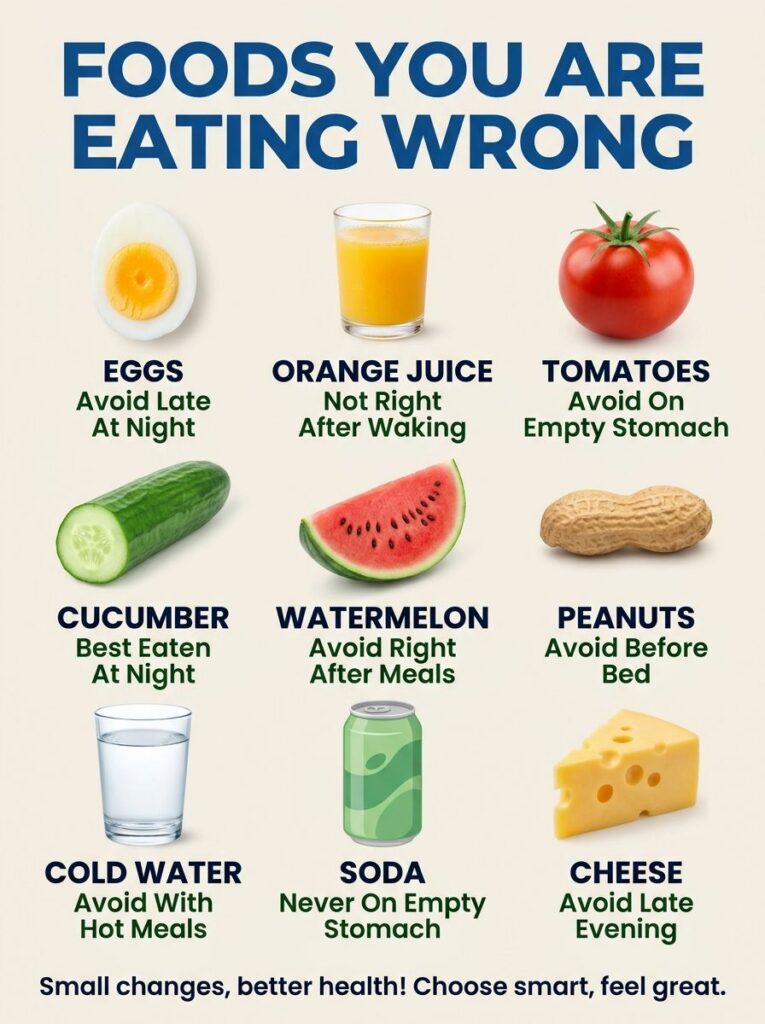
Boiled Eggs: A Morning Powerhouse
- Optimal Time: Breakfast or early afternoon.
- Why: Eggs are packed with protein, which helps you feel full and satisfied, making them an excellent choice to kickstart your day or provide a sustained energy boost after lunch. Their protein content also supports muscle repair and growth. Eating them too close to bedtime might put a strain on your digestive system as it winds down for rest.
Orange Juice: A Morning Vitamin C Boost
- Optimal Time: Breakfast or mid-morning.
- Why: While rich in Vitamin C, orange juice is also high in natural sugars. Consuming it in the morning can provide a quick energy lift and a dose of immune-boosting vitamins. Drinking it on an empty stomach later in the day, especially before bed, might lead to a rapid blood sugar spike and crash, potentially disrupting sleep or contributing to acid reflux.
Tomatoes: Best Enjoyed Earlier in the Day
- Optimal Time: Lunch or early dinner.
- Why: Tomatoes are acidic and contain tyramine, which can stimulate the brain and increase gastric acid production. While a fantastic source of antioxidants like lycopene, eating them too late at night, especially in large quantities, might cause heartburn or indigestion, potentially interfering with sleep for sensitive individuals.
Cucumbers: A Refreshing Day-Time Snack
- Optimal Time: Mid-morning or afternoon.
- Why: Cucumbers are mostly water, making them incredibly hydrating and refreshing. They’re excellent for a light snack. However, their high water content can lead to frequent urination, which might disrupt sleep if consumed close to bedtime. Some individuals may also experience bloating or gas if eaten late due to their fiber content and the digestive effort required.
Watermelon: Hydration for the Day
- Optimal Time: Mid-morning to early evening.
- Why: Like cucumbers, watermelon is exceptionally hydrating and full of vitamins and antioxidants. It’s a perfect fruit for a hot day or a healthy dessert. However, its high water and sugar content can lead to similar issues as cucumbers and orange juice if consumed late at night – frequent trips to the bathroom and potential blood sugar fluctuations.
Peanuts: A Smart Afternoon Snack
- Optimal Time: Mid-morning or afternoon.
- Why: Peanuts are calorie-dense and rich in healthy fats and protein, making them a satisfying snack that can curb hunger. Eating them in the afternoon can help sustain energy levels and prevent overeating at dinner. Due to their high fat content, they take longer to digest, so consuming them late at night might lead to digestive discomfort.
Cold Water: Mind Your Digestion
- Optimal Time: Throughout the day, but avoid during meals if sensitive.
- Why: Hydration is paramount, but some traditional practices and anecdotal evidence suggest that drinking very cold water *with* meals can constrict blood vessels in the digestive tract, potentially slowing down digestion. While research on this is mixed, it’s generally recommended to drink room temperature water, especially around meal times, to support optimal digestion. Cold water on its own is perfectly fine for hydration.
Soda and Sugary Drinks: Best Avoided (Especially at Night)
- Optimal Time: Ideally, rarely or never. If consumed, stick to early day.
- Why: Sugary sodas offer empty calories, provide no nutritional value, and can lead to rapid blood sugar spikes, energy crashes, and dental issues. Consuming them, particularly in the evening, can significantly disrupt sleep due to both sugar content and caffeine (in many varieties), and contribute to weight gain and metabolic issues.
Cheese: A Savory Treat, But Not for Bedtime
- Optimal Time: Lunch or early dinner.
- Why: Cheese is a delicious source of calcium and protein, but it’s also high in fat. Fatty foods take longer to digest and can sit heavily in your stomach. Eating cheese late at night can lead to indigestion, discomfort, and potentially interfere with the quality of your sleep as your body works hard to digest it when it should be resting.
General Principles for Smart Food Timing
Beyond specific foods, these overarching principles can guide your eating habits for better health:
- Listen to Your Body: Pay attention to how different foods make you feel at various times. Everyone’s digestive system is unique.
- Early Dinners: Aim to finish your main meal at least 2-3 hours before bedtime to give your body ample time for digestion.
- Balanced Meals: Combine carbohydrates, proteins, and healthy fats in your meals to stabilize blood sugar and maintain energy.
- Hydrate Thoughtfully: Drink plenty of water throughout the day, but taper off closer to bedtime to avoid nighttime bathroom breaks.
- Mindful Snacking: If you need a snack between meals, choose nutrient-dense options like fruits, vegetables, nuts, or yogurt.
Embrace Small Changes for Big Rewards
Adopting these food timing strategies doesn’t require a complete overhaul of your diet. Start with one or two changes and observe how your body responds. You might be surprised at the positive impact these seemingly small adjustments can have on your digestion, energy levels, sleep quality, and overall well-being.
Remember, the goal is to work with your body, not against it. By understanding the optimal timing for certain foods, you’re taking another powerful step towards a healthier, happier you!