Your body is an incredibly complex system, often providing crucial signals when something is amiss. Among the most urgent of these signals are specific pains that demand immediate medical attention. Recognizing these vital warning signs can be the difference between a minor issue and a life-threatening emergency. Knowing when to act swiftly and seek professional help is a cornerstone of proactive health management.
Ignoring significant discomfort or unfamiliar sensations can have serious consequences. This article will guide you through 7 pains that demand immediate medical attention, helping you understand what these alarms might signify and why a prompt response is crucial. Save this vital information and share it to help others be more health-aware.
Understanding Your Body’s Alarms
Pain is your body’s way of communicating that something isn’t right. While many aches and discomforts are minor and resolve on their own, some types of pain are red flags that should never be ignored. These are the body’s emergency alarms, signaling potentially severe conditions that require urgent medical evaluation.
Being tuned into these signals empowers you to make informed decisions about your health and ensures you receive timely care when it matters most.
7 Pains That Demand Immediate Medical Attention
Here are seven critical types of pain and symptoms that warrant an immediate trip to the emergency room or a call to emergency services.
1. Sudden Chest Pain
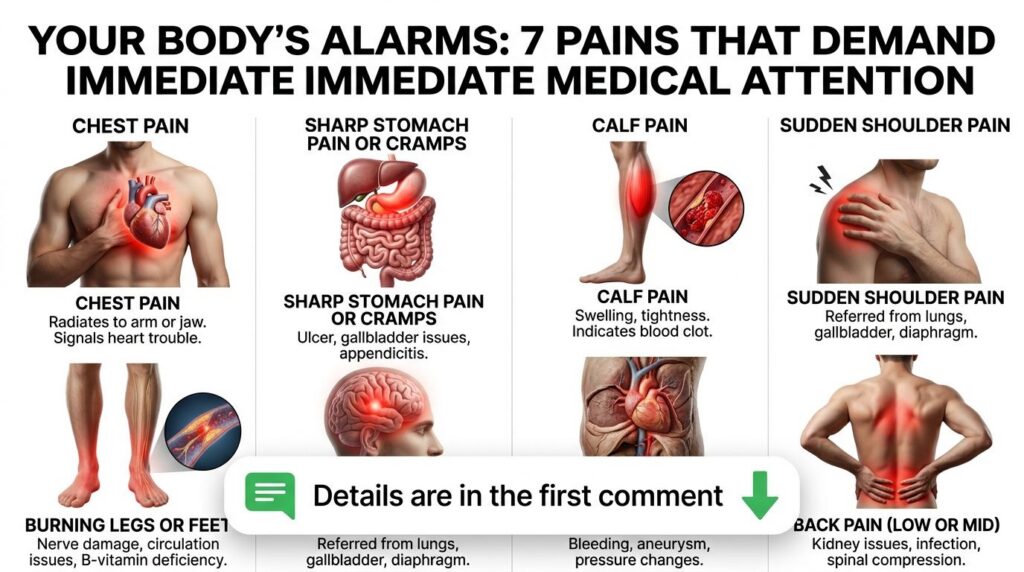
Pain in the chest area, especially if it’s sudden, crushing, squeezing, or radiating to your arm, jaw, or back, is a classic warning sign of a heart attack. While not all chest pain is cardiac-related, it’s impossible to tell the difference without medical evaluation. Other symptoms like shortness of breath, sweating, or nausea accompanying chest pain amplify the urgency. Never delay seeking help for chest pain.
2. Severe, Abrupt Headache
More than just a bad headache, a sudden, severe headache—often described as the “worst headache of your life”—can indicate a serious underlying condition such as a stroke, aneurysm, or brain hemorrhage. If this type of headache comes on suddenly and is accompanied by vision changes, weakness, numbness, or difficulty speaking, seek emergency care without hesitation.
3. Intense Abdominal Pain
Severe pain in your abdomen, particularly if it’s localized to one area, comes on suddenly, or is accompanied by fever, vomiting, or changes in bowel habits, can point to critical issues. Conditions like appendicitis, gallstones, pancreatitis, or bowel obstruction require prompt diagnosis and treatment to prevent life-threatening complications.
4. Calf Pain with Swelling and Redness
Pain in your calf, especially if one leg is noticeably swollen, red, warm to the touch, or tender, can be a sign of a deep vein thrombosis (DVT), or a blood clot. A DVT can be extremely dangerous if the clot travels to your lungs (pulmonary embolism), leading to severe respiratory distress. Early detection is crucial.
5. Sudden, Sharp Back Pain
While back pain is common, sudden and excruciating pain in your upper or lower back, particularly if it radiates, is accompanied by numbness, weakness in your legs, or loss of bladder/bowel control, demands immediate attention. This could indicate conditions like kidney stones, a ruptured disc, or even a life-threatening aortic dissection, especially if the pain is tearing or ripping in nature.
6. Upper Right Abdominal Pain
Persistent or worsening pain in the upper right quadrant of your abdomen can signal problems with your liver or gallbladder. This might include conditions like gallstones, cholecystitis (gallbladder inflammation), or liver issues. Symptoms may be accompanied by nausea, vomiting, or jaundice (yellowing of the skin or eyes). These conditions often require prompt medical intervention.
7. Sudden Weakness or Numbness
Though not always felt as “pain,” sudden weakness, numbness, or tingling on one side of your body, in one arm or leg, or on one side of your face, is a critical sign of a stroke. Other stroke symptoms include sudden confusion, trouble speaking or understanding speech, sudden vision problems, or difficulty walking. Time is of the essence with stroke symptoms, as prompt treatment can significantly improve outcomes.
When to Seek Emergency Care
The general rule of thumb is: if the pain is severe, sudden, unexplained, persistent, or accompanied by other alarming symptoms (like difficulty breathing, fainting, confusion, or changes in consciousness), do not hesitate. Call emergency services (e.g., 911 in the U.S. or your local emergency number) or go to the nearest emergency room immediately. It’s always better to err on the side of caution when your health is potentially at risk.
Don’t Ignore Your Body’s Signals
Being proactive about your health means listening to your body. These 7 pains that demand immediate medical attention are not to be taken lightly. Educating yourself and those around you about these warning signs can empower everyone to act quickly and potentially save lives.
Remember, your health is your most valuable asset. Stay informed, stay vigilant, and never compromise when it comes to critical health signals.
Final Thoughts
Understanding when to seek immediate medical attention for specific pains is a vital part of personal health and wellness. These 7 alarming pains serve as critical indicators that something serious may be happening within your body. By recognizing these signals and acting promptly, you take a crucial step towards safeguarding your health and well-being. Always trust your instincts when it comes to severe or unusual pain, and never hesitate to get professional medical help.