Fresh fruit and vegetable juices are a delicious way to increase your intake of vitamins, minerals, and antioxidants. While no juice can cure disease, certain ingredients may support your overall health when combined with a balanced diet, regular exercise, and appropriate medical care.
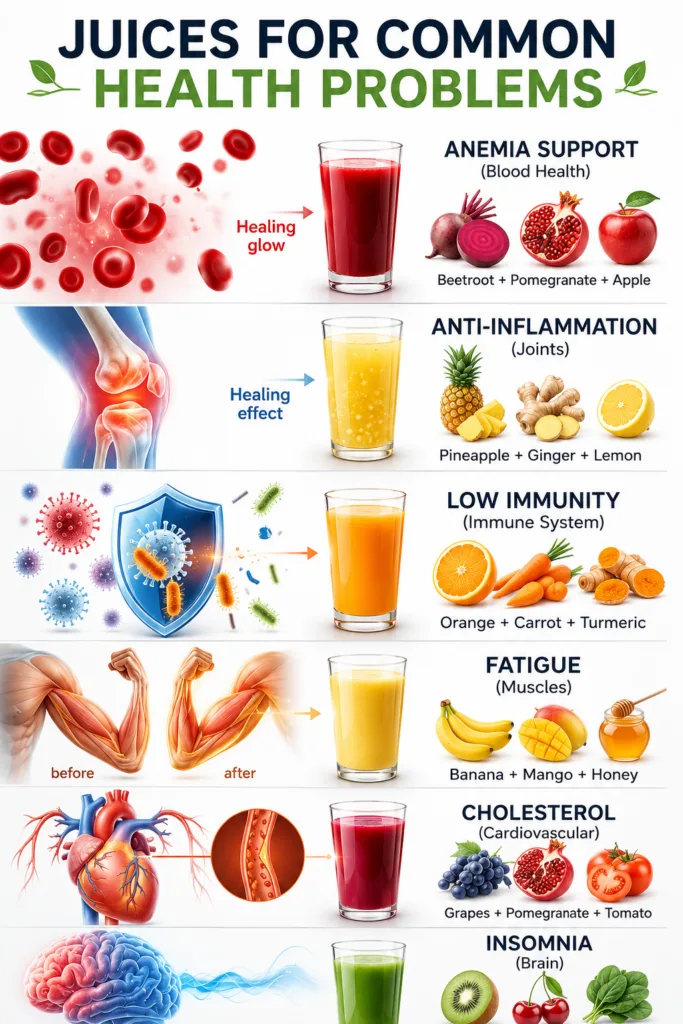
The infographic highlights six juice combinations that are commonly associated with different health concerns. Let’s explore what each recipe offers—and what current scientific evidence suggests.
❤️ 1. Beetroot + Pomegranate + Apple
Claimed Benefit: Anemia Support
Why these ingredients?
🥬 Beetroot
Beetroot contains:
- Folate
- Vitamin C
- Nitrates
- Antioxidants
Although beetroot is often believed to be rich in iron, it actually contains only modest amounts. Its biggest benefit comes from supporting healthy blood vessel function through natural nitrates.
❤️ Pomegranate
Pomegranate provides:
- Vitamin C
- Polyphenols
- Powerful antioxidants
Vitamin C may help improve the absorption of iron from plant-based foods.
🍎 Apple
Apples contribute:
- Vitamin C
- Fiber (if blended rather than juiced)
- Antioxidants
They add natural sweetness while providing additional nutrients.
What the science says
This juice is nutritious and may support a healthy diet, but it does not treat anemia. If you have iron-deficiency anemia, it’s important to identify the underlying cause and follow your healthcare provider’s recommendations, which may include iron-rich foods or supplements.
💛 2. Pineapple + Ginger + Lemon
Claimed Benefit: Anti-Inflammation
🍍 Pineapple
Contains bromelain, an enzyme that has been studied for its anti-inflammatory properties.
🫚 Ginger
Ginger contains gingerol, a natural compound that may help reduce inflammation and ease nausea.
Some studies suggest ginger may provide mild relief for people with osteoarthritis.
🍋 Lemon
Rich in:
- Vitamin C
- Antioxidants
- Citric acid
Vitamin C supports collagen production and contributes to normal immune function.
What the science says
This juice may help support a healthy inflammatory response as part of an overall balanced diet, but it is not a replacement for medications or treatment for chronic inflammatory conditions.
🧡 3. Orange + Carrot + Turmeric
Claimed Benefit: Immune Support
🍊 Orange
Excellent source of:
- Vitamin C
- Folate
- Potassium
Vitamin C helps support normal immune function.
🥕 Carrot
Carrots provide:
- Beta-carotene
- Vitamin A
- Antioxidants
Vitamin A plays an important role in maintaining healthy skin and mucous membranes—the body’s first line of defense against infections.
🌿 Turmeric
Turmeric contains curcumin, a compound with antioxidant and anti-inflammatory properties.
Curcumin is absorbed better when consumed with black pepper and a source of healthy fat.
What the science says
These ingredients are rich in nutrients that support overall immune health, but no juice can prevent or cure infections on its own.
🍌 4. Banana + Mango + Honey
Claimed Benefit: Fatigue
🍌 Banana
Provides:
- Potassium
- Vitamin B6
- Carbohydrates
Bananas offer a quick source of energy.
🥭 Mango
Rich in:
- Vitamin C
- Vitamin A
- Natural sugars
It provides additional carbohydrates and antioxidants.
🍯 Honey
Honey contains natural sugars that can provide rapid energy.
What the science says
This smoothie can be an excellent post-workout snack or quick energy boost. However, if fatigue is persistent or severe, it could be related to sleep issues, anemia, thyroid disorders, or other medical conditions that require evaluation.
❤️ 5. Grapes + Pomegranate + Tomato
Claimed Benefit: Cholesterol Support
🍇 Grapes
Contain polyphenols such as resveratrol, which may support cardiovascular health.
❤️ Pomegranate
Provides antioxidants that may help protect blood vessels from oxidative stress.
🍅 Tomato
Tomatoes are rich in lycopene, an antioxidant linked to heart health.
What the science says
These fruits contain compounds that support heart health as part of a balanced dietary pattern. However, juice alone will not lower cholesterol significantly. Maintaining healthy cholesterol levels also depends on limiting saturated fats, increasing fiber intake, exercising regularly, and following medical advice when necessary.
🧠 6. Kiwi + Cherry + Spinach
Claimed Benefit: Better Sleep
🥝 Kiwi
Studies suggest that eating kiwi before bedtime may help improve sleep quality for some people.
🍒 Cherries
Tart cherries naturally contain melatonin and plant compounds that may support healthy sleep.
🥬 Spinach
Provides:
- Magnesium
- Folate
- Potassium
Magnesium plays a role in muscle relaxation and normal nerve function.
What the science says
This combination may support healthy sleep habits, but it won’t cure chronic insomnia. Good sleep hygiene—such as maintaining a regular sleep schedule, limiting caffeine late in the day, and reducing screen time before bed—is also essential.
Important Reminder
These juices are nutritious additions to a healthy lifestyle, but they are not medical treatments.
If you experience symptoms such as:
- Severe fatigue
- Persistent joint pain
- High cholesterol
- Frequent infections
- Ongoing insomnia
- Suspected anemia
consult a healthcare professional for proper diagnosis and treatment.
Final Thoughts
Fresh juices can be a convenient way to enjoy a variety of fruits and vegetables while increasing your intake of vitamins, minerals, and antioxidants.
Here’s a quick recap:
🥤 Beetroot + Pomegranate + Apple → Supports a nutrient-rich diet that may help maintain healthy blood.
🥤 Pineapple + Ginger + Lemon → Contains natural compounds that may support a healthy inflammatory response.
🥤 Orange + Carrot + Turmeric → Rich in immune-supporting vitamins and antioxidants.
🥤 Banana + Mango + Honey → Provides quick energy and nutrients that may help combat temporary fatigue.
🥤 Grapes + Pomegranate + Tomato → Supplies heart-friendly antioxidants that complement a healthy diet.
🥤 Kiwi + Cherry + Spinach → Contains nutrients that may support relaxation and healthy sleep.
The healthiest approach is to view these juices as part of a balanced eating pattern, not as miracle remedies. Combined with regular physical activity, adequate sleep, proper hydration, and routine medical care, they can contribute to long-term health and well-being.