There’s nothing quite like the taste of fresh, homemade pasta – and it’s simpler to create than you might think. Dive into the rewarding world of homemade pasta with this simple guide, showing you how to create delicious, fresh pasta from scratch. It’s a satisfying and potentially healthier way to enjoy your favorite dish, putting you in control of every ingredient.
This article will walk you through eight easy steps, from gathering your ingredients to savoring your very own creation. Get ready to transform basic pantry staples into a culinary masterpiece that tastes incredible and feels incredibly rewarding.
Why Choose Homemade Pasta? The Joy and Health Benefits
Opting for fresh, homemade pasta goes beyond just taste; it’s a mindful choice for your well-being and a delightful culinary experience. When you make pasta from scratch, you:
- Control Ingredients: You know exactly what goes into your meal, avoiding unwanted preservatives or additives found in some store-bought varieties.
- Enjoy Superior Flavor and Texture: Fresh pasta has a delicate texture and rich flavor that often surpasses its dried counterparts. It absorbs sauces beautifully, creating a more harmonious dish.
- Reap Potential Health Benefits: While pasta is often seen as a carb-heavy dish, making it at home allows you to choose high-quality flours (like whole wheat or semolina) and fresh, nutrient-rich eggs. It’s also often eaten in more reasonable portions when you’ve put in the effort!
- Experience Culinary Satisfaction: The process itself is incredibly rewarding. From kneading the dough to seeing it transform into beautiful strands, it’s a creative journey that culminates in a delicious meal.
Essential Ingredients for Your Fresh Pasta
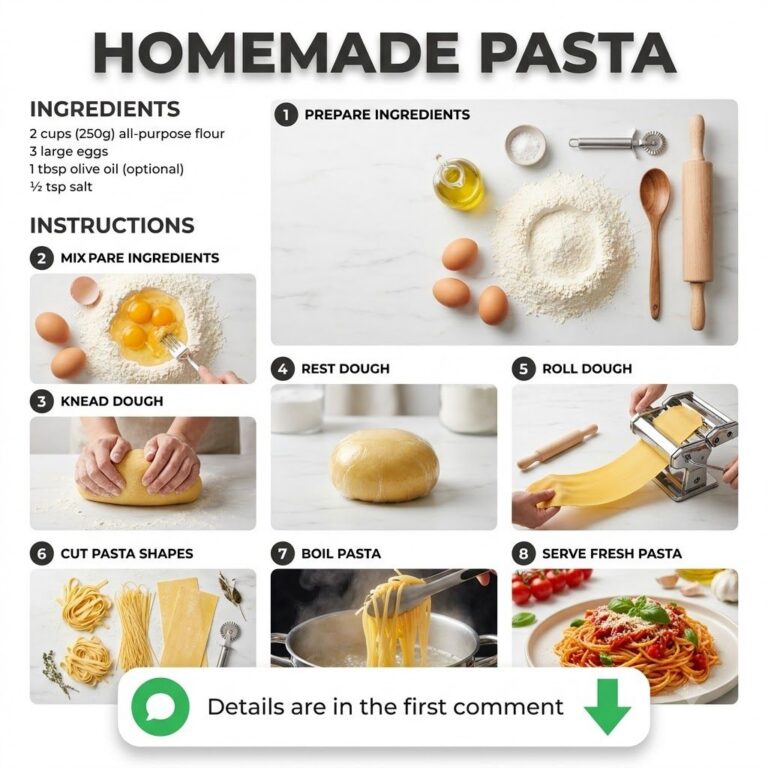
Making fresh pasta requires just a few basic ingredients, showcasing the magic that simple components can create. For a standard batch serving 2-4 people, you’ll need:
- All-Purpose Flour: 2 cups (approximately 240g). Many recipes also use ’00’ flour for a finer texture, but all-purpose works wonderfully.
- Large Eggs: 2 large eggs. These provide the necessary moisture, richness, and structure for the dough.
- Pinch of Salt (Optional): A small pinch, about 1/4 teaspoon, can enhance the flavor of the pasta itself.
Your Step-by-Step Guide to Perfect Homemade Pasta
Ready to get your hands dusted with flour? Follow these eight easy steps to craft your own delicious homemade pasta.
Step 1: Prepare Your Workspace
Clear a large, clean, flat surface – a counter or a wooden board is ideal. Mound your two cups of all-purpose flour directly onto this surface.
Step 2: Create the Egg Well
Using your fingers or the bottom of a bowl, create a large well in the center of the flour mound. Think of it like a volcano, with high walls to contain your liquid ingredients.
Step 3: Combine Eggs and Flour
Carefully crack your two large eggs into the well. If using, add a pinch of salt to the eggs. With a fork, gently whisk the eggs, gradually incorporating small amounts of flour from the inner walls of the well. Continue until a thick, shaggy dough forms.
Step 4: Knead the Dough to Perfection
Once the dough is too stiff to work with a fork, use your hands. Begin to fold and push the dough, incorporating any remaining loose flour. Knead the dough vigorously for about 8-10 minutes. This develops the gluten, resulting in a smooth, elastic, and springy dough. It should feel firm but pliable, not sticky.
Step 5: Let the Dough Rest
Form the kneaded dough into a ball. Wrap it tightly in plastic wrap or cover it with an inverted bowl to prevent it from drying out. Let it rest at room temperature for at least 30 minutes. This resting period allows the gluten to relax, making the dough much easier to roll.
Step 6: Roll Out Your Pasta
Divide the dough into 2-4 smaller, manageable portions. Lightly flour your work surface and one portion of dough. Using a rolling pin, roll the dough as thinly as possible. Alternatively, use a pasta machine: starting on the widest setting, pass the dough through, folding and repeating until it’s smooth. Then, gradually work your way down to thinner settings until your desired thickness is achieved (typically setting 6 or 7 for most machines).
Step 7: Cut Your Fresh Pasta Shapes
Once the dough sheets are rolled thin, it’s time to cut them. For classic shapes like fettuccine or tagliatelle, you can either use the cutting attachment on your pasta machine or do it by hand. If cutting by hand, lightly flour the sheets, then fold them loosely and slice them into strips of your desired width using a sharp knife. Gently unfurl the strips and dust them with a little extra flour to prevent sticking.
Step 8: Cook and Enjoy Your Creation
Bring a large pot of salted water to a rolling boil. Carefully add your fresh pasta. Fresh pasta cooks much faster than dried pasta – usually in just 2-4 minutes, or until it floats to the surface and is al dente (tender but with a slight bite). Drain immediately and toss with your favorite sauce, a drizzle of olive oil, or a sprinkle of fresh herbs. Serve hot and savor the fruits of your labor!
Tips for Success
- Dough Consistency is Key: If your dough feels too dry during kneading, add a tiny bit of water (half a teaspoon at a time). If it’s too sticky, add a little flour.
- Don’t Skip the Rest: The 30-minute rest is crucial for a pliable dough that won’t snap back when rolled.
- Prevent Sticking: Generously flour your workspace and pasta sheets, especially after cutting, to ensure they don’t clump together before cooking.
- Fresh is Fast: Always remember that fresh pasta cooks quickly. Keep a close eye on it to avoid overcooking.
Frequently Asked Questions About Homemade Pasta
Q: Can I make pasta dough ahead of time?
A: Yes! You can store fresh pasta dough, wrapped tightly in plastic wrap, in the refrigerator for up to 2 days. You can also freeze it for up to 2 weeks.
Q: Do I need a pasta machine?
A: While a pasta machine makes the process easier and more consistent, it’s not strictly necessary. You can achieve great results with just a rolling pin and some patience!
Q: What kind of sauce pairs best with fresh pasta?
A: Fresh pasta shines with lighter sauces that highlight its delicate texture, such as a simple pomodoro, pesto, aglio e olio, or a creamy mushroom sauce.
Final Thoughts
Embarking on the journey of making homemade pasta is a culinary adventure that promises both delicious results and a deep sense of accomplishment. From the soothing rhythm of kneading to the satisfying sight of fresh strands simmering in boiling water, it’s an experience that nourishes the body and soul. So, roll up your sleeves, embrace the flour, and discover the simple joy and health benefits of crafting your own fresh pasta.