Some plants look like ordinary garden weeds until you learn how long people have used them.
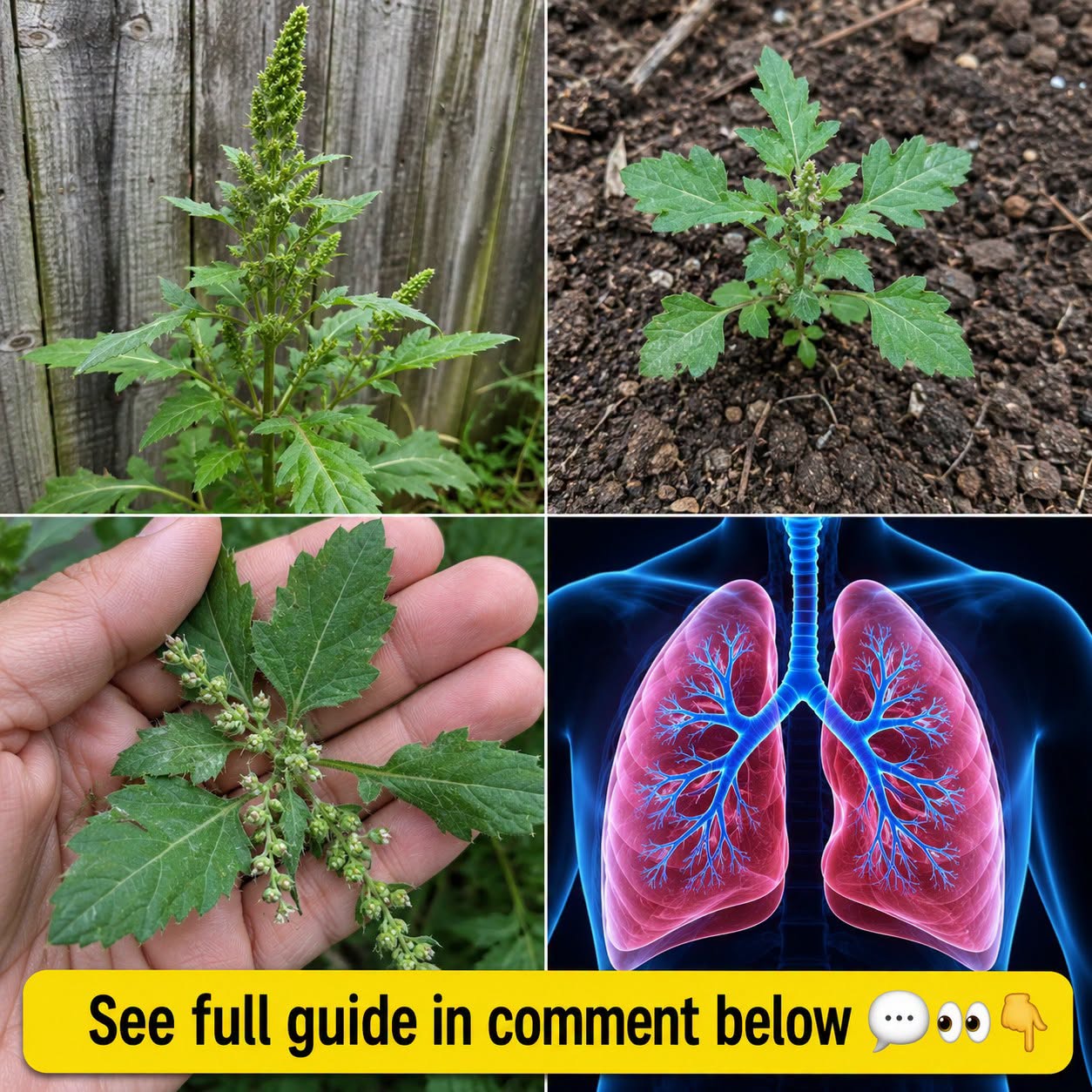
This plant appears to be Chenopodium album, commonly called lamb’s quarters, bathua, or wild spinach. It is a green leafy plant with toothed leaves and upright clusters of tiny greenish flowers. In many regions, it is eaten as a cooked leafy vegetable, but it also has a long history in traditional remedies for digestion, inflammation, skin concerns, and general body support. Reviews describe Chenopodium album as both a nutritional plant and a medicinal herb with antioxidant, antimicrobial, anti-inflammatory, and other studied activities.
The image connects this plant with lung health. That is where we need to be careful. Chenopodium album tea is not a lung cleanser, asthma cure, or treatment for infection. A better, safer way to describe it is as a traditional herbal drink that may feel soothing during mild seasonal discomfort, especially when used warm and in small amounts.
What Chenopodium Album Is Traditionally Used For
In traditional food and herbal practice, Chenopodium album has been used for more than one purpose.
People commonly associate it with:
- Digestive comfort.
- Mild inflammation support.
- General cleansing-style herbal use.
- Nutritional support as a cooked green.
- Folk remedies for skin and urinary complaints.
Modern reviews note that C. album has been studied for antioxidant, antimicrobial, anti-inflammatory, hepatoprotective, antidiabetic, and anthelmintic activities. However, many of these findings come from laboratory or preclinical studies, not strong human trials.
That means this herb has real traditional and scientific interest, but it should not be marketed as a cure.
Why People Link It With Lung and Throat Comfort
Warm herbal teas often feel helpful when the throat is dry, the chest feels heavy, or the body is dealing with mild seasonal irritation.
With Chenopodium album, the connection is usually indirect. The plant is better known for its anti-inflammatory and antioxidant potential than for direct lung treatment. One study looked at Chenopodium album alongside another traditional herb and described both as plants traditionally used as food and herbal remedies against inflammatory disorders.
So if someone drinks this tea during a mild cough or scratchy throat, the benefit may come from three things at once: warmth, hydration, and the plant’s traditional anti-inflammatory reputation.
That is a realistic explanation. It is also much more trustworthy than saying it “cleans the lungs.”
Ingredients
For a simple Chenopodium album tea, use:
- 1 small handful fresh Chenopodium album leaves and tender tops
- or 1 to 2 teaspoons dried herb
- 2 cups clean water
Use only young, correctly identified plant material. Avoid plants growing near roadsides, sprayed gardens, polluted soil, or industrial areas.
How to Prepare It
This tea is simple, but cleanliness matters.
Step 1: Wash the herb well
Rinse the leaves and tender tops under clean running water. Remove tough stems, damaged leaves, and any dirt.
Step 2: Add to water
Place the herb in a small pot with 2 cups of water.
Step 3: Simmer gently
Bring it to a light boil. Lower the heat and simmer for 8 to 10 minutes.
Step 4: Let it rest
Turn off the heat, cover the pot, and let it sit for another 5 minutes.
Step 5: Strain and drink warm
Strain into a cup and sip slowly.
The flavor is green, mild, and slightly earthy. It tastes closer to a vegetable broth than a sweet herbal tea.
How to Use It
This is best used as a short-term traditional drink, not as an all-day tonic.
Many people would drink it:
- In the evening when the throat feels dry.
- During mild seasonal discomfort.
- After exposure to dust, smoke, or dry air.
- Alongside rest, warm meals, and enough water.
Quick relief timeline
The first effect is usually simple. The warm tea may soothe the throat within minutes. The body may feel a little more settled the same day.
Bigger claims should be avoided. This tea should not be expected to clear mucus deeply, reverse lung damage, treat pneumonia, or replace inhalers or prescribed medicine.
Why This Plant Still Gets Attention
Part of the appeal is that Chenopodium album is both food and folk medicine.
As a leafy green, it contains nutrients and plant compounds that make it useful in traditional diets. A nutritional review describes it as a plant with strong potential for food and nutraceutical development, while also noting the need for more research into pharmacology and safety.
This matters because food-like herbs often feel gentler than strong medicinal roots or bitter barks. Still, “food-like” does not mean unlimited. This plant can contain compounds such as oxalates, especially in older leaves, which is why moderation and proper preparation matter.
Safety Notes
Do not use Chenopodium album tea as a treatment for serious respiratory symptoms.
Get medical care if you have:
- Shortness of breath.
- Chest pain.
- Wheezing.
- High fever.
- Cough lasting more than a few days.
- Blood in mucus.
- Severe weakness or worsening symptoms.
People with a history of kidney stones should be cautious because edible Chenopodium-type greens can contain oxalates, which may be a concern for people prone to oxalate kidney stones. Older leaves and seeds are generally not ideal for casual use.
Pregnant or breastfeeding people, children, and anyone taking regular medication should avoid using wild herbs medicinally without professional guidance.
Final Takeaway
Chenopodium album tea is best understood as a simple traditional herbal drink, not a dramatic lung remedy. It may feel soothing for mild throat dryness or seasonal discomfort because it is warm, hydrating, and linked with traditional anti-inflammatory use.
Used carefully, it can be a gentle part of a wellness routine. Used with exaggerated expectations, it becomes another misleading “lung detox” claim.
The better message is simple: respect the plant, prepare it cleanly, drink it moderately, and seek proper care when symptoms are more than mild.
Related Source Science
Research reviews describe Chenopodium album as a nutritional and medicinal plant with antioxidant, antimicrobial, anti-inflammatory, hepatoprotective, antidiabetic, and anthelmintic potential. Current evidence is strongest for traditional use, nutrition, and preclinical pharmacology. Strong human clinical evidence for lung disease treatment is still limited.