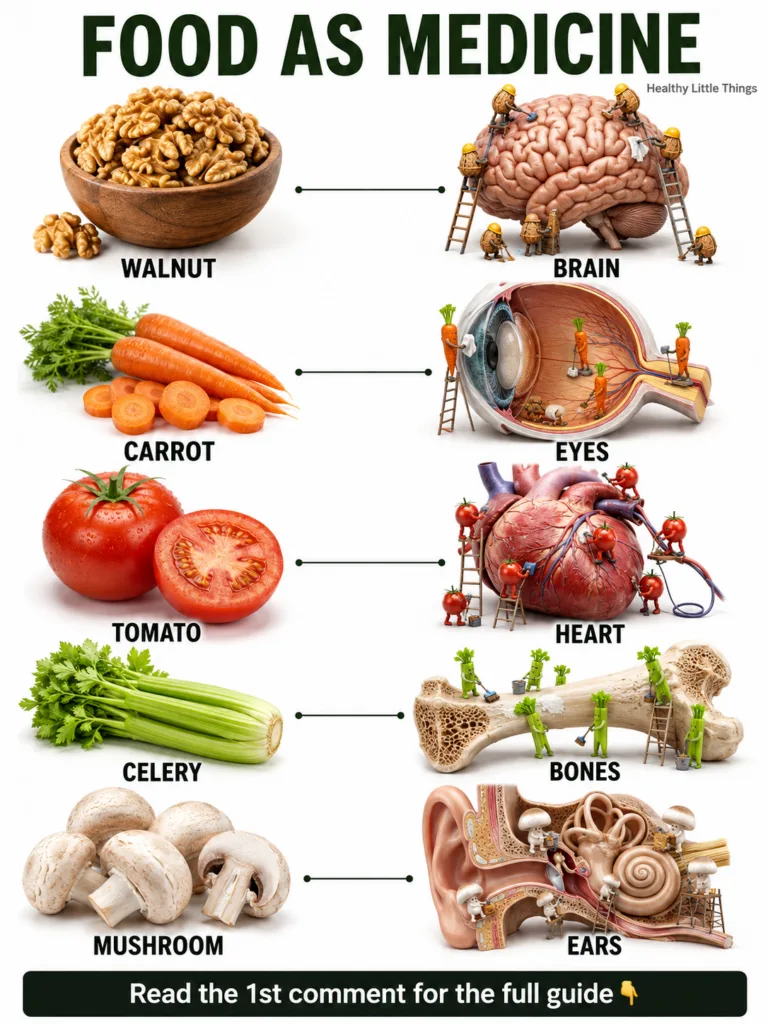
Did you know that many everyday foods act like a tiny repair crew, diligently working to support various parts of your body? It’s a fascinating concept often referred to as ‘food as medicine’ – where the nutrients in common grocery items play vital roles in maintaining our health and well-being. Far from being just fuel, these foods provide the building blocks and protective compounds our bodies need to thrive.
In this guide, we’ll explore how specific foods you likely already have in your kitchen can offer natural support to your brain, eyes, heart, bones, and ears. Get ready to discover the powerful benefits of walnuts, carrots, tomatoes, celery, and mushrooms, and learn simple ways to incorporate them into your daily diet for optimal health.
Walnuts: Fueling Your Brain Power
Often resembling a tiny brain themselves, walnuts are much more than just a coincidence. These versatile nuts are packed with essential nutrients that make them a standout food for cognitive health. When you include walnuts in your diet, you’re providing your brain with some of its favorite building blocks.
Why Walnuts are Brain Boosters
- Omega-3 Fatty Acids: Walnuts are one of the best plant-based sources of alpha-linolenic acid (ALA), an omega-3 fatty acid. Omega-3s are crucial for brain structure and function, helping to improve memory and cognitive processing. They may also help reduce oxidative stress in the brain.
- Antioxidants: These nuts are rich in polyphenols, which are powerful antioxidants that can help protect brain cells from damage caused by free radicals. This protective action is vital for maintaining brain health as we age.
- Vitamin E: Another antioxidant found in walnuts, Vitamin E, has been associated with a lower risk of cognitive decline.
How to Enjoy Walnuts Daily
Incorporating walnuts into your routine is simple and delicious. They make excellent healthy snacks and can be added to many meals:
- Snack Smart: Grab a handful of raw walnuts for a quick, brain-boosting snack.
- Oatmeal & Yogurt Topping: Sprinkle chopped walnuts over your morning oatmeal or yogurt for added crunch and nutrition. This is a great high-protein breakfast idea.
- Salad Enhancer: Add walnuts to your salads for a satisfying texture and a dose of healthy fats.
- Baking: Use walnuts in baking recipes like muffins, bread, or cookies for a nutritious twist.
Carrots: For Your Keen Eyesight
The classic image of Bugs Bunny munching on a carrot is iconic for a reason – carrots truly are excellent for your eyes. These vibrant orange vegetables are loaded with compounds that play a crucial role in maintaining good vision, especially in low light.
The Power of Beta-Carotene
- Vitamin A Precursor: Carrots are famous for their high content of beta-carotene, a powerful antioxidant that the body converts into Vitamin A. Vitamin A is essential for healthy vision, particularly for the function of the retina and for seeing in dim light.
- Eye Protection: Beyond Vitamin A, carrots contain other antioxidants like lutein and zeaxanthin, which accumulate in the retina and may help protect the eyes from harmful blue light and reduce the risk of age-related macular degeneration.
Delicious Ways to Eat Carrots
Whether raw or cooked, there are countless ways to enjoy the eye-boosting benefits of carrots:
- Raw Snack: Carrot sticks with hummus or a healthy dip are a classic, satisfying snack.
- Juices & Smoothies: Add carrots to your fresh juices or morning smoothies for a nutritional boost.
- Salads & Slaws: Grated carrots add color and crunch to any salad or coleslaw.
- Cooked Dishes: Roast them, steam them, or add them to stir-fries, soups, and stews. Cooked carrots are just as beneficial!
Tomatoes: Supporting a Healthy Heart
These juicy, versatile fruits (yes, botanically they’re fruits!) are a cornerstone of many healthy diets, particularly the Mediterranean diet, known for its heart-protective qualities. Tomatoes are truly a champion for cardiovascular health.
Lycopene’s Role in Heart Health
- Potent Antioxidant: Tomatoes are an exceptional source of lycopene, a powerful antioxidant responsible for their red color. Lycopene has been extensively studied for its potential to support heart health by helping to reduce oxidative stress and inflammation, factors that can contribute to heart issues.
- Cardiovascular Benefits: Research suggests that lycopene may help maintain healthy blood pressure levels and support healthy cholesterol profiles, both crucial for a well-functioning heart.
Incorporating Tomatoes into Your Diet
Tomatoes are incredibly versatile and can be enjoyed in many forms, with cooked tomatoes often enhancing lycopene absorption:
- Fresh: Slice them into salads, sandwiches, or enjoy them as a simple, refreshing snack.
- Sauces: Use tomatoes to make healthy pasta sauces, salsas, or pizza toppings. Cooking tomatoes actually increases the bioavailability of lycopene.
- Soups & Stews: Tomatoes form a flavorful base for countless hearty and healthy soups and stews.
- Roasted: Roasting cherry tomatoes brings out their natural sweetness, making them a delicious side dish.
Celery: Building Blocks for Strong Bones
Often overlooked as merely a crunchy salad ingredient, celery holds surprising benefits, particularly for your skeletal system. This humble vegetable is more than just water; it’s a source of key nutrients that contribute to bone strength.
Essential Nutrients in Celery
- Vitamin K: Celery is a good source of Vitamin K, which is vital for bone health. Vitamin K helps your body produce proteins necessary for bone mineralization and plays a role in calcium regulation, helping to keep your bones strong and resilient.
- Calcium & Magnesium: While not as high as dairy, celery does contribute small amounts of calcium and magnesium, two minerals fundamental to bone structure.
- Anti-inflammatory Properties: Celery contains anti-inflammatory compounds that may help protect against conditions that impact bone health over time.
Simple Ways to Add Celery
Celery’s mild flavor and satisfying crunch make it an easy addition to many meals and snacks:
- Classic Snack: Enjoy celery sticks with peanut butter or cream cheese for a satisfying, nutritious snack.
- Dips & Spreads: Use celery as a dipper for hummus, guacamole, or your favorite healthy spreads.
- Soups & Broths: It’s a fundamental aromatic vegetable in many soups, stews, and homemade broths, adding flavor and nutrients.
- Stir-fries & Salads: Add chopped celery to stir-fries or tuna salad for extra crunch.
Mushrooms: Supporting Auditory Health
While less commonly known for this specific benefit, certain types of mushrooms can offer support for your often-forgotten ears. The unique nutrient profile of mushrooms makes them a valuable addition to a diet aimed at holistic well-being.
The Ear-Supporting Nutrients in Mushrooms
- Vitamin D: Many mushrooms, especially those exposed to UV light, are one of the few plant-based sources of Vitamin D. Adequate Vitamin D levels are important for bone health, including the tiny bones in your inner ear that are crucial for hearing.
- Antioxidants: Mushrooms contain various antioxidants, like ergothioneine, which may help protect the delicate cells of the inner ear from oxidative damage, a factor linked to age-related hearing loss.
- B Vitamins: Some mushrooms provide B vitamins, which are important for nerve function, including the auditory nerves.
Cooking with Mushrooms
Mushrooms are incredibly versatile and can be cooked in numerous ways to enhance their flavor and make them a staple in your meals:
- Sautéed: Quickly sautéed with garlic and herbs, they make a fantastic side dish or topping.
- Soups & Stews: Mushrooms add an umami depth to broths, soups, and hearty stews.
- Omelets & Scrambles: Include sliced mushrooms in your morning eggs for a nutritious start to the day.
- Stir-fries: They blend seamlessly into Asian-inspired stir-fries with other vegetables and protein.
Final Thoughts on Food as Your Body’s Repair Crew
Embracing the concept of food as medicine is a powerful step towards better health. As we’ve seen, simple, everyday foods like walnuts, carrots, tomatoes, celery, and mushrooms can act as your body’s dedicated repair crew, each contributing unique benefits to vital organs. By making conscious choices at the grocery store and incorporating these nutrient-rich items into your meals, you’re not just eating; you’re actively supporting your body’s intricate systems.
Remember, a balanced and varied diet is key to unlocking the full potential of these amazing foods. Start small, experiment with new recipes, and enjoy the journey to a healthier, more vibrant you!