Most people focus on mattress quality and blackout curtains for better sleep, but they often ignore the living elements that can transform a bedroom’s atmosphere. Imagine waking up feeling truly refreshed, not just rested. The secret might be simpler than you think: specific plants, placed strategically, can turn your sleeping quarters into a sanctuary of calm and positivity.
This isn’t about just any houseplant; it’s about choosing the right botanical companions that actively contribute to a serene and ‘good vibe’ bedroom environment. From natural air purifiers to gentle aromatherapies, these living remedies offer more than just aesthetics.
What It Is: Cultivating a “Good Vibes” Bedroom
A ‘good vibes’ bedroom is a space optimized for rest, relaxation, and positive energy flow. While decor and lighting play a role, specific plants can significantly enhance this atmosphere. They act as natural filters, mood enhancers, and visual anchors for tranquility, helping to reduce stress and improve air quality, setting the stage for deeper calm and more refreshed mornings.
The Vibe-Boosting Plant “Ingredients”
Here are the nine plants renowned for bringing positive energy and practical benefits to your bedroom:
- Lavender (Lavandula angustifolia): Known for its calming fragrance, lavender essential oil is often used to promote relaxation and sleep. A live plant offers a subtle, continuous release of this soothing aroma.
- Snake Plant (Sansevieria trifasciata): A champion air purifier, it uniquely converts CO2 into oxygen at night, making it perfect for the bedroom. It’s also incredibly low maintenance.
- English Ivy (Hedera helix): Excellent for filtering airborne mold and other toxins, English Ivy is a beautiful trailing plant that can add a touch of lushness to your space, especially when hung.
- Pothos (Epipremnum aureum): Another low-maintenance and effective air purifier, Pothos is versatile. Its vibrant green leaves help remove common toxins like formaldehyde and carbon monoxide.
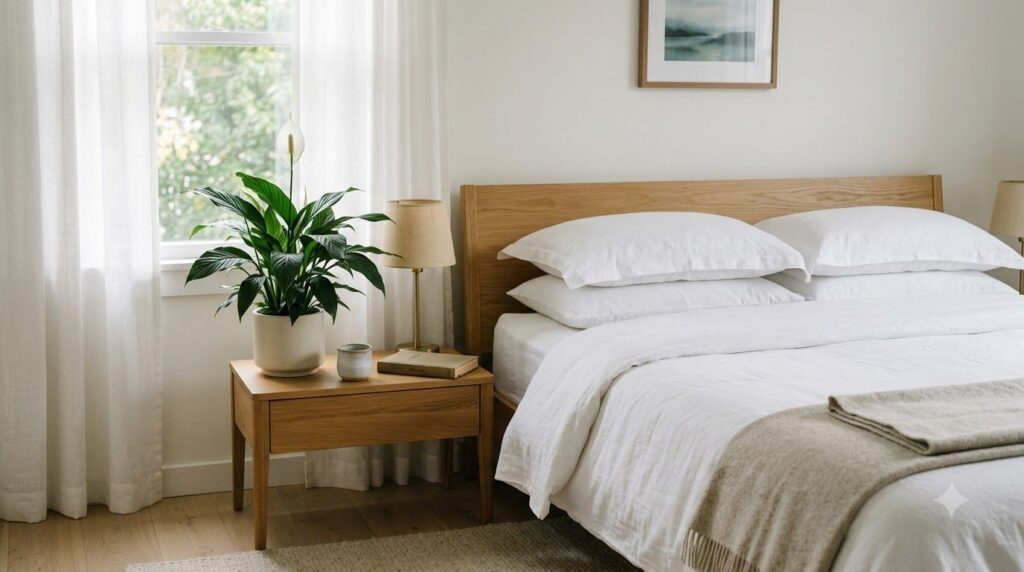
- Peace Lily (Spathiphyllum): Beyond its elegant white blooms, the Peace Lily excels at filtering common indoor pollutants, including benzene, trichloroethylene, and ammonia, while also increasing room humidity.
- Jasmine (Jasminum officinale): This plant is celebrated for its sweet, alluring fragrance, which has been linked to reduced anxiety and improved sleep quality. A small jasmine plant can be a delightful addition.
- Gardenia (Gardenia jasminoides): With glossy leaves and highly fragrant white flowers, Gardenia’s scent is often associated with relaxation and anti-anxiety effects, though it requires more care than others on this list.
- Aloe Vera (Aloe barbadensis miller): Famous for its medicinal gel, Aloe Vera also purifies the air by emitting oxygen at night. It’s a succulent, so it’s easy to care for and forgiving.
- Spider Plant (Chlorophytum comosum): One of the easiest houseplants to grow, the Spider Plant is a powerhouse when it comes to removing indoor air toxins, including formaldehyde and xylene.

Approximate “Measurements” (Placement & Light Needs)
While specific needs vary by plant, here are general guidelines for integrating these plants into your bedroom:
- Light: Most bedroom plants thrive in indirect light. A spot near a window with sheer curtains, or a few feet away from a north or east-facing window, is often ideal.
- Humidity: Many plants appreciate moderate humidity. If your bedroom is very dry, consider misting plants like Peace Lily or English Ivy, or grouping plants to create a microclimate.
- Temperature: Average room temperature (65-75°F / 18-24°C) is suitable for most of these. Avoid placing plants directly next to drafts, heaters, or air conditioners.
- Space: Consider the plant’s mature size. A Snake Plant can grow tall and slender, perfect for a corner, while a Pothos or English Ivy might trail beautifully from a shelf.
Quick Tip: Low Light & Low Maintenance Winners
For bedrooms with minimal natural light or for those new to plant care, Snake Plant, Pothos, and Spider Plant are incredibly forgiving and still deliver significant benefits.
Your Serene Bedroom “Formula” (Choosing and Arranging)
Selecting the right plant goes beyond just aesthetics. Consider:
- Your Bedroom’s Light: Match plants to your available light. A bright room can host Gardenias, while a dimmer room is perfect for Snake Plants.
- Pet Safety: If you have pets, prioritize non-toxic options. Spider Plants and Lavender are generally safer, but always double-check. English Ivy and Peace Lily are toxic if ingested.
- Scent Preference: If you’re sensitive to strong smells, opt for non-fragrant air purifiers like Snake Plants or Spider Plants. For a touch of natural aromatherapy, Lavender or Jasmine are excellent.
- Maintenance Level: Be realistic about how much time you can dedicate. Succulents like Aloe Vera and hardy plants like Pothos require less frequent attention.
Step-by-Step Method (Basic Plant Care for a Peaceful Bedroom)
- Assess Your Space: Before buying, observe your bedroom’s light conditions throughout the day.
- Choose Wisely: Select plants that match your light, care commitment, and aesthetic preferences from our list.
- Proper Potting: Ensure your pot has drainage holes. Use a good quality potting mix appropriate for indoor plants.
- Initial Watering: Water thoroughly after potting until water drains from the bottom.
- Strategic Placement: Place your plant where it can thrive based on its light needs, and where it contributes most to your desired vibe.
How to Use (Optimizing Placement for Maximum Effect)
- Near the Bed: Fragrant plants like Lavender or Jasmine can be placed on a nightstand for immediate aromatherapy benefits.
- In a Corner: Taller plants like a Snake Plant or Peace Lily can fill a corner, providing a calming green focal point.
- Hanging or Shelved: Trailing plants such as English Ivy or Pothos look fantastic spilling from a hanging planter or high shelf, keeping them out of the way while purifying the air.
How Often to Use (Care Frequency)
Consistency is key for healthy plants and sustained good vibes:
- Watering: Check soil moisture every 5-7 days for most plants. Water when the top inch or two of soil feels dry. Succulents like Aloe Vera need less frequent watering (every 2-4 weeks).
- Dusting: Gently wipe leaves with a damp cloth monthly to ensure they can photosynthesize efficiently and keep them looking fresh.
- Fertilizing: Most indoor plants benefit from a balanced liquid fertilizer every 2-4 weeks during their growing season (spring and summer).
How to Buy / How to Choose Your Plants
- Inspect Carefully: Look for vibrant green leaves, no yellowing or brown spots. Check under leaves for pests.
- Healthy Roots: If possible, gently lift the plant from its pot to check for firm, white roots, not mushy or circling ones.
- Reputable Nursery: Purchase from a garden center or nursery that has well-cared-for plants and knowledgeable staff.
You may also like: Read our full guide on identifying common houseplant pests.
Storage (Plant Health & Dormancy)
While bedroom plants aren’t