In the world of gardening, we’re often taught to pull out anything that wasn’t intentionally planted. But what if some of these ‘weeds’ are actually hidden gems, offering nutritional benefits, resilience, and a delicious addition to your culinary repertoire? Many plants that thrive uninvited in our gardens are not only edible but are packed with vitamins, minerals, and unique flavors. By learning to identify and appreciate these wild edibles, you can transform your garden into a more productive, sustainable, and biodiverse ecosystem. It’s time to rethink what constitutes a ‘weed’ and discover the bounty that nature generously provides, often right at your fingertips.
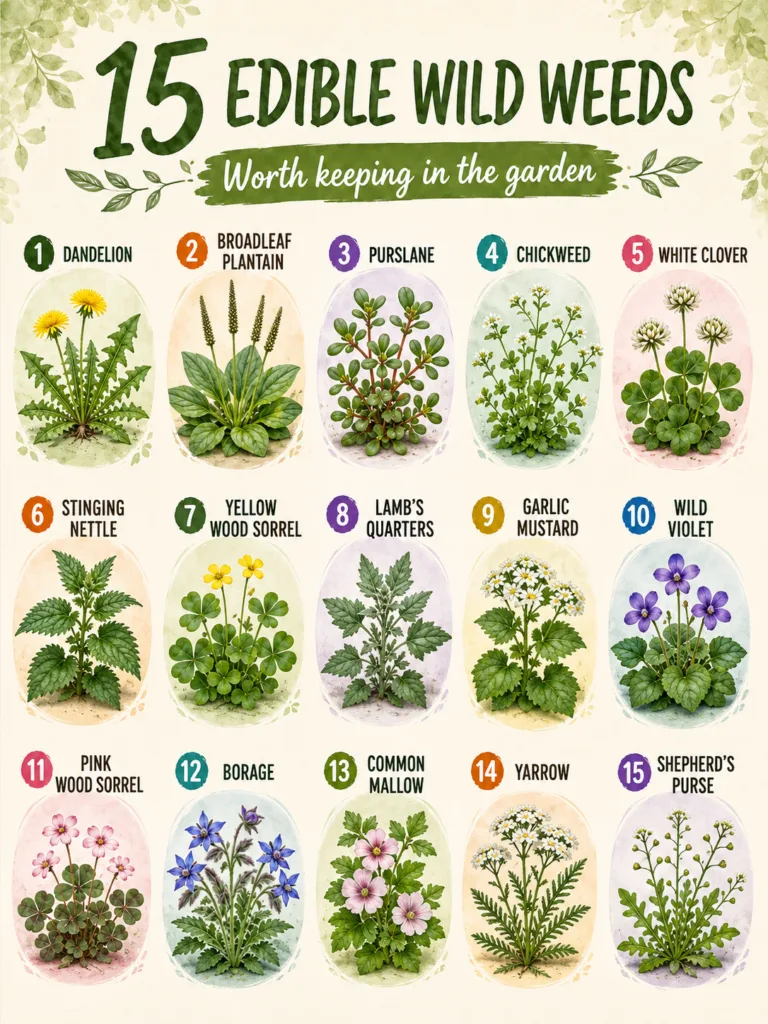 Uncover the hidden culinary treasures thriving naturally in your garden.
Embracing the Edible Wild in Your Garden
Integrating edible wild plants into your garden philosophy is more than just foraging; it’s about fostering a resilient, sustainable, and nutrient-rich landscape. These plants are often perfectly adapted to local conditions, requiring less water, fertilizer, and intervention than cultivated crops. They can attract beneficial insects, improve soil health, and offer a continuous harvest through different seasons. Before you begin, always ensure you have a positive identification of any plant you intend to eat, and avoid harvesting from areas that may have been treated with pesticides or are near roadsides.
Your Guide to 15 Edible Garden Guests
Let’s explore some of the most common and valuable edible plants you might already have growing in your garden.
1. Mallow (Malva neglecta)
Common mallow, often called ‘cheeseweed’ due to its wheel-shaped seedpods, is a pervasive plant found across most temperate regions (USDA Zones 3-9). Its leaves and young seedpods are entirely edible. The leaves have a mild, slightly mucilaginous texture, similar to okra or spinach, making them excellent raw in salads or cooked in soups and stews as a thickener.
- Plant Type: Annual/Biennial
- Exposure: Full sun to partial shade
- Soil: Adaptable, prefers well-drained soil
- Watering: Drought-tolerant once established
- Height: 6-24 inches
- Practical Tip: Harvest young leaves before flowering for the best flavor and texture.
- Warning: Ensure positive identification as some mallow relatives are not edible.
2. Stinging Nettle (Urtica dioica)
Found worldwide, stinging nettle is a powerhouse of nutrients (USDA Zones 3-10). Its leaves are covered in fine hairs that sting upon contact, but cooking or drying neutralizes the sting. High in iron, calcium, and vitamins A and C, nettle is fantastic in teas, soups, pesto, or as a cooked green like spinach.
- Plant Type: Perennial herb
- Exposure: Full sun to partial shade
- Soil: Rich, moist soil
- Watering: Prefers consistent moisture
- Height: 2-6 feet
- Practical Tip: Always wear gloves when harvesting raw nettle. Blanching for a minute or two removes the sting.
- Warning: Harvest before flowering for best flavor; nettle can become stringy and fibrous later in the season.
3. Dandelion (Taraxacum officinale)
A familiar sight in lawns across USDA Zones 3-10, every part of the dandelion is edible. The bitter greens are excellent in salads (especially young leaves), cooked, or blanched. Flower petals add color and mild sweetness to dishes, roots can be roasted and ground for a coffee substitute, and the flowers can be made into wine or jelly.
- Plant Type: Perennial herb
- Exposure: Full sun to partial shade
- Soil: Highly adaptable
- Watering: Drought tolerant
- Height: 6-18 inches
- Practical Tip: Harvest young leaves in early spring or fall for less bitterness.
- Warning: Be absolutely sure of identification; some look-alikes are not edible.
4. Chickweed (Stellaria media)
This delicate, low-growing plant is common in cooler, moist conditions (USDA Zones 3-9). Chickweed is a tender, nutritious green with a mild, fresh flavor, perfect for raw salads, sandwiches, or as a garnish. It’s rich in vitamins and minerals.
- Plant Type: Annual/Winter Annual
- Exposure: Partial shade to full sun
- Soil: Rich, moist, well-drained soil
- Watering: Prefers consistent moisture
- Height: 2-8 inches (spreading)
- Practical Tip: Harvest often to encourage tender new growth.
- Warning: It can spread aggressively, so manage its growth if it competes with desired plants.
5. Wild Garlic/Wild Onion (Allium vineale / Allium canadense)
These common wild alliums are found across much of North America (USDA Zones 3-9). Both the leaves and small bulbs have a distinct onion/garlic flavor. They can be used raw in salads, cooked into stir-fries, or as a substitute for chives or scallions.
- Plant Type: Perennial herb
- Exposure: Full sun to partial shade
- Soil: Adaptable, prefers well-drained soil
- Watering: Moderate
- Height: 1-3 feet
- Practical Tip: Use scissors to snip the hollow, grass-like leaves for quick harvesting.
- Warning: Always confirm identification by crushing a leaf; it should smell distinctly of onion or garlic. Avoid poisonous look-alikes like star-of-Bethlehem (Ornithogalum umbellatum).
6. Plantain (Plantago major / Plantago lanceolata)
Known as ‘broadleaf plantain’ (Plantago major) and ‘narrowleaf’ or ‘ribwort plantain’ (Plantago lanceolata), these plants are found globally (USDA Zones 3-9). Young leaves are mild and can be added to salads or cooked like spinach. Older leaves become tougher and more fibrous but can be used in teas or as a potherb.
- Plant Type: Perennial herb
- Exposure: Full sun to partial shade
- Soil: Adaptable, tolerates poor soil
- Watering: Drought-tolerant
- Height: 6-18 inches
- Practical Tip: Harvest young, tender leaves in spring for culinary use.
- Warning: Leaves can become fibrous and bitter with age.
7. Purslane (Portulaca oleracea)
A succulent gem, purslane is a low-growing annual that thrives in warm weather (USDA Zones 4-11, usually grown as an annual). Its thick, fleshy leaves and stems have a slightly tart, lemony flavor and a crunchy texture, making them ideal for salads, sandwiches, or light stir-fries. It’s a rich source of Omega-3 fatty acids.
- Plant Type: Annual succulent
- Exposure: Full sun
- Soil: Well-drained, even poor soil
- Watering: Drought-tolerant
- Height: 2-6 inches (spreading)
- Practical Tip: Pinch off stem tips regularly to encourage bushier growth and prevent flowering.
- Warning: Can spread rapidly by seed; consider growing in containers if you want to control its spread.
8. Wood Sorrel (Oxalis stricta)
Often mistaken for clover due to its three heart-shaped leaves, yellow wood sorrel is identifiable by its small yellow flowers (USDA Zones 4-9). The leaves, flowers, and seedpods have a pleasant lemony, tart flavor due to oxalic acid. Enjoy them raw in salads, as a garnish, or to add a zing to soups.
- Plant Type: Annual/Perennial
- Exposure: Partial shade to full sun
- Soil: Adaptable, prefers moist soil
- Watering: Moderate
- Height: 4-12 inches
- Practical Tip: Use sparingly due to oxalic acid content, especially if sensitive.
- Warning: Consuming large quantities is not recommended due to oxalic acid, especially for those with kidney issues.
9. Clover (Trifolium repens / Trifolium pratense)
White clover (Trifolium repens) and red clover (Trifolium pratense) are common lawn plants (USDA Zones 3-10). The leaves and flowers are edible. Leaves can be added to salads (best when young and tender), and flowers can be steeped for tea or used in salads. Clover is also a fantastic nitrogen fixer, improving soil fertility.
- Plant Type: Perennial herb
- Exposure: Full sun to partial shade
- Soil: Adaptable
- Watering: Moderate, tolerates some drought
- Height: 4-12 inches (spreading)
- Practical Tip: Incorporate clover into paths or between garden beds to improve soil health and suppress weeds.
- Warning: Some people experience bloating from eating raw clover in large quantities.
10. Wild Violet (Viola spp.)
These charming, low-growing perennials with heart-shaped leaves and purple, white, or yellow flowers are found in woodlands and gardens across USDA Zones 3-9. The leaves and flowers are edible. Leaves are rich in vitamins A and C, with a mild, slightly sweet flavor. Flowers make a beautiful, edible garnish for salads, desserts, or can be candied.
- Plant Type: Perennial herb
- Exposure: Partial shade to full shade
- Soil: Moist, rich, well-drained soil
- Watering: Prefers consistent moisture
- Height: 4-8 inches
- Practical Tip: Gather leaves and flowers in spring for the best flavor and tenderness.
- Warning: Ensure positive identification as some related plants might not be edible.
11. Lamb’s Quarters (Chenopodium album)
Often called wild spinach, lamb’s quarters is a fast-growing annual (USDA Zones 3-10). The young leaves and tender shoots are an excellent substitute for spinach, with a slightly earthy flavor. They are highly nutritious, rich in iron, calcium, and vitamins A and C.
- Plant Type: Annual herb
- Exposure: Full sun to partial shade
- Soil: Adaptable, thrives in disturbed soil
- Watering: Moderate, drought-tolerant once established
- Height: 2-6 feet
- Practical Tip: Harvest leaves frequently to prevent the plant from going to seed and becoming woody.
- Warning: Like spinach, it contains oxalic acid, so consume in moderation, especially if sensitive.
12. Sheep Sorrel (Rumex acetosella)
Identifiable by its arrow-shaped leaves, sheep sorrel is a tart and tangy perennial (USDA Zones 3-9). It has a distinct lemony flavor, excellent when added raw to salads, sandwiches, or used to brighten up fish dishes and sauces. It’s a smaller cousin to garden sorrel.
- Plant Type: Perennial herb
- Exposure: Full sun to partial shade
- Soil: Prefers acidic, well-drained soil
- Watering: Moderate
- Height: 4-12 inches
- Practical Tip: Use sparingly due to oxalic acid content.
- Warning: Not recommended in large quantities for individuals prone to kidney stones due to oxalic acid.
13. Garlic Mustard (Alliaria petiolata)
An invasive biennial in many parts of North America, garlic mustard (USDA Zones 4-8) is also a highly flavorful edible. Its leaves have a pungent garlic-mustard flavor, especially when young. Use it in pesto, salads, or as a cooked green. Harvesting it for food can also help manage its spread.
- Plant Type: Biennial herb
- Exposure: Partial to full shade
- Soil: Prefers moist, rich soil
- Watering: Moderate
- Height: 1-4 feet
- Practical Tip: Harvest early and often, especially before it flowers, to prevent seed dispersal and enjoy the best flavor.
- Warning: It is highly invasive; ensure you remove the entire taproot to prevent regrowth.
14. Yellow Dock (Rumex crispus)
Recognizable by its wavy-edged, sometimes reddish-tinged leaves and deep taproot, yellow dock is a persistent perennial (USDA Zones 3-9). Young leaves in spring have a tart, slightly bitter flavor, and can be cooked like spinach or added sparingly to salads. Its root has traditional medicinal uses.
- Plant Type: Perennial herb
- Exposure: Full sun to partial shade
- Soil: Adaptable, tolerates heavy clay
- Watering: Drought-tolerant once established
- Height: 2-4 feet
- Practical Tip: Harvest young leaves for culinary use; older leaves become bitter and fibrous.
- Warning: Contains oxalic acid, so consume in moderation. Its deep taproot makes it difficult to eradicate if unwanted.
15. Shepherd’s Purse (Capsella bursa-pastoris)
This small annual plant (USDA Zones 3-9) is easily identified by its heart-shaped seedpods. The young basal leaves have a peppery, slightly mustardy flavor, similar to arugula, and are best eaten raw in salads or sandwiches. The seedpods can also be eaten, offering a mild spice.
- Plant Type: Annual/Winter Annual
- Exposure: Full sun to partial shade
- Soil: Adaptable, prefers disturbed soil
- Watering: Moderate
- Height: 6-20 inches
- Practical Tip: Harvest the rosette of leaves before the plant bolts and flowers for the best flavor.
- Warning: Tends to self-seed prolifically, so manage its growth if it becomes too widespread.
Common Mistakes to Avoid When Embracing Wild Edibles
To safely and successfully integrate wild edibles into your garden and diet, be mindful of these common pitfalls:
- Misidentification: This is the most crucial mistake. Never eat a plant unless you are 100% certain of its identity. Use reliable field guides, cross-reference multiple sources, and when in doubt, do not eat it. Many edible plants have poisonous look-alikes.
- Harvesting from Contaminated Areas: Avoid harvesting plants from roadsides, industrial areas, conventional lawns treated with pesticides, or areas with potential animal waste.
- Over-Harvesting: Practice sustainable harvesting. Take only a small portion of what’s available to ensure the plant can continue to thrive and regenerate. Leave plenty for wildlife and future harvests.
- Ignoring Invasiveness: While many wild edibles are beneficial, some, like garlic mustard, are aggressive spreaders. Be aware of their growth habits and manage them responsibly to prevent them from outcompeting native plants or cultivated crops.
- Not Washing Thoroughly: Always wash wild-harvested greens thoroughly to remove soil, insects, and other residues.
Regional and Seasonal Considerations for Harvesting
The best time to harvest edible wild plants often depends on your specific USDA Hardiness Zone and local microclimate. Generally, the tenderest leaves and best flavors are found in spring and fall, especially after good rain. In warmer zones (like USDA Zones 8-11), many of these plants might grow year-round, while in colder zones (like USDA Zones 3-5), they are strictly seasonal, appearing after the last frost and fading with the first hard freeze. Always pay attention to your local environment: soil temperature, recent rainfall, and the plant’s growth stage are often better indicators than a calendar date alone.
Cultivate a Wildly Productive Garden
By understanding and valuing the edible wild plants that often appear unbidden, you can transform your gardening perspective and practice. These resilient, nutritious, and often delicious plants offer a wealth of benefits, from enhancing your culinary adventures to enriching your garden’s biodiversity and sustainability. Start small, learn to identify these natural treasures, and safely incorporate them into your diet. Your garden might just surprise you with its hidden bounty, becoming a more vibrant, self-sufficient, and exciting place to grow.